Trade
Trade

Tanduay sells more rum than Bacardi. But does the average person in the UK know them? Ask your friends.
Heck, ask a reasonably committed British rum drinker about Tanduay. What it tastes like, where it is made, even how to pronounce it (tan-DOO-eye), and there is a decent chance you will be met with silence.
The numbers are unambiguous. Drinks International’s 2026 Millionaires’ Club records Tanduay sales of 23.2 million nine-litre cases in 2025. Bacardi, the name many would instinctively identify as the world’s biggest rum, sold 19.3 million. Tanduay’s volume fell by 2.5% last year, but it still finished nearly four million cases ahead of its nearest rival.
This was not a freak result, either. The Filipino brand first overtook Bacardi in 2017 and has now topped the global rum table for nine consecutive years.
How, then, can the world’s bestselling rum still need an introduction?
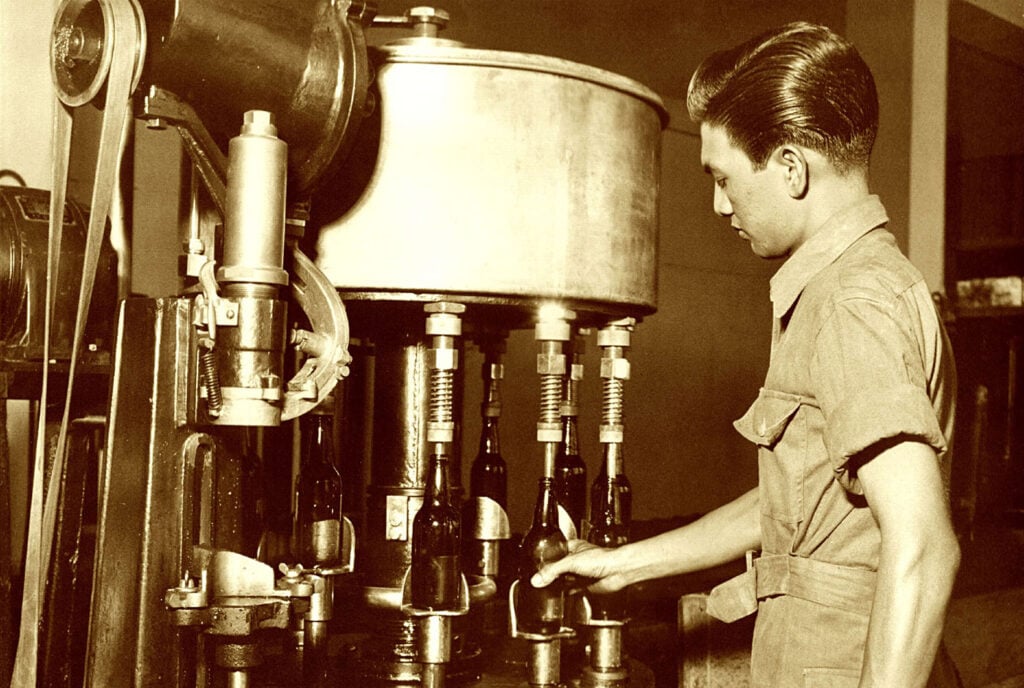
Tanduay has been going for some time
The biggest rum brand you might not know
The answer is simple. Nearly all of it is drunk in one country. It’s much like baijiu ranking as the biggest-selling spirit in the world, but having little market presence outside of China.
The overwhelming majority of Tanduay’s sales remain in the Philippines. Roy Sumang, international business development manager at Tanduay Rum, tells Master of Malt that international markets account for less than 1% of total volume. Roughly 99% is still consumed in the Philippines.
That means Tanduay became the world’s largest rum brand without first building the sort of export empire we associate with Bacardi, Captain Morgan, or Havana Club. Instead, it became almost inescapably popular in a home market of more than 100 million people.
Tanduay has enormous distribution reach and a very broad consumer base in the Philippines, Sumang says, spanning everyday drinking, bars and restaurants, and increasingly “premium” occasions. Overseas growth came later and is now a top priority. The rum was sold in more than 25 countries by 2024, including the UK, US, Canada, Australia, China, South Korea and the UAE. Further European expansion has since followed, including a Danish distribution deal in late 2025.
The Pacific problem
I first learned of Tanduay about eight years before Master of Malt had any stock. Building a brand, even with a head start like Tanduay has, is a process. Less than 1% is less than 1%. This may be an international brand, but it is not yet an international-volume brand.
There’s one obstacle easily overcome through advocacy and education. When people in Europe think about rum, they naturally think of the Caribbean and Latin America, Sumang says. The Philippines is not necessarily the first place that comes to mind, even though the Pacific has a long history of sugarcane cultivation, rum production and a climate particularly well suited to tropical maturation.
Tanduay can trace its roots to 1854. Rum developed alongside the Philippines’ sugar industry and became stitched into the country’s social culture. It appears at celebrations, family gatherings, parties and informal inuman, or drinking sessions. Cola and plenty of ice is the most recognisable serve, although Sumang says it is also commonly mixed with other soft drinks and fruit mixers. In rural areas, much of it is still drunk neat.
For many Filipinos, Tanduay is not an imported idea of rum. It is rum.
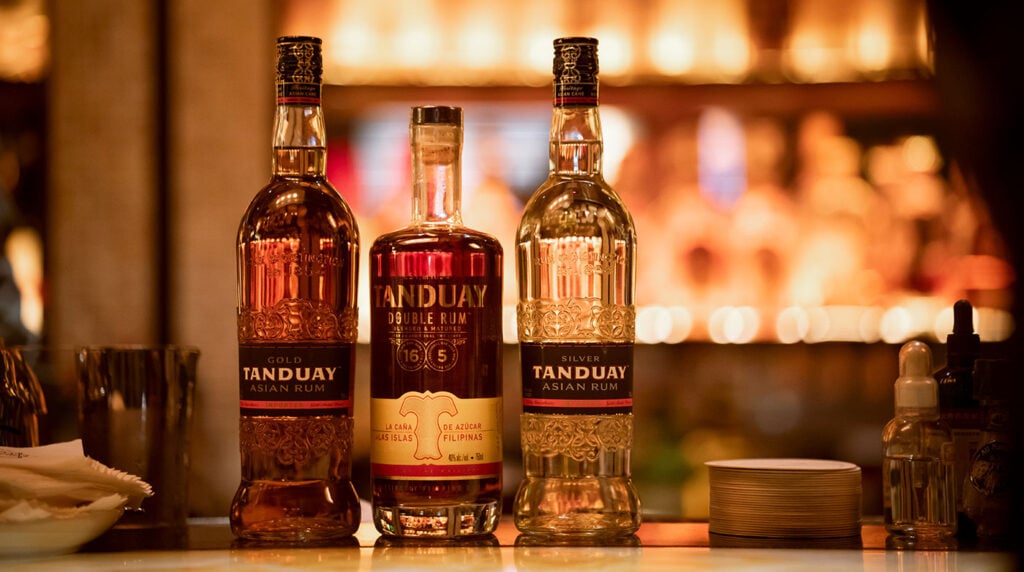
Tanduay makes a range of rum you can buy here at Master of Malt
Grade A molasses, not mystery syrup
Enormous domestic sales explain Tanduay’s position at the top of the table. They do not tell us much about what is in the bottle. Happily, this is where the story gets a bit nerdier.
Tanduay’s rum starts with Philippine sugarcane, particularly from Negros Occidental, the country’s principal sugar-producing region. It works with sister company Victorias Milling Company, which processes sugarcane into first-syrup Grade A molasses. The company has tight control over its supply.
According to Sumang, the material arrives at around 85 degrees Brix, with total fermentable sugars of approximately 55% weight by volume. Sucrose, glucose and fructose provide plenty for the yeast to get its teeth into, while the molasses’ own flavour and chemical composition help set the direction of the spirit. This does not sound like the exhausted, vaguely treacly residue that the word molasses can bring to mind.
Fermentation and distillation
Sumang confirms that fermentation typically lasts 24 to 30 hours at 35 to 38°C, with the temperature controlled using a heat exchanger. Tanduay cultivates and maintains its own undisclosed yeast strain in its laboratory, while closed-top fermenters capture the carbon dioxide produced.
For context, a distillery looking to develop a heavy, high-ester rum might let fermentation run for days, or considerably longer, while encouraging a bustling population of yeasts and bacteria to generate acids, esters and other congeners. Tanduay’s tightly controlled one-day dash is designed to establish a cleaner base, retain sweet molasses character and prevent unwanted compounds from getting in the way.
Most Tanduay rum is column-distilled. The lightest spirit comes off at approximately 95% ABV, reducing heavier congeners while retaining a foundation of molasses sweetness. Tanduay’s pot-distilled marques come in at 90% ABV and below.
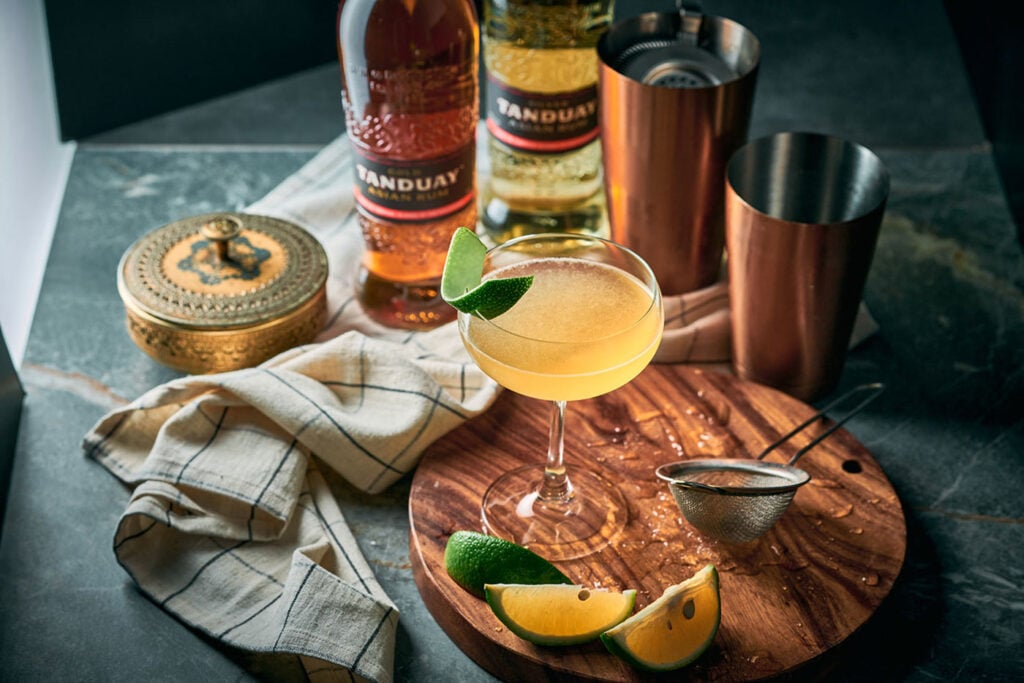
How do you drink Tanduay?
Columns, pots and a blender’s toolkit
“For lighter column-distilled rums, we want a relatively clean fermentation that retains the characteristic sweet and molasses-derived notes without generating excessive unwanted congeners”, Sumang explains. “For the pot-still components, we deliberately preserve more of the flavour compounds and esters that contribute fruitiness, body and complexity”.
The components may be combined before ageing or matured separately. Some finished rums are predominantly column-distilled, while others bring the two production methods together. Not every Tanduay distillate is intended to be light. Yes, this is not a heavy double-retort spirit crawling from the still in an ester-soaked Hawaiian shirt. Rather, flexibility is favoured, with fermentation and distillation adjusted where necessary to create a library of components for the blenders.
“Rather than treating column and pot distillation as competing philosophies, we see them as tools in the blender’s toolkit”, Sumang says, attempting to puncture an assumption often made about giant spirits brands. Scale doesn’t equal one neutral river of alcohol pouring endlessly from an industrial column.
Bourbon barrels in the tropics
Maturation takes place in the Philippines, principally in 200-litre Kentucky bourbon barrels with a No. 4 alligator char. In that warm, humid climate, the relationship between rum and oak moves quickly. So does the rum’s relationship with the outside air.
Tanduay estimates annual evaporation at around 5% to 7%, compared with roughly 2% in cooler warehouses. At 5% a year, a cask would retain only about 44% of its original volume after 16 years if the loss remained constant. The calculation is not fixed, of course, but gives some idea of the cost of holding old rum in the tropics.
“Five years in a tropical warehouse is not simply ‘five years’ in sensory terms,” Sumang explains. “At around five years, you begin to see pronounced vanilla and oak-spice development. With very old stocks, the tropical environment contributes deeper fruit, creamy and caramelised characteristics. The challenge for the blender is to balance the intensity of tropical maturation against the loss of volume from evaporation. That is why a 10- or 16-year-old Tanduay is not simply a younger rum that has been left in a barrel for longer. The maturation environment itself becomes part of the character”.
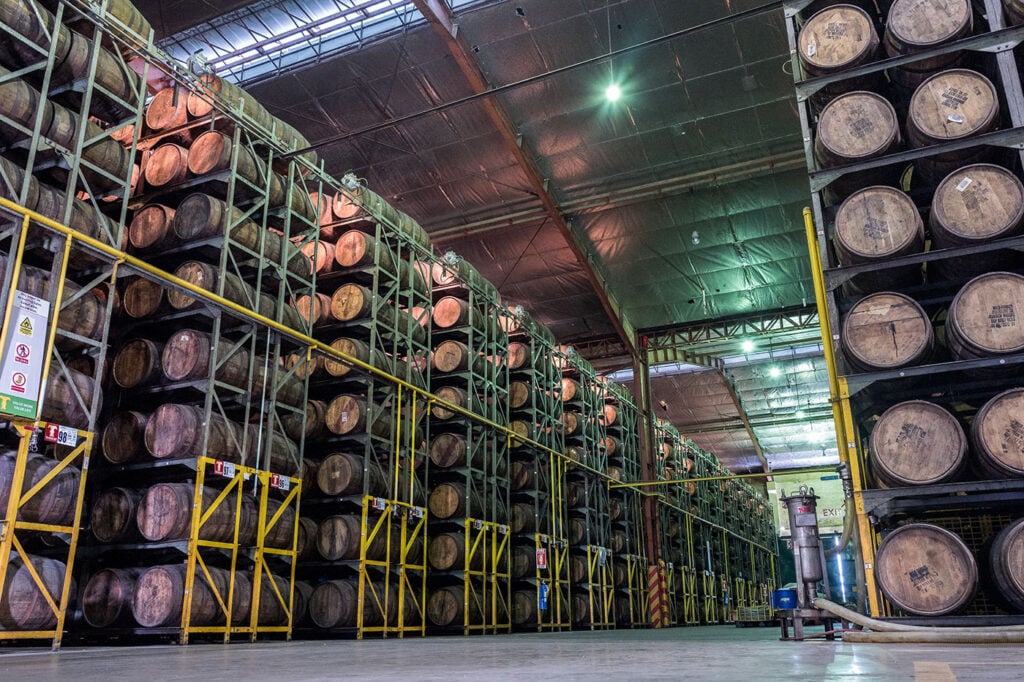
Tanduay has a substantial inventory to work with
Solera ageing and substantial stock
Tanduay uses both conventional batch maturation and solera ageing.
Individual casks give its blenders a library of stocks organised by age and flavour. The solera system allows only part of the rum to be drawn at a time, with younger liquid moving through a series of barrels that retain portions of older spirit.
The company primarily uses individually aged stocks for its export and international brands, while solera maturation helps to maintain continuity across some of its larger domestic lines. Where one method offers selection and clear age definition, the other offers continuity.
Tanduay will not reveal precisely how many casks it holds, describing the figure as commercially sensitive. The inventory is obviously substantial. The range includes younger blending stocks as well as components matured for five, seven, 10 and even 16 years.
What is added to Tanduay rum?
As rum becomes more serious about transparency, being vague about sugar, colouring and flavouring can be a death sentence. It’s rare to see openness from major brands. Tanduay does a bit more than most, as its answer depends on the bottle.
Sumang says no sugar or glycerol is added to the company’s premium products. Double Rum combines rums aged for five and 16 years before they are married in bourbon barrels for a further two years. Between 0% and 0.08% caramel colour may be used to keep its appearance consistent between batches.
Especia is deliberately a spiced rum, with natural spice extracts providing its intended flavour profile. Silver is blended from rums aged for up to five years and charcoal filtered, while Gold contains rums aged for up to seven years. Chill filtration may also be used for clarity and stability.
This is the sort of detail international rum drinkers increasingly expect. The headline claims that Tanduay sells more rum than anybody else might persuade somebody to pick up the bottle once. Information about fermentation, distillate marques, maturation and additions is what gives a curious drinker a reason to take it seriously.
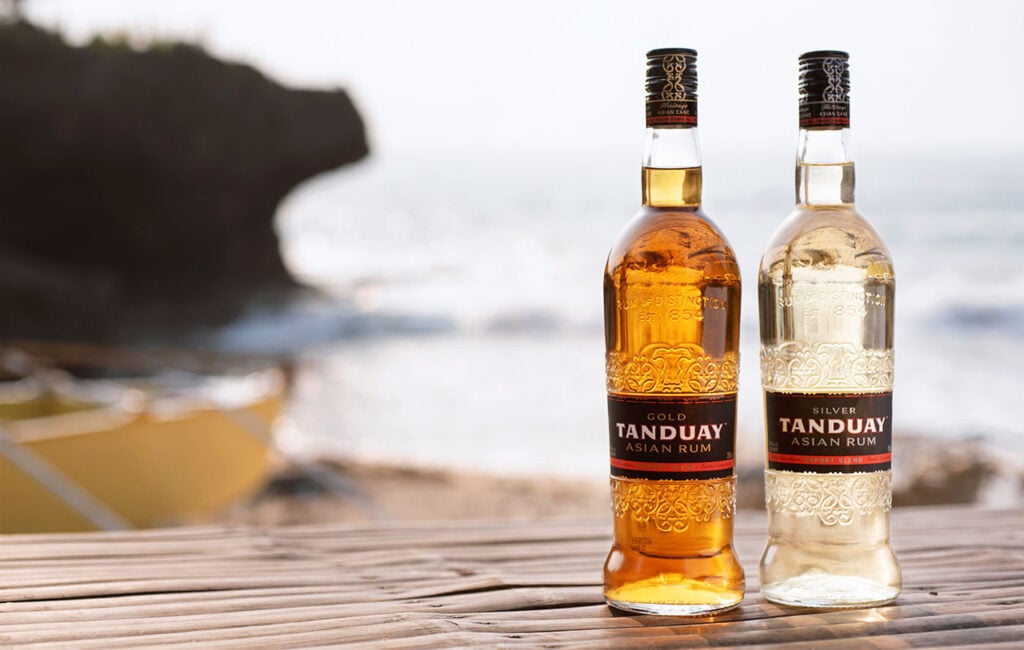
It sells more than Bacardi, but have you tried it?
Does the rest of the world need a different Tanduay?
Tanduay now faces an interesting problem. Its strength in the Philippines comes from being accessible, familiar and tied to ordinary social drinking. Pour it with cola and call your friends. But “premium” international rum often sells itself through scarcity, higher price tags, and age statements. Though none of those factors actually guarantee quality, and the last thing we need is good value rum slapping a price hike on its products in a bid to appear more fashionable.
Sumang does not see those identities as incompatible.
“We don’t want the world to drink Tanduay without understanding where it comes from. At the same time, we recognise that consumers in London, New York, Tokyo or Berlin have different drinking cultures and different expectations of rum. Our job is not to change Tanduay into something that isn’t Filipino”, he says. “It is to give people different ways of discovering the same heritage”.
That might begin with a cocktail before moving into the aged range, where the production story becomes easier to taste and explain. The premiumisation strategy, he argues, is about revealing more of Tanduay rather than inventing a different version for foreign drinkers.
Making the introductions
Tanduay does not need to borrow somebody else’s story to look legitimate to a wider audience. It has 172 years of its own, one of the world’s great sugarcane-producing regions on its doorstep, a mixed distillation programme, vast stocks of tropically matured rum and a safety net home market on an almost absurd scale.
It’s the world’s bestselling rum and most British drinkers have yet to try it. It can sell 23.2 million cases, beat Bacardi for nine consecutive years and still have so much of its story left to tell. Here’s how Sumang frames it:
“For more than 170 years, Filipinos have known Tanduay as part of everyday life. Now we have the opportunity to let the rest of the world discover that there is much more to Filipino rum than they may have assumed. Ultimately, our international ambition is not simply to be recognised as the world’s largest rum brand. We want Tanduay to become recognised as one of the world’s great rum-producing traditions, and to put the Philippines firmly on the global rum map.”