Trade
Trade

I was drinking Mango Bay Rum recently.
It’s from Mauritius and comprises molasses rums aged for at least three and five years respectively in oloroso and Pedro Ximénez sherry casks, plus a pure sugar cane juice rum matured in French oak. Both are pot distilled, then presented naturally coloured, and made without additives. It’s in a striking bottle with a vivid, tasteful shelf presence and a price point that sits a touch above the norm within the accessible bracket.
Nice. All very interesting. Tasty too. But I want to learn more.
Good thing I’m at the brand’s trade stand at The Rum Show. Representing Mango Bay is Camille Rackham, business development, export and social media director at Emporia Brands. Once I had finished my tasting, with an accompanying cocktail for a truly thorough examination, I clocked the surname and realised I was in “Daddy Rack” territory.
Camus, Chairman’s Reserve… economics?!
The moniker belongs to one J. Arthur Rackham, a master blender and founder of spirits importer and distributor Emporia. A few years ago I covered the launch of one of his products, Daddy Rack Tennessee Whiskey, but I met him in person for the first time at The Rum Show, where he agreed to chat with me later about Mango Bay Rum and all things Rack and Roll.
“I’m a second-generation wine and spirits merchant, James Arthur Rackham. I grew up in the trade; my father, Arthur Rackham, ran fifteen wine shops across Kensington and Chelsea in London. As a young man, I spent my holidays interning in France, and my most formative stretch was living with the Camus family in Cognac, learning about the spirit from the inside. That’s where I first fell for the art of blending: different crus, different ages, the whole alchemy of it.”
Rackham says that fascination went dormant for a while, and he spent a spell in Australia working as a senior economist, before returning home to join his father and help build his business.
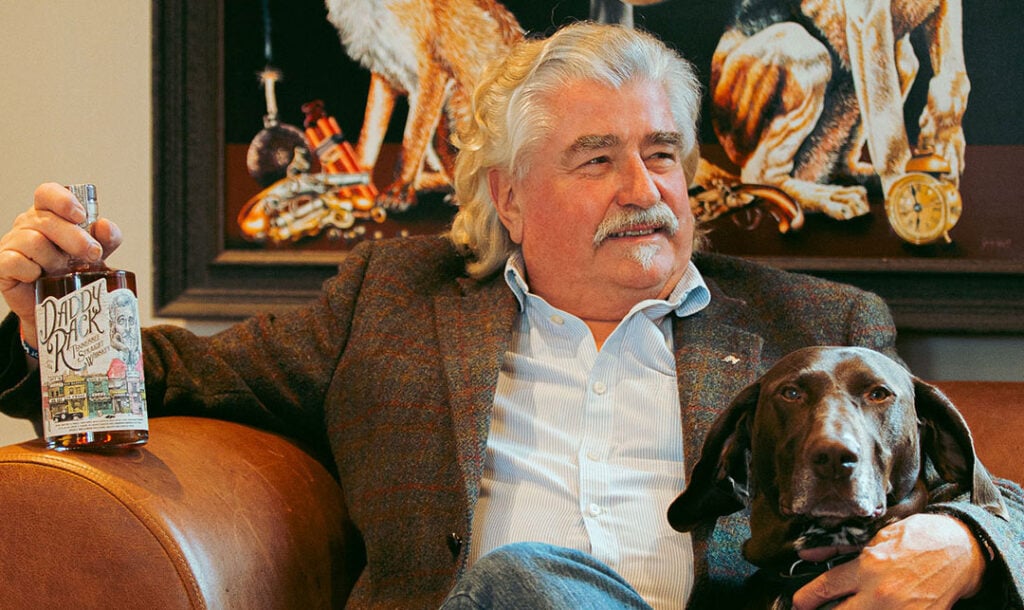
Say hello to Daddy Rack
Striking out on his own
“In 1984 I struck out on my own and founded Emporia Brands, which quickly became a national supermarket supplier of French spirits: Cognac, Armagnac, Calvados. It’s a position we still hold today, and I remain responsible for the blends myself”.
The rum chapter began fifteen years ago, when Laurie Barnard, who owned St Lucia Distillers, asked Rackham to launch Chairman’s Reserve in the UK. It was a commercial success, but more than that, it was an education.
“Their cellar master and master distiller taught me rum blending from the ground up. I got to work hands-on, helping create the Chairman’s Spiced Blend and a bespoke blend for the UAE market. When Chairman’s decided to bring distribution in-house, it opened a door for me: the chance to launch a brand of my own.”
Mango Bay, Mauritius, and Alan Oxenham
That brand is Mango Bay, which came to market in January 2026.
“My business is a personal one. I only work with people I like, trust, and respect. People devoted to traditional, artisan practices without compromising on quality, but who still have real ambition,” Rackham says. “I spent two years and several expeditions in the Caribbean looking for something genuinely new to bring to a market that has moved on a great deal since my Chairman’s days and is now crowded with new brands and sharper marketing from the big players. I didn’t find it there”.
Enter: Alan Oxenham, export director of Oxenham, a fourth-generation family business in Mauritius. Rackham had met him eight years earlier and started getting to know his rums. The agreement with St Lucia, however, meant he couldn’t work with him. Years later, they met again. Rackham tasted the range properly and was blown away by Oakes & Ames, Oxenham’s pure cane rum.
“I signed up to take on UK distribution almost immediately”.
Rackham knew his rhum agricole well, having imported La Mauny from Martinique back in 2000. During his final three years with Chairman’s Reserve, he also relaunched its sister brand, Clément. But Mauritian pure cane is a different animal entirely.
“It lacks the vegetal, grassy character you get from Martinique; instead, it has a purity and mouthfeel all its own. So I got on a plane, met Cedric Oxenham, who runs the distillery and cellars, and we started working on the blend together”.
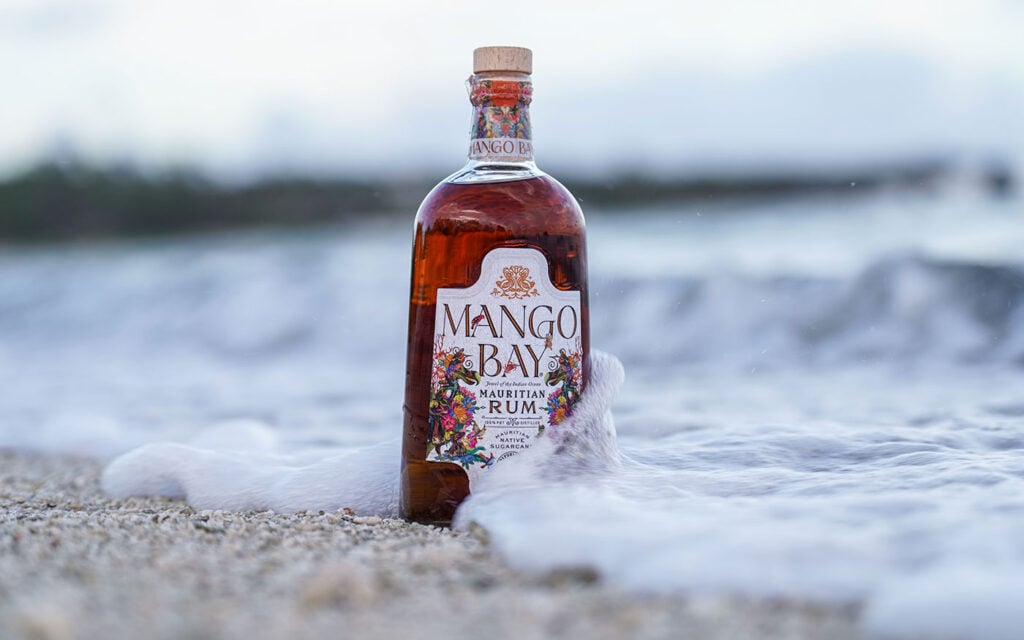
Meet Mango Bay Rum
Doing your homework and trusting good partners
Mango Bay itself is not a real place, but an imagined destination built from Rackham’s discoveries. At least, not yet. One day there will be a rum shack on a beach in a bay, once Rackham has sold a few cases. No place, flavour or encounter sparked the rum’s creation. Just good old-fashioned elbow grease.
“I did my homework. I tasted everything: every pure cane rum they had in the cellars, every molasses rum grown from local cane,” Rackham explains. “And once I’d tasted enough, the idea was simply there. I knew exactly what I wanted to do. It’s a bit like being an artist: once the brush touches the canvas, you don’t stop until the picture is finished”.
Rackham outlines the process as follows: “I’ve already used the metaphor of the artist for the blending itself, but it applies just as well to a chef. Ingredients are everything. Our growers give us the raw material to work with. Then comes the craft of Cedric Oxenham and his team: crushing the cane, fermenting the juice, and distilling it. And this part is crucial — we are 100% pot distilled, unlike most rums, which are column distilled. That’s what lets us retain so much natural flavour”.
He continues: “The third part of the story is Cedric’s own decision, a genuinely visionary one, to mature the pure cane rum in high-quality French oak, and the molasses rum mainly in oloroso sherry casks, with a good proportion finished in the ultra-sweet Pedro Ximénez sherry casks as well. That gave us the opportunity to build a blend from all three components and fine-tune the age to get exactly the character we wanted”.
A true Mauritian rum…
Rackham tells me that Mauritius is a genuinely unusual place — a volcanic island where sugar cane is grown almost everywhere, but with real variations in terroir and its own patchwork of microclimates. Oxenham showed him how the team had mapped the island to find its best cane farmers, dotted across different regions.
Mango Bay isn’t a single-plantation rum. The cane comes from several contracted farmers spread across the island, each contributing its own flavour, and all meeting Emporia’s internal fair-trade standards.
It is produced, blended and bottled entirely in Mauritius, and meets a new certification being introduced for authentic Mauritian rum. Rackham says this matters because some producers still export their rum in bulk rather than bottling it on the island.
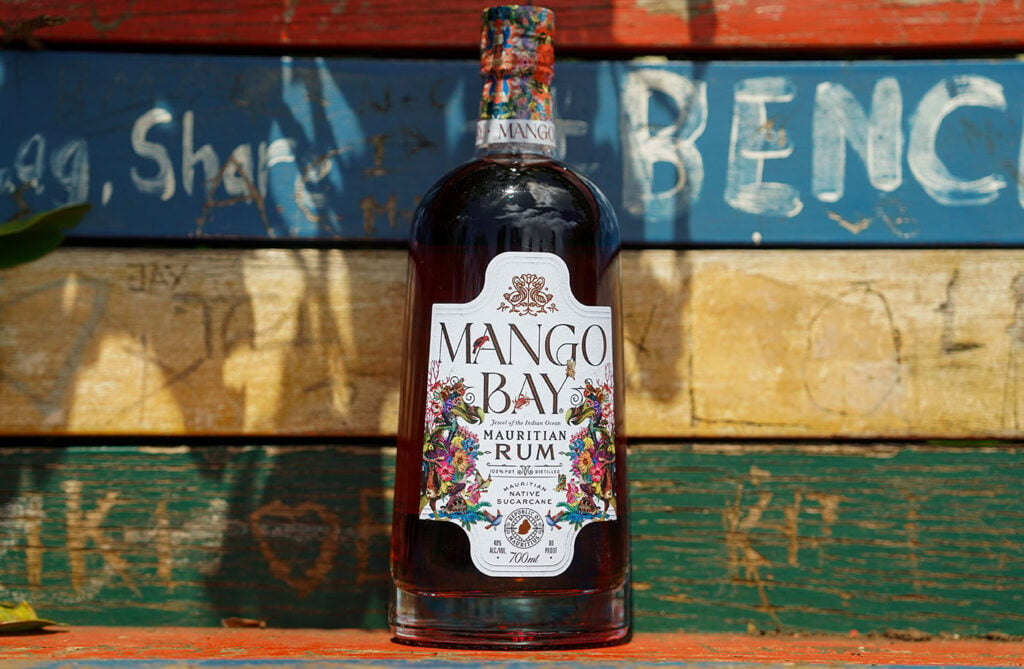
The only blend of Mauritian pure cane and molasses rum
…and a genuine first
Mango Bay also holds the distinction of being a genuine first:
“Every distillery in Mauritius makes either a pure cane rum or a molasses rum. Nobody had thought to blend the two together. We’ve broken new ground doing exactly that, and it works magnificently”.
Rackham explains that bringing something genuinely new to the international rum market is his mission.
“It’s a natural rum, with a beautiful rich gold colour. The first taste is clean, pure aged sugar cane, fresh and bright. Then the oloroso-matured molasses rum comes through and fills the palate with this glorious depth of flavour — you almost want to pause on it. And then the PX kicks in: wonderfully smooth, lingering, but still fresh”.
He adds: “I don’t know another rum that delivers quite like this — one that can satisfy a Havana-cigar drinker just as well as a poolside rum and coke, and everything in between in a great cocktail”.
Total creative control
Alan Oxenham, director of the Oxenham Craft Distillery, was also on hand to very kindly provide plenty of additional production detail. He says that Rackham arrived with a very precise idea of the style he wanted to create.
“Together, we tasted our way through the library of rums available in our cellars, exploring different combinations of pure cane juice and molasses rums. It was rather like a composer working through different musical passages before bringing them together into a final symphony,” he recalls.
“After several long hours of tasting, the essential character of Mango Bay began to emerge. Once we had established the direction of the blend, it took only a few additional days to fine-tune the proportions and achieve the final balance”.
Not only is every component of Mango Bay distilled and matured at Oxenham in Mauritius, but the final blending and bottling also take place there. This gives the team complete control over the rum throughout its journey, from freshly harvested cane to the finished bottle.
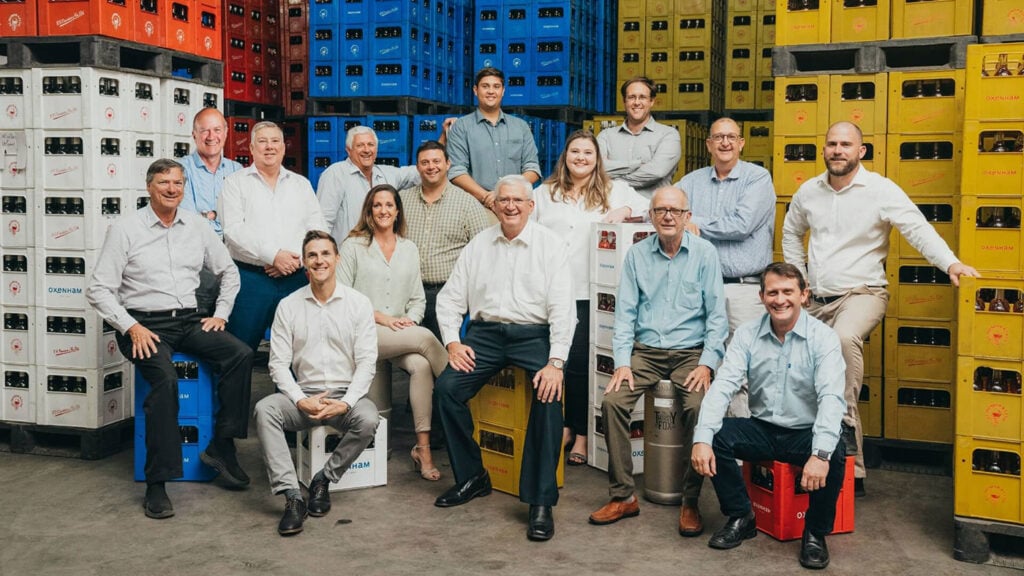
The Oxenham team bring untold expertise and experience to the project
Like wine terroir
The Oxenhams wield generations of knowledge about the island’s soils, climates and cane varieties. Particular varieties of sugar cane are selected because they are well suited to specific terroirs and climatic conditions. For the pure cane juice component of Mango Bay, the team works principally with Red Cane grown in the south-east of Mauritius.
“This variety is particularly well suited to the region. It benefits from the south-east trade winds, which bring a cooling maritime influence from the Indian Ocean and contribute to the distinctive character of the cane,” Oxenham says. “The variety of cane, the nature of the soil, the amount of rainfall, the elevation and the influence of the trade winds can all affect its character. We therefore select particular plots not only for the quality of the cane, but also for the freshness, aromatic expression and balance they can bring to the finished rum.”
The molasses comes from one of the island’s principal sugar mills, where cane from different varieties and regions is processed together. It is therefore not possible to isolate molasses originating from one particular variety or plot. The pure cane juice component is different.
“We can work directly with selected growers and obtain freshly harvested cane from specific plots with which we have established a close working relationship. This gives us much greater control over the variety, freshness, and origin of the raw material.”
Low and slow fermentation
For pure cane juice rum, freshness is everything. The cane is harvested by hand and transported to the distillery as quickly as possible. The aim is to mill it within 24 hours of harvesting. After milling, the fresh juice rests briefly, allowing the indigenous microflora naturally present on the cane to begin expressing its character before selected Champagne yeast is added.
“We like to say that nature writes the opening chapter of the fermentation through the cane’s native microflora, while our selected yeast guides the rest of the story and helps reveal the true character of the Mauritian terroir,” Oxenham says.
Both the molasses and pure cane juice rums undergo slow, temperature-controlled fermentation. As in the wine industry, the Oxenhams believe that fermentation should not be rushed. Generally, it lasts between eight and twelve days, depending on the raw material, the conditions and aromatic profile they are seeking.
They maintain the fermentation at approximately 18°C, allowing the yeast to work gradually and encouraging the development of a broader and more complex range of aromas than would emerge at higher temperatures.
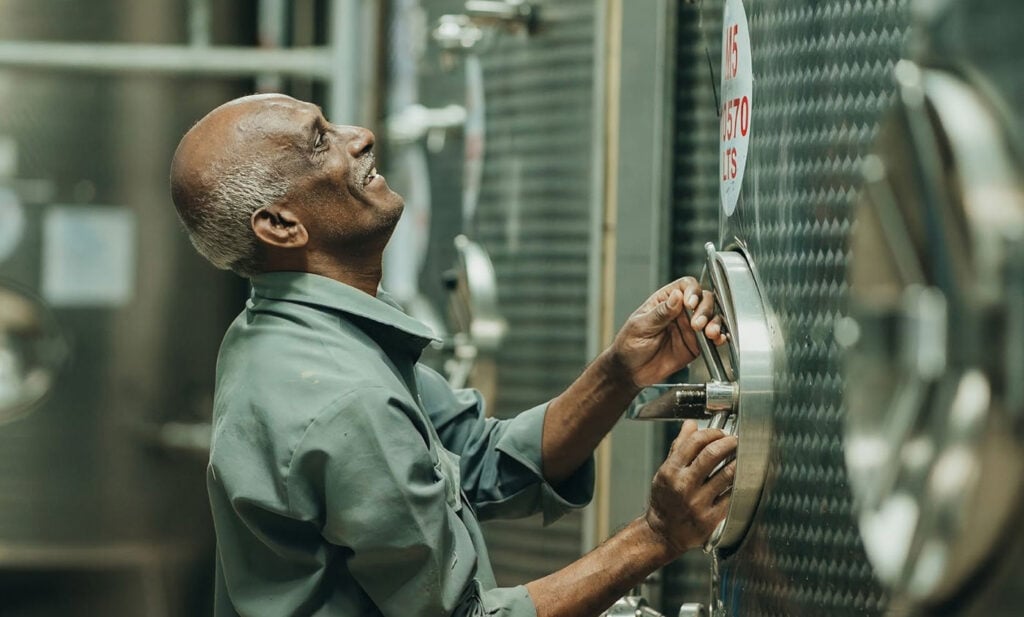
Oxenham Craft Distillery produces a wide range of spirits
Distillation and blending
Distillation takes place in a German-made Holstein hybrid copper pot still.
“The hybrid design combines the aromatic richness and character associated with pot distillation with the precision and flexibility of a rectifying column. This allows us to retain the natural flavour of the raw material while producing a spirit with elegance, balance and finesse,” Oxenham says.
During the development process, several very promising combinations emerged. Oxenham says some offered greater intensity, while others brought additional sweetness, oak influence or aromatic richness. However, Mango Bay was never intended to be dominated by any single component.
“The final blend was chosen because it achieved the best harmony between the freshness and purity of the cane juice rum and the richness, depth and roundness of the matured molasses rums. In blending, what you decide to leave out can be just as important as what you finally include”.
Making Mango Bay a genuinely loved local brand
Mango Bay has formal partnerships with its farmers, a conservation group, and twenty luxury hotels on the island whose bars actively represent the brand to tourists. It also works with partners in airport duty-free on the island. Rackham says the brand benefits the communities involved in making it, but that they want to do more.
“We’re very focused on our home market and making Mango Bay a genuinely loved local brand. Next month we’re launching a national cocktail competition open to every bar on the island. First prize is a week in London working at a top rum bar, a real once-in-a-lifetime experience. Alongside that, we’re investing in training to help raise the profile and craft of Mauritian bars and their cocktails”.
The team is also in the process of reaching out to Mauritian writers, historians and cultural advisers to help shape the brand’s storytelling. Camille is heading out in September 2026 and will be building those relationships. I’m not at all jealous. I’ll go to Tonbridge once a week. Who’s the real winner?
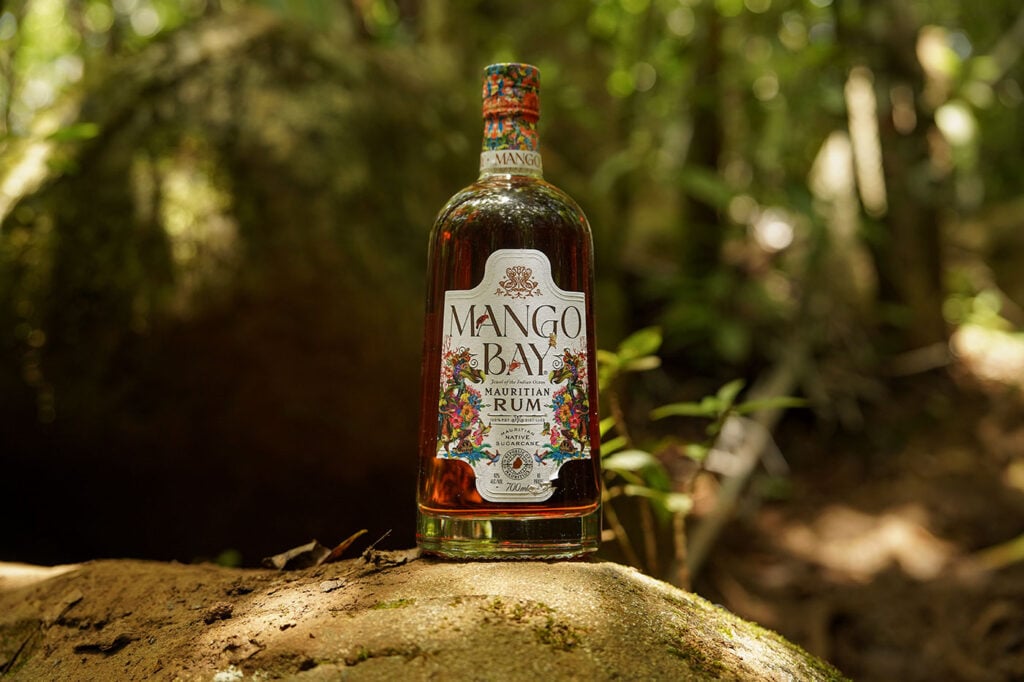
You can buy Mango Bay Rum at Master of Malt
West Side is the best
Beyond the liquid, Rackham tells us to take a moment with the bottle itself.
“The graphics were created by my friends at Stranger & Stranger: beautiful, evocative tropical scenes with local history woven right into the design”.
As for what’s next for Rackham, it’s all about the brand building.
“Since my son Jack joined the business and took over the heavy lifting of running things in the UK, and now my youngest daughter Camille has joined the family firm too last year, I’ve been free to focus on building brands we own outright and expanding into the US, European and APAC markets,” he explains. “First up is Mayfield Sussex Hop Gin, followed by a project I’m genuinely excited about: Daddy Rack Tennessee Straight Whiskey, which I make just outside Nashville. I’m 73 now, in rude health and still ambitious”.
Rackham is also happy to tease a new creation.
“There’s one more brand in the pipeline, and I’ll share the name: West Side. My father launched it in the sixties as a lager, through a contract with the Dorset brewer Hall & Woodhouse, which had the first beer canning line in the UK. He got to market first. I suppose I learned something from him. It won’t be a lager, though.”
Mango Bay brings together everything Rackham has spent a lifetime learning: how to find the right people, trust the liquid and recognise a good idea. Most people might consider a new rum brand, a Tennessee whiskey and a mystery project called West Side enough to be getting on with. Rackham, thankfully, does not appear to be most people.