Trade
Trade

Dos Maderas is a line of rum from a sherry bodega.
There are plenty of rums finished in a sherry cask. Some good, some less so.
But the question here is not simply what sherry wood can do to rum. It is what happens when people who have spent generations making sherry turn their attention to rum.
When a sherry family turns to rum
Williams & Humbert was founded in Jerez in 1877. Its enormous bodega holds more than 60,000 American oak casks beneath one roof, used to mature sherry and Brandy de Jerez through the region’s dynamic criaderas y solera system. Cask management, fractional blending and the slow maintenance of a consistent house character are the name of the game.
When the Medina family decided to create its own rum brand in the 2000s, it did so from that position. The company had spent several years distributing other rum brands and learning the market, so it was not about to impersonate a Caribbean distillery.
“We wanted to create a rum with high added value that would also convey the distinctive characteristics and heritage of a prestigious sherry producer such as Williams & Humbert,” says Winemaker and Dos Maderas master blender Juan José Mesa, known as Juanjo.
The result was Dos Maderas. The name means two woods. It is also two climates, two maturation traditions and two different sets of expertise.
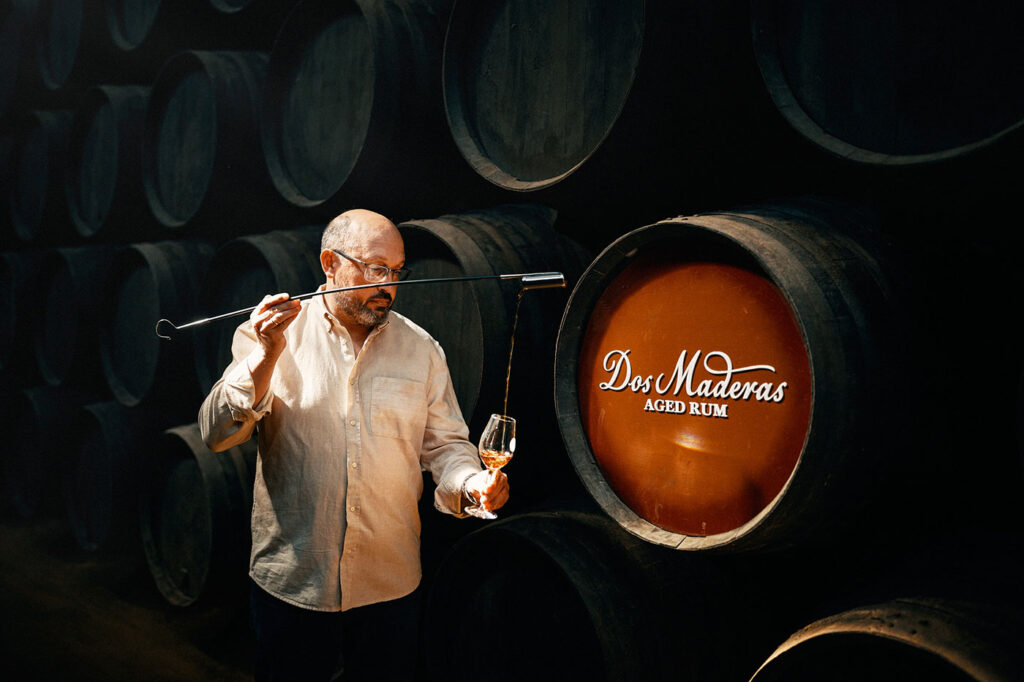
Say hola to Juanjo
Build the rum for what happens next
Dos Maderas begins with molasses-based rums from Barbados and Guyana. Following fermentation, the rums are distilled using several types of equipment, including column and pot stills, before spending five years in 220-litre bourbon casks in the Caribbean.
This is not some preamble before the serious Spanish bit begins. Tropical maturation is fast and consequential. Heat increases interaction between spirit and wood, bringing vanilla, caramel and oak spice from the charred American oak while concentrating the rum through evaporation.
The two origins also contribute different components to the eventual blend. Juanjo describes the Barbadian rums as soft, light, earthy and refined. The Guyanese rums are fuller-bodied and heavier, with more intense fruit.
After five years, the team selects and blends the two styles with their future in mind. The objective is not necessarily to create the best standalone five-year-old blend and then see what a convenient cask does to it. It must have the structure to withstand several more years of ageing, assertive oxidative wine character and continuous blending without disappearing beneath it all.
A sherry cask with a known past
Sherry casks are now used across whisky, rum and other brown spirits, but the term can conceal a great deal. A newly coopered cask seasoned with sherry for a relatively short period is not the same as an old bodega cask that has held wine for decades. Both may legitimately be called sherry casks, but they will not behave alike.
Williams & Humbert owns the casks used for Dos Maderas and knows the wines that occupied them. The American oak butts are between 80 and 100 years old. They have held two of the bodega’s great solera-aged sherries: Dos Cortados Palo Cortado and Don Guido Pedro Ximénez.
At that age, nobody should imagine vigorous extraction from fresh oak. Much of the readily available vanilla, coconut and tannin has long since been taken up by wine and earlier fills. The old wood instead provides a vessel for gradual oxygen exchange and carries an imprint of the sherry it held.
Williams & Humbert controls the wine, the cask history, the time spent seasoning it and its subsequent use for rum. No two casks are identical, but the bodega is not working blind, and it is not treating sherry as one generic flavour called “dark fruit”.
“Our long experience in sherry and Brandy de Jerez gives us an in-depth understanding of the relationship between the wine, the cask and the spirit during the ageing process,” Juanjo says.
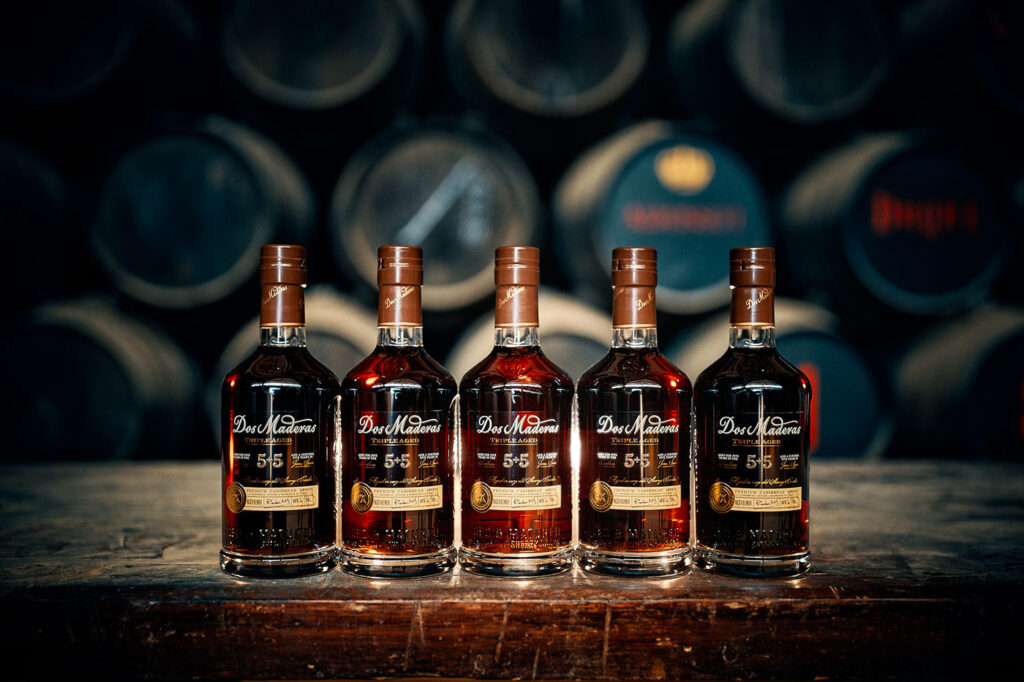
We’re turning our attention to Dos Maderas today
Palo Cortado first, Pedro Ximénez second
Dos Maderas 5+3 spends five years in the Caribbean followed by three years in the Palo Cortado solera in Jerez. The casks previously held Dos Cortados, a Palo Cortado with a certified average age of at least 30 years.
Palo Cortado combines the aromatic delicacy associated with biologically aged wine and the body of oxidative maturation. Juanjo tells us Dos Cortados is dry, intense and nutty. Its casks contribute oxidative depth, dried fruit, walnut and structure rather than straightforward sweetness.
Dos Maderas 5+5 goes further. After its five tropical years, the rum spends three years in the Palo Cortado system and then two more in casks used for Don Guido Pedro Ximénez, which has a certified average age of at least 20 years.
Pedro Ximénez begins with grapes dried beneath the Andalusian sun, concentrating their sugar before fermentation. Don Guido is extremely dark and sweet, with raisin, fig, chocolate and honey character. Its casks bring weight and richness to the rum after the drier Palo Cortado stage has supplied structure, Juanjo says.
Dos Maderas Luxus begins with older rum, matured for ten years in Barbados and Guyana before spending another five years in the Don Guido PX solera. Just 5,000 bottles are produced annually.
Not a conventional finish
The other fundamental difference is movement. A lot of cask finishes are static. Spirit goes into one or more casks, stays there for a chosen period, then comes out for blending and bottling. Dos Maderas enters the criaderas y solera system used for sherry and Brandy de Jerez.
The oldest rum occupies the bottom row of casks, called the solera, from suelo, the Spanish word for floor. A portion is drawn from these casks for bottling. They are not emptied. The removed liquid is replaced with rum from the first criadera above, which is replenished from the second criadera, and so on. Younger spirit enters at the top and moves fractionally through the system over time.
The Spanish word criadera means nursery. Think of it like a system in which younger liquid is progressively raised by older rum and casks that have been doing this work for decades. Fractional blending makes the solera a living inventory, where each withdrawal contains many different vintages of rum.
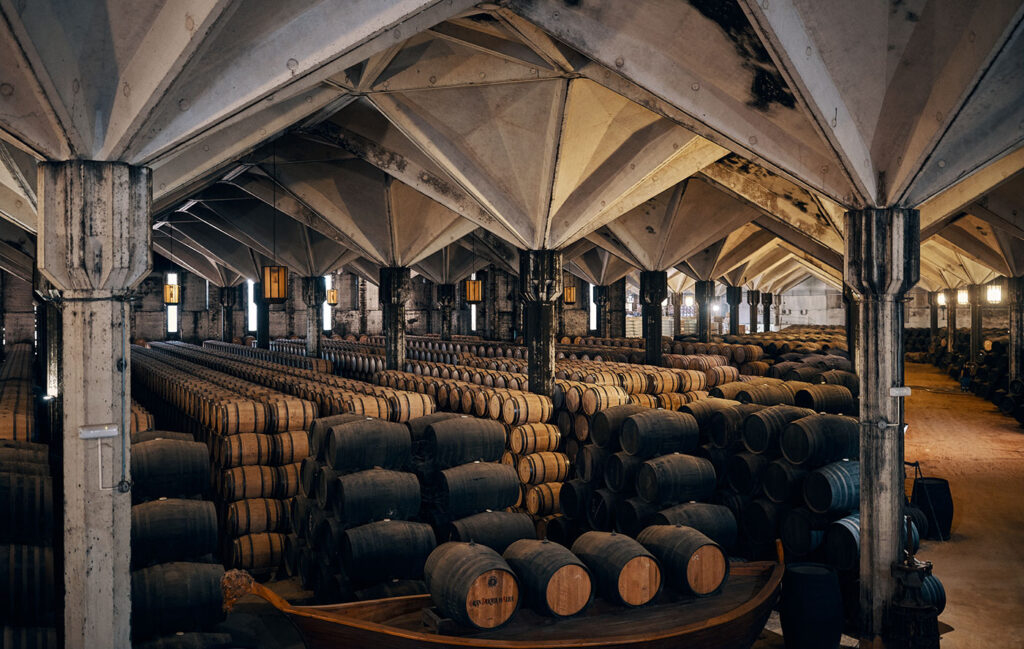
Casks of Dos Maderas rum age in Jerez, Spain
The criaderas y solera system
Every replenishment changes the whole system by a small amount. Because the bottom casks are never fully emptied, the brand says every bottle contains a trace of the first Dos Maderas batch. After nearly two decades, that trace will be doing some committed work at a small scale, but the principle matters.
The practical advantage is continuity. A conventional blender assembles batches that resemble one another, but a solera builds consistency into the maturation system itself, with older liquid smoothing the arrival of younger components. It can integrate flavours and preserve house style. The skill comes from understanding how much to withdraw, when to replenish and when the final rum is ready.
This is why describing Dos Maderas as sherry-finished rum misses the point. It is part of a continuous blending system rooted in Jerez.
From tropical heat to the cathedral bodega
The move from the Caribbean to southern Spain also changes the pace and nature of maturation.
Jerez has hot summers and mild winters, but it’s not exactly Barbados and Guyana. The Levante and Poniente winds contribute further variation. The easterly Levante tends to bring hot, dry air; the westerly Poniente arrives cooler and carries Atlantic moisture.
Williams & Humbert’s vast bodega also creates its own microclimate. The building, its high roof, air volume, orientation and ventilation moderate the conditions around those 60,000 casks. The bodega’s architecture is part of the production process. Sure, it’s a handsome setting for tastings beneath flattering shafts of Andalusian sunlight. But while volume and airflow may not be sexy, they determine how liquid develops in the casks.
Rum that has already endured five or ten years of tropical maturation is therefore not subjected to more of the same. Its second life is slower, oxidative, and seasonally variable.
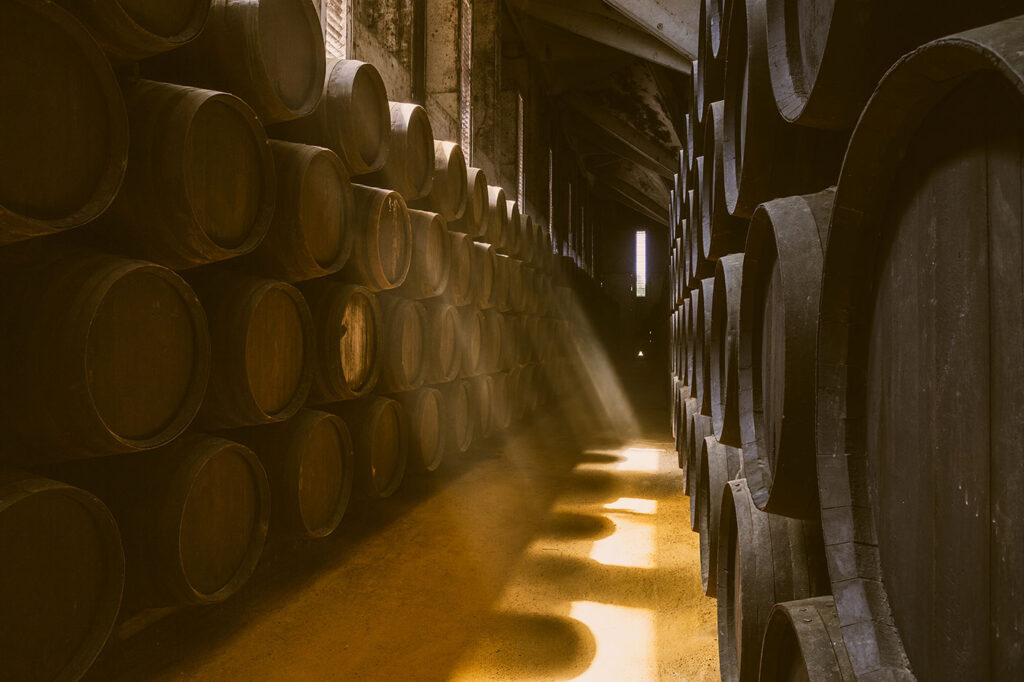
Drink rum. Drink sherry. Appreciate both.
The rum blender who studied flor
The final decisions belong to somebody whose route into rum ran through wine, microbiology and the peculiar yeast layer responsible for biologically aged sherry.
Juanjo studied Chemical Sciences at the University of Cádiz before specialising in industrial fermentation and oenology. His doctoral thesis examined the veil of flor in fino wines, and he later taught microbiology and analytical chemistry.
He spent 20 years as a head oenologist and technical director at wineries in Málaga and the sherry region, including a decade as president of the Andalusian Association of Oenologists. He joined Williams & Humbert in 2022.
That background changes the questions being asked of rum. Juanjo is looking at aromatic intensity and harmony across floral notes, spice and toasted wood, but he is also managing wine-derived flavour, oxygen, fractional blending and consistency across a dynamic system.
Two places, one purpose
“The objective is to achieve a balance in which the influence of the sherry casks enhances the rum while preserving the characteristic personality of the Caribbean spirits,” Juanjo says.
Heavy Guyanese fruit, lighter Barbadian elegance, bourbon cask sweetness, Palo Cortado dryness and PX richness all need to remain legible in the final product.
The easy romantic version of the Dos Maderas story is Caribbean sunshine meets Andalusian tradition. Two cultures in a bottle. Barrels rolling across a map while somebody finds a flamenco playlist on Spotify.
Dos Maderas means two woods. The interesting part is everything the people on either side of the Atlantic know about using them.