Trade
Trade

Tamnavulin is the UK’s fastest growing single malt whisky. It’s the second biggest in the UK off-trade (supermarkets), behind Jura, and the number one single malt in Sweden. In 2022 it became the 15th best selling malt overall, shifting 2.6 million bottles of Scotch whisky.
It wasn’t long ago, however, that the distillery felt virtually non-existent. And today its supermarket reputation means it escapes the clutches of cult whiskydom respect. Dr Kirstie McCallum, master blender for Whyte & Mackay, calls it “A proper distillery”. Michael Jackson (not that one) called it an “elegant malt that is a delightful aperitif”.
In the year of its 60th anniversary, Tamnavulin remains something of an enigma. Even though the outlook is as simple as it was when the distillery opened in 1966: create smooth and fruity Speyside whisky. So, what’s the story here? Let’s take a deeper look, starting with some standout expressions.
Have you tried Tamnavulin whisky?
Meet the Tamnavulin whiskies
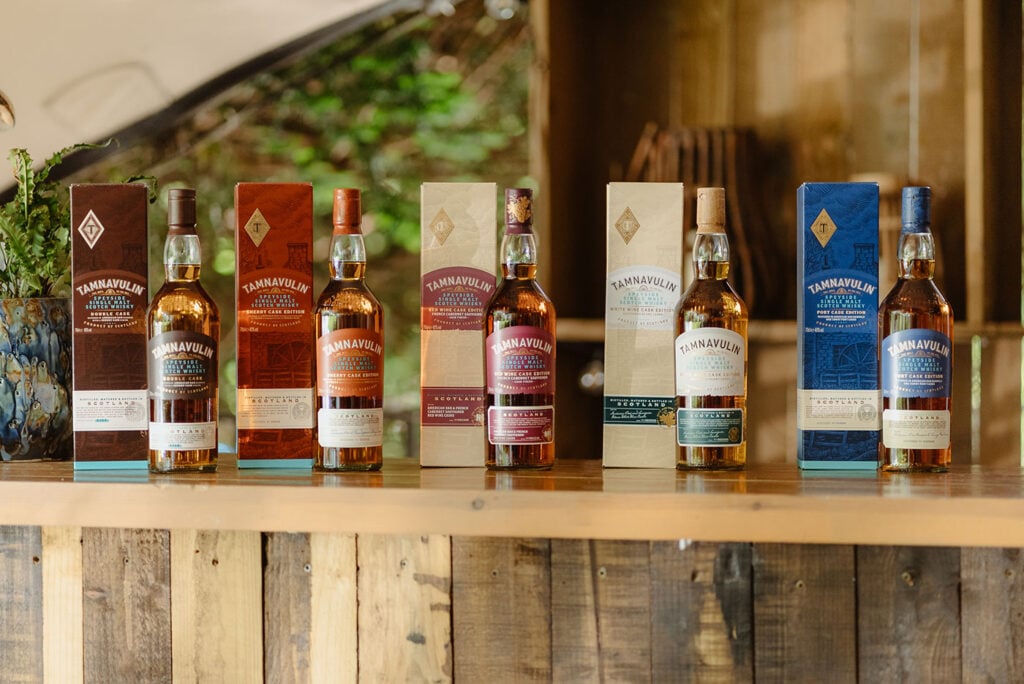
Tamnavulin Double Cask was the first release from the distillery since the 1990s and today remains its most likely introduction. It’s aged first in American oak barrels before undergoing a finish in sherry casks. Hence, double cask. Expect notes of brown sugar, stewed apples, and chocolate. Single malt sub £30 gets a round of applause from me.
Tamnavulin Sherry Cask Edition also begins life in American oak barrels, but then comes a finish in three different types of sherry casks to deliver even more of those Christmas cakey, chocolatey, red berry-y notes.
Tamnavulin Red Wine Cask Edition shows off the distillery’s skills at using wine cask finishes, with a stay in French Cabernet Sauvignon casks bringing warming dark fruit and sweet spice notes.
Tamnavulin is very much a Speyside distillery in nature
The beginnings of Tamnavulin
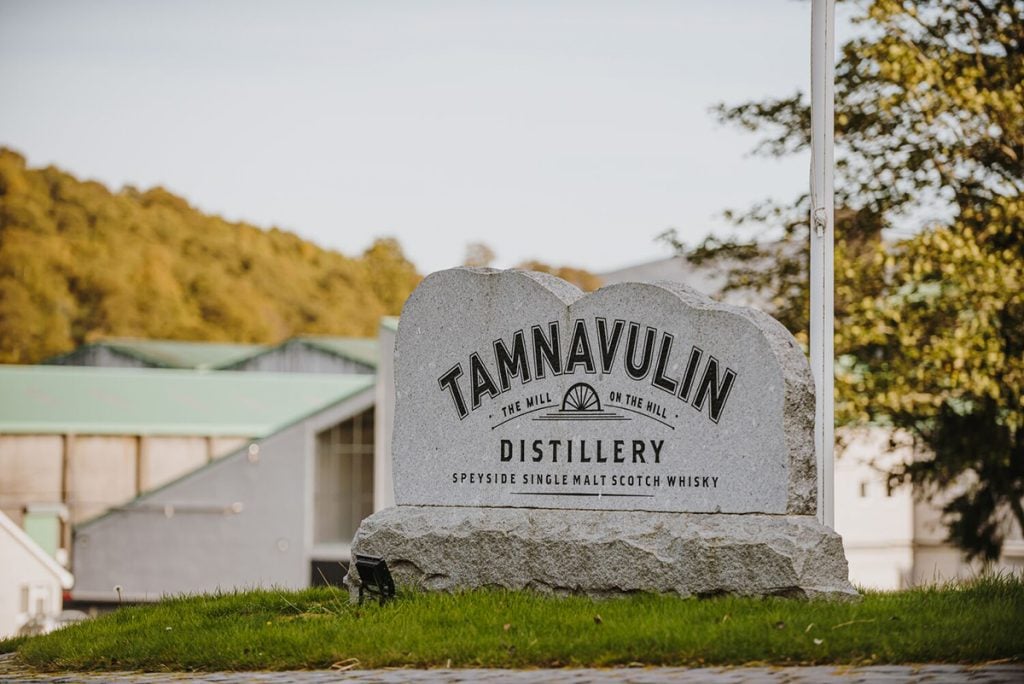
Tamnavulin stands in the tranquil village of Tomnavul, which means sometimes you see people spell it that way. The name means Mill on the Hill, a nod to the 16th-century woollen mill that once stood on the site. Today it makes a scenic picture, water wheel and all, but despite its traditional aesthetic, the distillery is young, opening in 1966 as part of the decade’s great whisky-building boom.
In the 19th century, Glenlivet was used as shorthand for an amount of whiskies from what we now call Speyside, with distilleries borrowing the name for themselves. Oddly enough, until 1965 there was only one distillery in the actual glen of the River Livet. Then Tamnavulin became the second. It’s also gone by Tamnavulin-Glenlivet in the past.
Built by Invergordon Distillers with six stills and, for a time, Saladin maltings, Tamnavulin was designed primarily to supply whisky for blends. It was mothballed in 1995, reopened in 2007, and can now produce around four million litres a year. Dave Broom in the third edition of the World Atlas of Whisky (2024), describes its new make as light, clean, and dry, and explains that since returning as a single malt in 2016, Tamnavulin has built its identity around smooth, fruity whisky, often shaped by wine cask finishes.
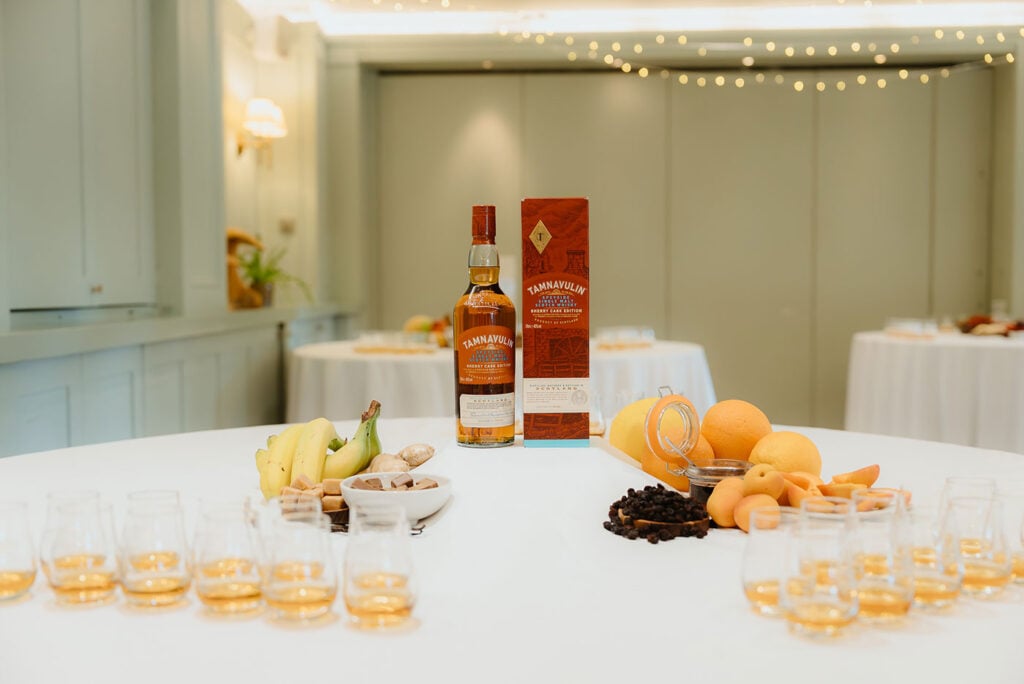
Some ideas of what to expect from the profile of the Sherry Cask edition
What makes Tamnavulin, Tamnavulin
The key people behind the distillery are the aforementioned Dr McCallum as well as distillery manager Trevor Milne and lead blender Kirsty Hodge. The latter describes the spirit as a signature Speyside whisky: “Sweet, smooth and fruity, with ripe orchard fruit at the heart of all our expressions”.
My own tasting notes of the new make are similar, noting apples, pears, and a creamy cereal backbone. As it develops (at the age of 13-16), you get these notes of strawberry laces and raspberry white chocolate, and at high strength, it becomes so creamy, with a vanilla shortbread quality.
Tamnavulin sits beside the River Livet, on the banks of the Allt a’ Choire, drawing its water from underground springs in the Easterton Hills. Snowmelt from the surrounding mountains filters slowly through ancient limestone before reaching the distillery, creating a supply of pure spring water.
Tamnavulin runs a full lauter mash tun with an 11-tonne charge, feeding nine stainless steel washbacks, each with a capacity of 48,500 litres. Fermentation lasts between 57 and 60 hours before the wash moves through three pairs of stills. The wash stills have horizontal lyne arms and subcoolers, while the spirit stills use descending lyne arms to create a fuller style of spirit. Foreshots run for around 25 minutes, with the heart collected from 75% down to 60% ABV, producing a new make with a slightly grassy character. At full tilt, the distillery can produce around 4.3 million litres of alcohol a year from 22 mashes each week.

The stunning Tamnavulin Distillery
Tamnavulin as a distillery
That spirit has not remained entirely unchanged. Tamnavulin brand manager Kirsty Hodge explains that heavy snowfall in 2009/10 caused the distillery roof to collapse. During the rebuild, the stills were made shorter, helping to create a more robust new make. The distillery’s earlier closure still shapes what can be bottled today.
“From 1995 to 2007 the distillery was silent, which has created gaps in our maturing stock inventory,” says Hodge. “It has been 10 years since we reintroduced Tamnavulin as a single malt and those challenges are easing, giving us some exciting options for new expressions in the future.”
Some of that whisky matures in Tamnavulin’s own warehouses, while the rest is stored at Whyte & Mackay’s facilities in Invergordon. “Although we don’t have the warehouse capacity to mature all our spirit at Tamnavulin, we do have some beautiful spirit at the distillery,” Hodge says. Those on-site stocks are particularly useful when selecting casks for limited releases, including special bottlings for the Spirit of Speyside Whisky Festival.
There are also plans to welcome drinkers back to Tamnavulin. A proposed brand home would make use of an 1830s building on the site that previously housed a visitor centre, alongside several new buildings. For a distillery that spent years quietly filling blends and rebuilding its stocks, opening the doors would mark another significant step into the spotlight.

There is a lot of demand for Tamnavulin whisky
Too popular to be taken seriously?
Tamnavulin’s success has been built in supermarket aisles, which means it is easy for some whisky fans to dismiss it. That would be a mistake, according to Hodge. “It’s a crowded market, and we work hard to deliver on flavour, quality, and consistency,” she explains. Her summary is even simpler: “Great whisky, great price.”
Accessibility can be a poisoned chalice in whisky. The more people enjoy something, the more determined certain enthusiasts become to explain why they should not. Hodge is unapologetic. “I am proud that Tamnavulin is an accessible whisky,” she says. The core range keeps the distillery’s fruit-forward style front and centre, while limited releases such as Tamnavulin Spirit of Speyside 13 Year Old and Tamnavulin 25 Year Old Moscatel Cask 60th Anniversary bottling show another side of the stock maturing behind the scenes.
The former was aged in American white oak and finished in first-fill bourbon casks before bottling at a cask strength of 57.8% ABV. It was limited to just 220 bottles available during the festival. The latter is whisky distilled in the year 2000, during a brief period when the stills were refired amid a 12-year closure that began in 1995. That makes the spirit from this era exceptionally scarce, so there are just 290 bottles. Presented at cask strength of 51.8% ABV, the whisky was matured for 20 years in American oak barrels before spending a further five years in a Moscatel cask. That’s not a finish; that’s a secondary maturation.
Both are very fine whiskies in their own right. I loved the SoS 2026 edition, which was such a pure expression of the gorgeous sparkling fruit notes the distillery is capable of creating, plus that creamy vanilla shortbread quality that is so moreish. These are bottlings that offer a glimpse of what Tamnavulin may become as the gaps left by its silent years continue to close. As for where Hodge wants the brand to be in another decade, the answer is wonderfully direct: “On every whisky drinker’s shelf.”
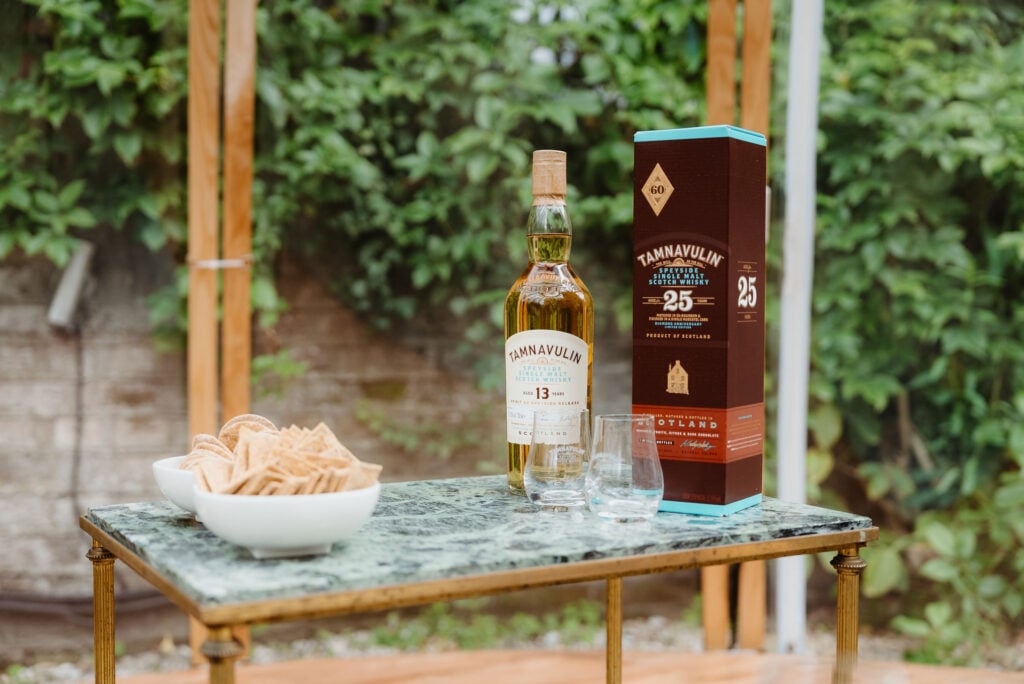
Whisky like this shows Tamnavulin has a complex side
The aperitif whisky
Tamnavulin’s supermarket status suggests colour adjustment, chill filtration, and a modest bottling strength. Not qualities the whisky enthusiasts tend to chase. But you can buy a bottle without first remortgaging the shed. That doesn’t make it inherently bad. Tamnavulin’s rise has come through ordinary drinkers buying something fruity, sweet, smooth, and affordable, rather than through auction prices or approval from the whisky nerd subculture.
Like Tormore, which we will also be exploring on the blog this week, Tamnavulin belongs to a gentler style of Speyside malt. It is not trying to flatten you with peat, oak, or enough sherry to preserve a Christmas cake until 2046. Independent bottlings show that the spirit can carry more weight and complexity when given the chance. But there is nothing wrong with making good whisky at a sensible price.
Michael Jackson understood the appeal, writing in his Malt Whisky Companion (1989): “Among the malts that are produced in the parish of Glenlivet, this is the lightest in body, although not in palate. In taste, it is a little more assertive than Tomintoul, with which it might be most closely compared. The distillery has a somewhat utilitarian look, but makes an elegant malt that is a delightful aperitif.”
The whisky writer has an unnerving ability to be ahead of the curve despite also having died nearly twenty years ago. Aperitif whisky is a useful way to understand modern Tamnavulin. Light, approachable, and easy to return to, but capable of greater depth when the stock and casks allow it.