Trade
Trade

Ardray was launched in June 2023 by Suntory Global Spirits with a brief: celebrate blended Scotch. And restore a litte credibility.
“For a while, blended Scotch simply wasn’t considered cool,” says Suntory portfolio brand ambassador Stephanie Peck. “People began to see it as an inferior category, which is a real shame because it can be delicious.”
As Peck says at the tasting she was hosting, blends put Scotch whisky on the global map. When people order Scotch, still, most of them are asking for blends. They remain ahead in the numbers game. But a hierarchy placing single malt at the top and blended whisky somewhere near the speed pour began to pick up real pace in the late 20th century. It has never shown a meaningful sign of slowing down.
It has led to single malt and blended Scotch being confused for quality grades. When they are simply different categories, capable of providing different drinking experiences. Both contain good and bad whisky. What’s in the glass will always be what counts.
Building the blend
I’ve got four glasses in front of me. Not at this moment, I’m casting my mind back to the aforementioned tasting, at Suntory’s swanky London office. One glass contains grain whisky, one American oak-matured malt, another sherry-seasoned malt and the last a blend of peated malts. Together, they form the foundations of Ardray blended malt.
That tasting, led by Peck, not only builds the flavour map in front of you, but provides a useful demonstration of what blending actually involves. This isn’t sweeping up whatever had been left behind after the single malts had taken their share. Every component had a particular job to perform. Texture, structure, and balance are all significant considerations alongside the obvious brief of: Do they all taste nice, and even better together?
Ardray whisky is approximately 65% malt and 35% grain, bottled at 48% ABV without chill filtration or added colouring. These decisions give it greater weight and viscosity, but also position it in terms more commonly used to reassure single malt drinkers.
That necessity says something about the category’s predicament. Blended Scotch has apparently reached the point where it must arrive carrying references before certain whisky drinkers will let it through the door.
Four building blocks
Each building block is itself a blend of multiple whiskies. Only after those four blends have been assembled and adjusted are they brought together to create Ardray.
The approach takes inspiration from blending practices employed during the early 20th century. It largely fell out of favour because it is labour-intensive, expensive and requires considerably more storage than simply assembling every component at once.
The four building blocks are held in inert vessels that are never completely emptied. A proportion remains behind to become part of the following batch. Ardray itself is treated similarly, with some whisky retained in the marrying vessel before the next batch is added.
It is a solera-inspired system rather than a strict solera, creating a thread of continuity between successive releases. Every new batch contains a small proportion of what came before it.
The blenders replenish and adjust each building block according to the character of the available whiskies. Changes can be made. The target is a consistent flavour profile, not blind obedience to a fixed set of percentages.
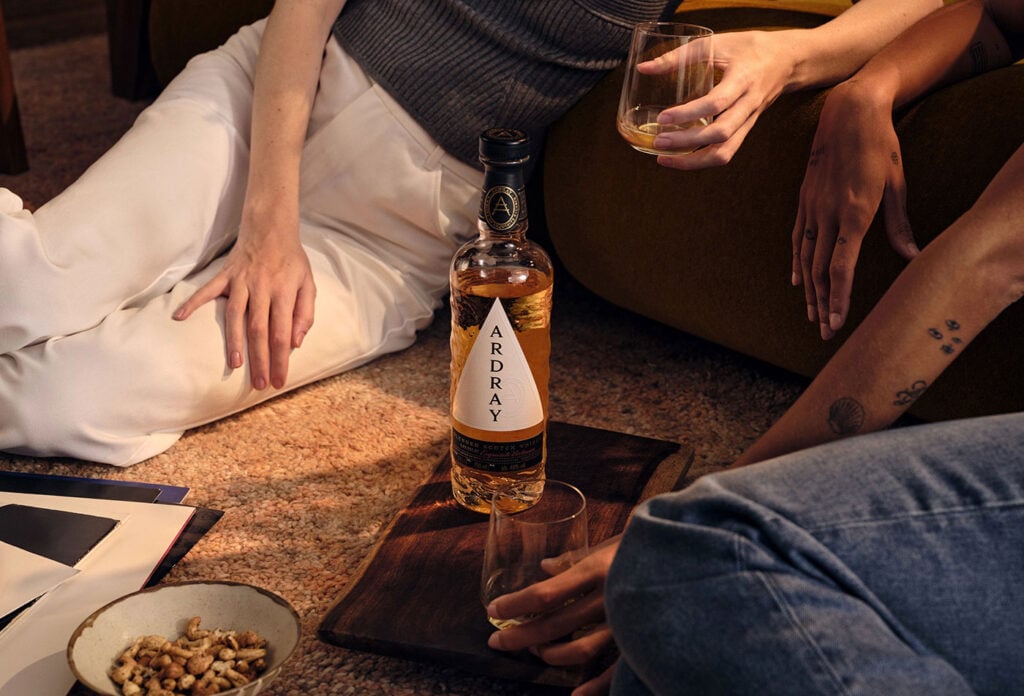
Have you tried Ardray?
Grain is not filler
The grain component is sampled at 60.5% ABV. Single grain whisky is another of Scotch’s most misunderstood categories. In blends it is frequently described as a neutral base. That underplays its contribution.
Ardray’s bourbon-matured grain component was lighter and brighter than the malts, bringing citrus notes and freshness, but its most important contribution was textural. That body becomes apparent in the finished blend. The grain does not disappear behind the malt but helps determine how Ardray moves across the palate.
This respect for grain whisky is also one of the clearest expressions of the Japanese influence, where every element is treated as part of the architecture, rather than as something to stretch the malt further.
The heart of Scotch
Next came the bourbon-matured malt component, sampled at 57.1% ABV.
Peck described this as the heart of Ardray and, more broadly, the heart of Scotch whisky. It delivered the familiar flavours associated with malt matured in American oak: vanilla, orchard fruit and honeyed sweetness.
Given that the wider Suntory Global Spirits portfolio includes Jim Beam and Maker’s Mark, the company is not exactly short of relationships with American whiskey producers or access to their empty casks.
Where the grain component supplied brightness and texture, this malt blend established the centre of gravity. It was the most immediately recognisable of the four samples, providing the flavours many drinkers expect Scotch whisky to contain.
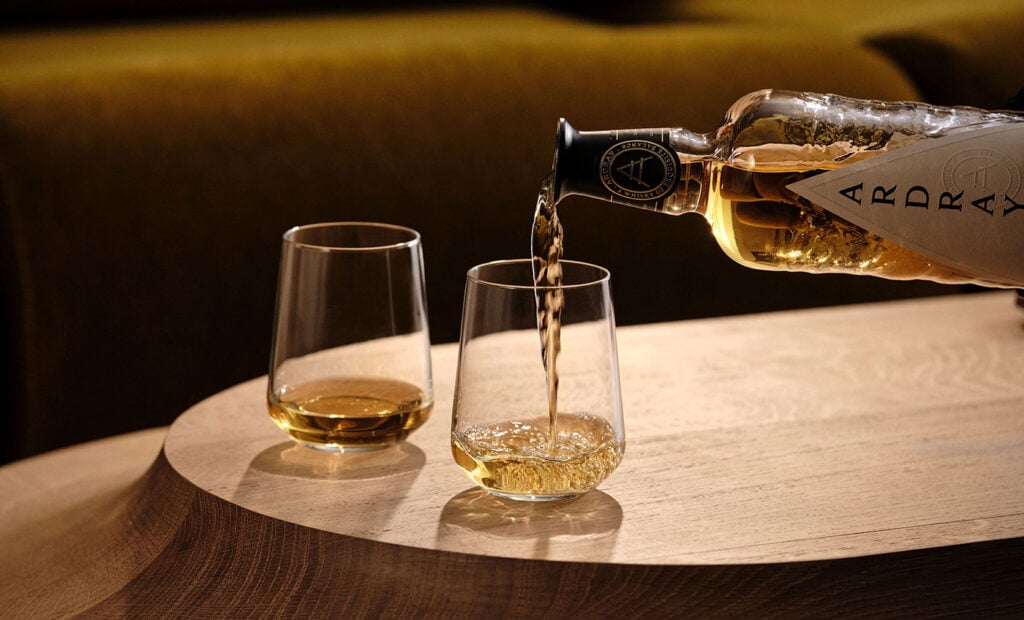
You can drink blends neat
Sherry with the volume turned up
The sherry-seasoned European oak component, bottled for the tasting at 62% ABV, was an altogether more forceful proposition.
It was dark, tannic and intense when tasted alone. Anyone expecting a rounded miniature sherry bomb might have received a small shock. But a blending component does not need to behave like a complete whisky. Its purpose is to provide a perceptible, complementary character after being combined with everything else.
Its colour offered some indication of how little might be required in the final recipe. The component’s concentration allows dried fruit, spice and tannin to pull through the grain, American oak and peat without dominating the finished blend.
Smoke and sherry are among the styles towards which modern Scotch enthusiasts most readily gravitate. Ardray contains both, but deploys them as parts of a wider composition rather than the focal point.
More than one kind of smoke
The final building block, sampled at 56.3% ABV, is itself a blend of peated malts.
Ardray does not rely on one smoky whisky to provide a recognisable puff of peat. The blending team combines peated malts with different regional and production characteristics, giving it access to several expressions of smoke. Remember, this is a company with ties to Bowmore, Laphroaig, Ardmore, perhaps even Highland Park from the former Edrington connection.
“You could easily drink this on its own,” Peck said of the sample. She was right. Within Ardray, it provides smoke, certainly, but also seasoning, structure and length.
The component demonstrated the possibilities available to a blender working across multiple distilleries. A single malt expresses the character of one distillery. A blend can draw upon different regions, still types, fermentation regimes, casks and styles of peat. Neither approach is inherently more sophisticated.
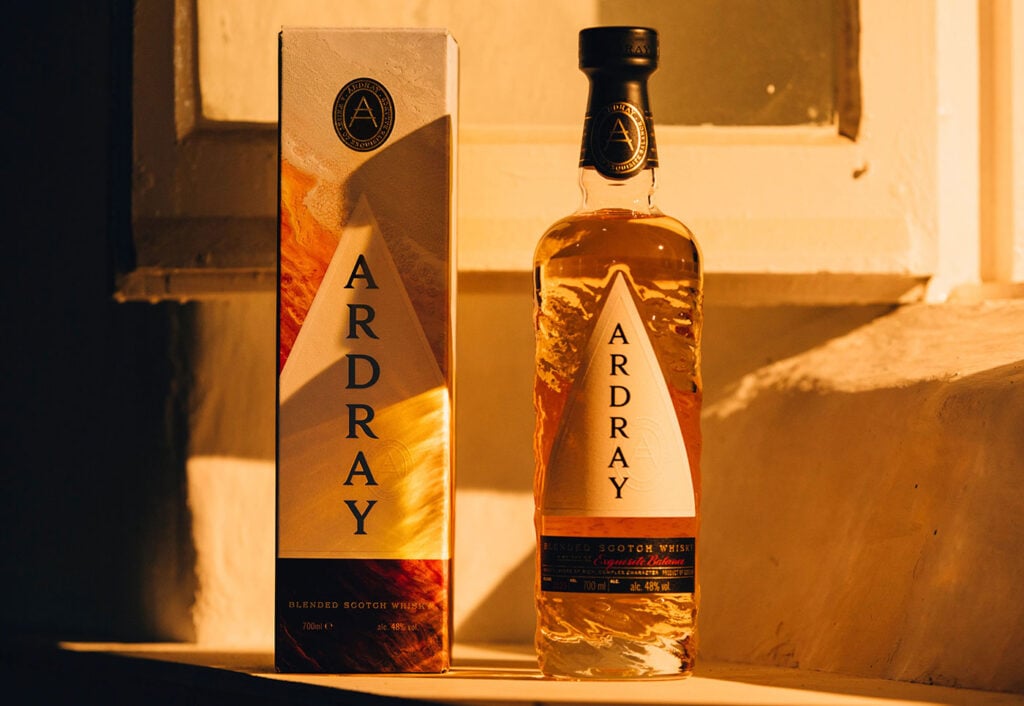
You can purchase Ardray here
Why Ardray has no age statement
Ardray is deliberately released without an age statement. According to Peck, its component whiskies span three different decades, with the blend having an average age of approximately 15 to 16 years.
Under Scotch whisky regulations, however, an age statement must declare the age of the youngest whisky in the bottle. That number would say little about how Ardray was constructed or why each component was selected, so it’s not on the label.
Some of the younger whiskies provide the brightness, freshness and aromatic lift the blenders require. Older does not automatically mean better suited to the recipe. Once again, however, Ardray must push against a hierarchy the industry helped create: older over younger, malt over grain and single over blended.
Dismantling terminology
The problem is not simply that consumers misunderstand blends. Scotch whisky’s terminology and marketing have spent decades encouraging them to do so.
Peck still encounters drinkers who equate “single” with both a single location and superior quality. Yet a single malt is also assembled from component casks, often spanning different ages, warehouses and cask types. It is blended too, just within the legal boundaries of one distillery.
Transparency around Ardray’s four building blocks helps make that process visible. It allows drinkers to taste how different whiskies contribute to a whole, rather than asking them to accept “the art of the blender” as another vague piece of marketing copy.
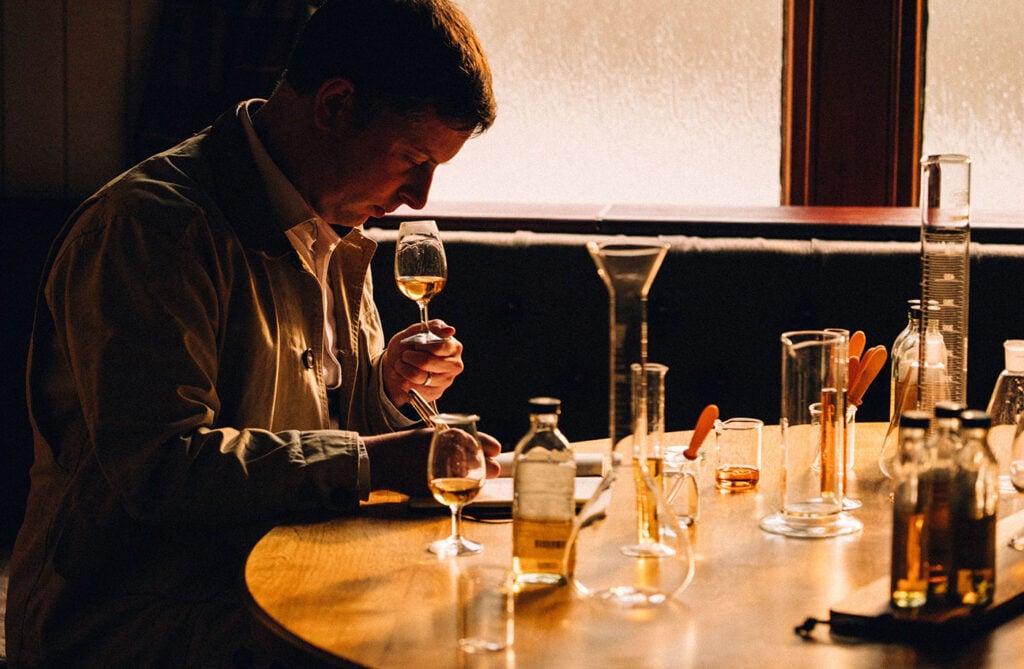
Callum Fraser working on Ardray
Scotland meets Japan
It’s worth clearing something of a misconception up at this stage: Ardray does not contain Japanese whisky.
It is entirely blended Scotch, made with whiskies distilled and matured in Scotland. When the brand says that Ardray is a collaboration between Suntory’s blending teams in Scotland and Japan, it is not implying that any Japanese spirit has entered the equation.
Instead, expertise and perspective were traded over three years between Suntory chief blender Shinji Fukuyo and Scotch whisky chief blender Calum Fraser. Much of that development happened during the Covid years, meaning samples had to be sent between Scotland and Japan while the teams worked remotely.
It was a genuinely international collaboration, although perhaps not in the way some drinkers initially assumed.
“What Ardray brings together is the best of both traditions,” Peck explains. “It has the soul, character and regional diversity of Scotch whisky, combined with the meticulous attention to detail of Japanese blending.”
Taking Ardray Off the Rocks
After our tasting, we move on to cocktails. Ardray also works in Highballs and shorter whisky cocktails such as the Old Fashioned. That versatility matters if blended Scotch is going to reach drinkers. The industry needs accessible entry points. Few people begin their whisky journey by spending £300.
The brand’s signature is its Off the Rocks serve, which involves slowly pouring the whisky over a suspended ball of ice and into the glass beneath it. The ice is suspended in a bespoke piece of equipment that Ardray designed. Head to the Master of Malt product page and you’ll see it. You’ll also receive a set with all the trimmings to conduct this serve with should you buy from us. Which makes the price a bit of a bargain.
The speed of the pour determines the amount of chilling and dilution. A quick pour maintains more of the whisky’s original intensity, while a slower one creates greater contact with the ice. Peck aimed for a middle-of-the-road pour lasting around six or seven seconds. The resulting whisky was noticeably colder, with a changed texture and flavour profile.
The contraption is deliberately theatrical, but the underlying point is useful. Adding water or ice to whisky is a matter of preference, not morality. Dilution will reveal certain flavours while muting others. Chilling changes aroma, texture and the perception of alcohol. The serve encourages drinkers to test those effects for themselves.

Try it for the whisky it is, not the category it belongs to
Can blends be cool again?
Nevertheless, priced over £50, Ardray occupies a difficult position. It is a ‘premium’ expression from a new brand, operating within a category some whisky enthusiasts have already decided they do not drink.
Peck encountered that resistance repeatedly at whisky shows. Drinkers would enjoy Ardray, only to become considerably less enthusiastic once told it was a blend. Transparency over its construction, willingness to experiment with serves, and the fact that it tastes really quite lovely will go some way to easing concerns.
It can’t make every blend cool. Some of them are still dull. The same is true of single malt. But if a whisky only becomes worse once you learn it’s a blend, the problem isn’t in the glass.