
Whisky has always had a foot in two worlds. It has warmed cold bones, steadied hands, and followed working people through rain and labour. The Geamair, or gamekeeper, lives in that same space. Practical, watchful, tied to the land.
At the same time, it has been hoisted onto plinths, stripped of its mud and muscle, and recast as a badge of taste, wealth, and discernment for the well-heeled.
As Scotch has edged further into the luxury space, it has inevitably drifted towards fine dining, tasting menus and pairings. The trappings of haute cuisine, all reinforcing the idea that this liquid deserves reverence.
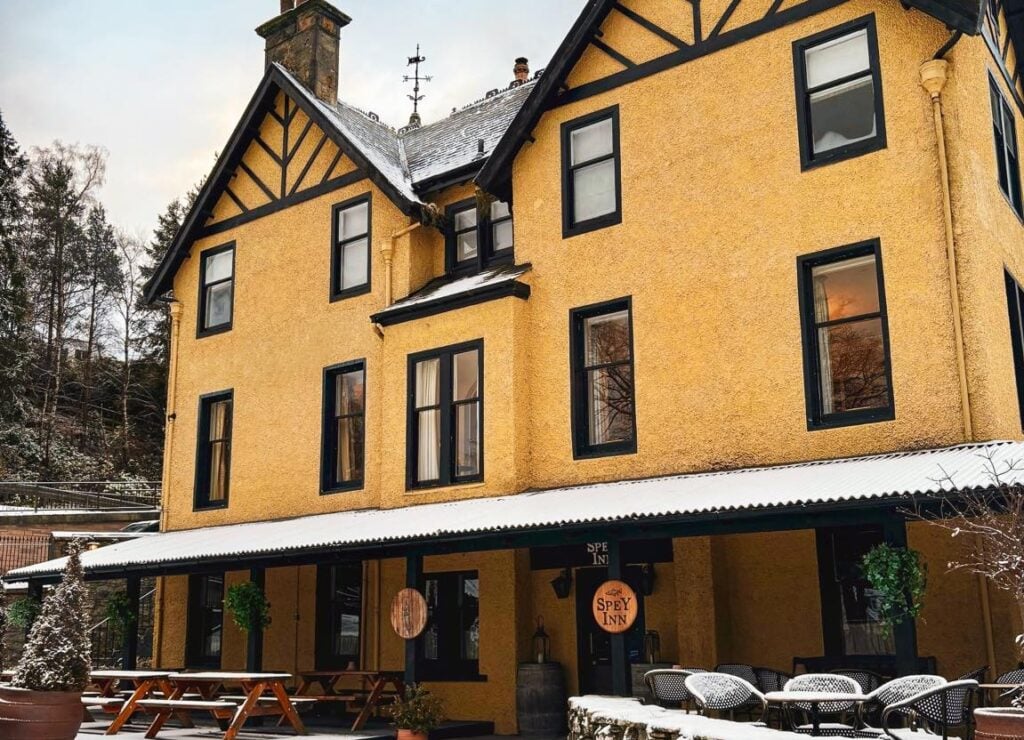
The Craigellachie Hotel has a new fine dining restaurant: Geamair
Whisky and fine dining: a match made in heaven?
Fine dining thrives on interaction, balance, and conversation between flavours. In theory, whisky should feel right at home. After all, it’s a platform for deeper storytelling, an opportunity to make a sense of place made edible, and a chance to experience the drink as something lived rather than merely collected.
But the pitfalls are obvious. Alcohol and heat can overwhelm delicacy. Pairings can be built with symbolism as the priority, not pleasure. And in Scotland or Ireland, the temptation for distilleries and local eateries is to use whisky for its own sake.
Wine has always been the natural dance partner at the table, and no other drink has truly unseated it.
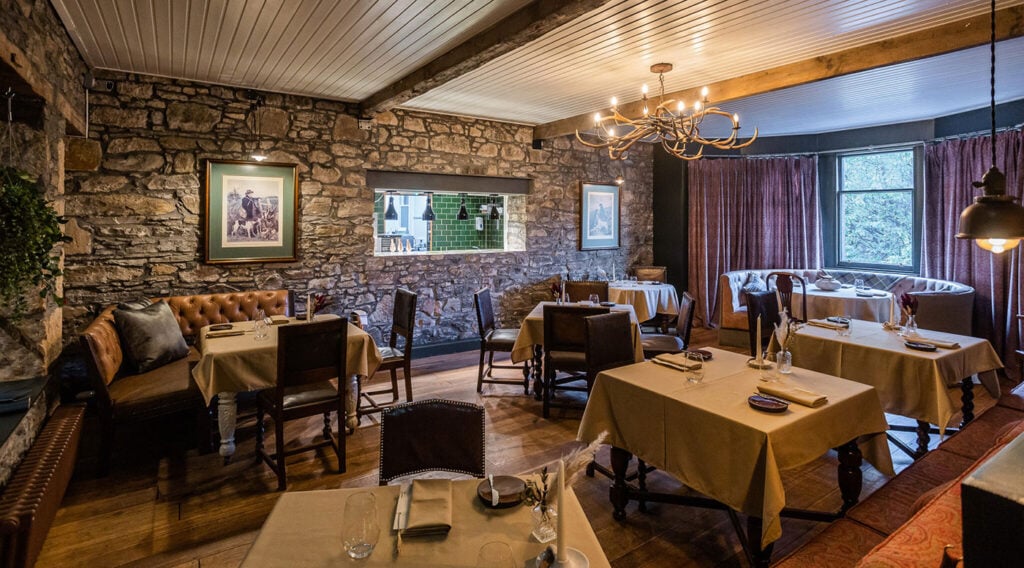
Welcome to Geamair
A Night at Geamair, Craigellachie
This is the tension I came to Speyside to sit with. Until recently, I remained unconvinced that whisky belonged at the table. The quality and imagination of some recent pairings have begun to chip away at that certainty. Enough, at least, to make me curious.
Geamair (pronounced Ge-med) is the intimate seven-table restaurant at the Craigellachie Hotel in Speyside. Here, chef patron Pawel Sowa works without corporate handrails. He arrives fresh from several years as head chef aboard The Macallan’s Speyship Enterprise and carries the nickname “The Single Malt Chef.”
In November, while touring local distilleries, I had a chance to try the seven-course tasting menu (£90) with the whisky pairing (£60). If whisky fine dining can work anywhere, it should work here, right?
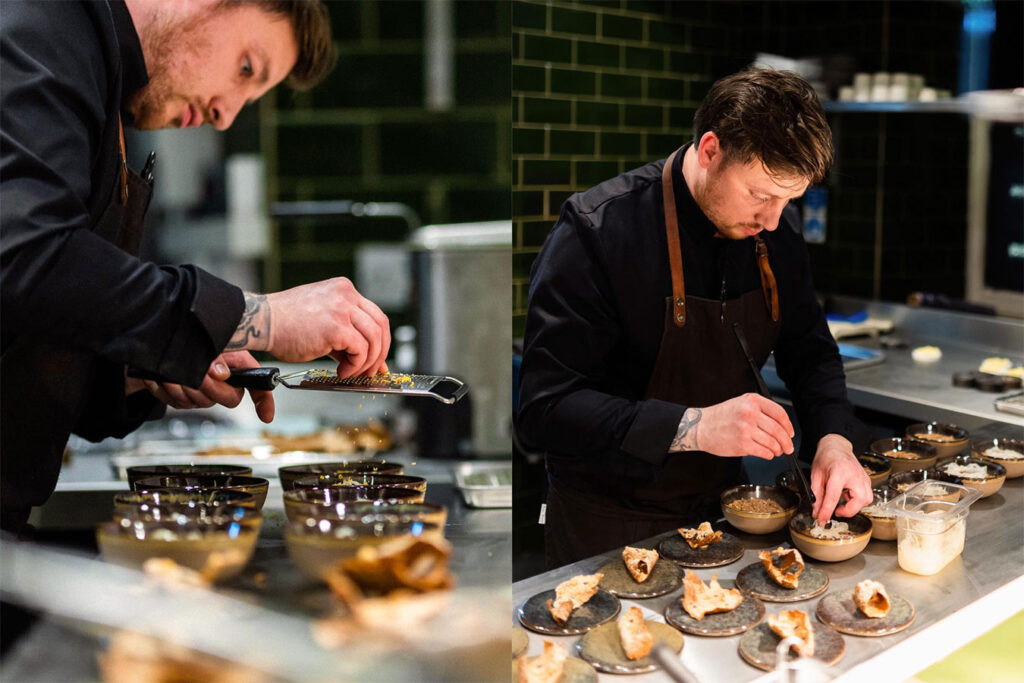
Meet chef patron Pawel Sowa
Geamair: Whisky at the Table
It is November. Outside, Scotland is doing what it does best in November. It’s raining, it’s dark, it’s cold. Inside, pacey traditional fiddle music threads through a warm, softly lit room. Each detail feels carefully chosen, creating a sense of locality without lapsing too far into tourist-bait tartan nostalgia.
One member of the front of house team is a Geamair, taking guests fishing on the Spey and, on this occasion, having shot the venison that will later arrive on my plate. The kitchen is open and constantly moving. Care radiates from the room. Alone, this doesn’t make a restaurant, but it is an excellent foundation.
The promise here is that ambition and authenticity are not opposites.
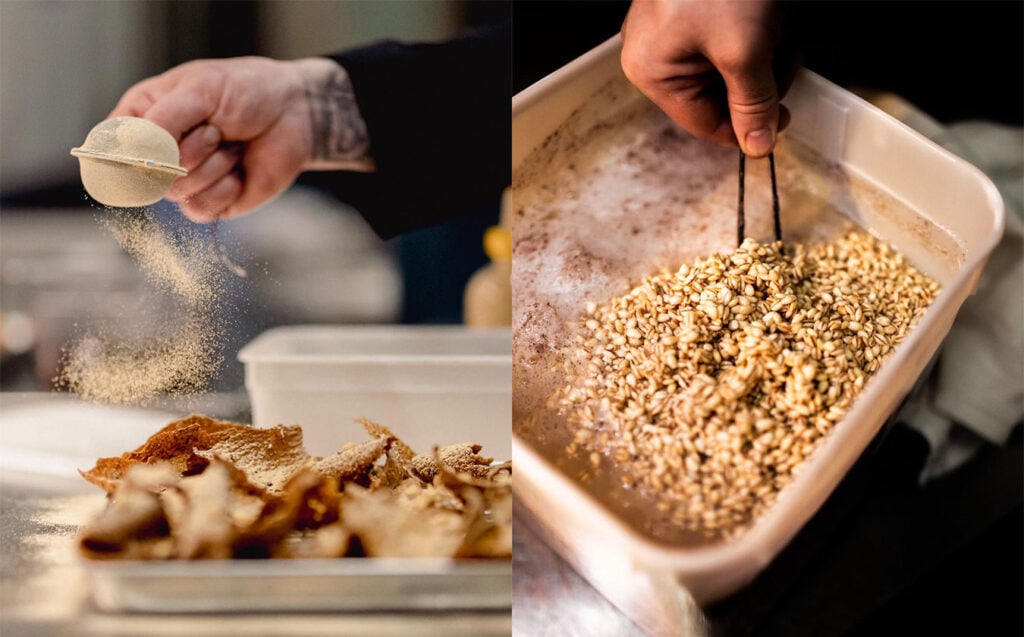
The process of creating a dish worthy of whisky
What the Geamair experience reveals
The seven courses open with Scoffs, Highland comfort in miniature, then Fermented Barley, which leans into grain, smoke, and labour, echoing whisky’s raw materials. River Spey is the most abstract moment, where fish, sorrel, and Mortlach 12 mirror the river’s own unpredictability.
Venison, alongside Speyburn 18, is the meal’s emotional centre, rooted in land, hunt, and ritual. Polly’s Tipple freezes Tormore new make into a revelatory pause, and the final vernal grass mousse with Balvenie Caribbean Cask ends not on spectacle but on warmth, grain, and quiet satisfaction.
At Geamair, we are in whisky country not just geographically, but thematically. The kitchen treats fermentation and maturation as creative lenses rather than flavour gimmicks, and when food is built with whisky in mind, not simply paired with it, the relationship makes sense. Still, Geamair faces the same questions as any serious, self-aware project. Who is it for? How does it last? Is the scope bigger than the room?
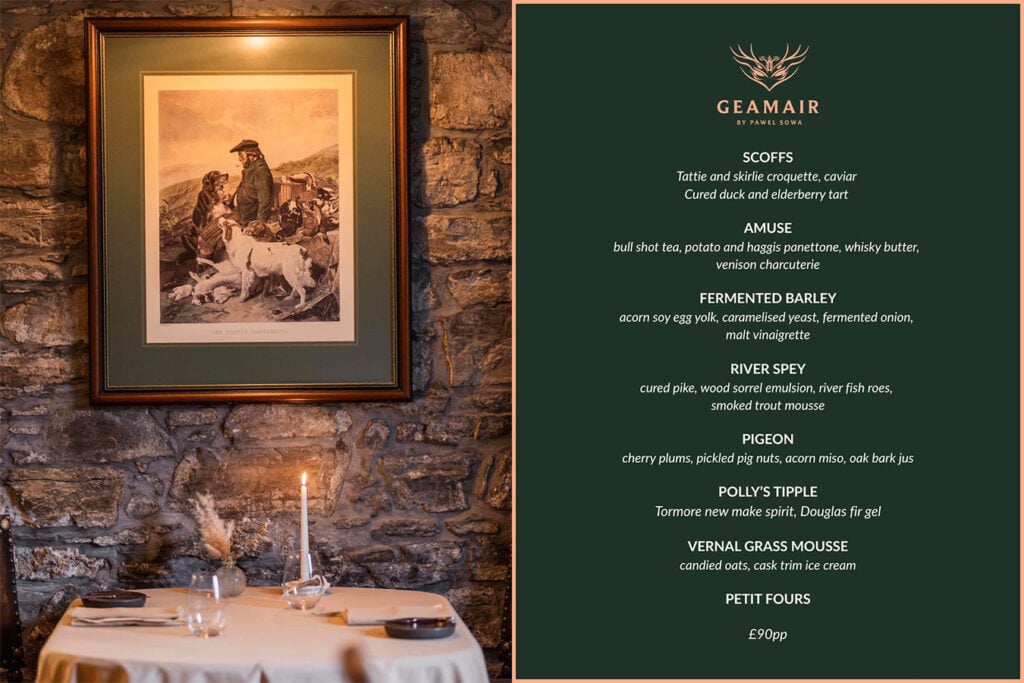
The gamekeeper (Geamair) and the menu
Whisky fine dining at Geamair
Chef Sowa tells me Speyside is more than whisky. And that whisky is great here for a reason. His understanding of the area and ability to utilise it fully away from brand constraints radiate through each course. He cooks locally because Speyside has, and is, enough. That’s what takes us something more interesting than luxury theatre.
Whisky’s relationship with luxury is complicated, partly because it’s so often defined by price, mahogany cases, and patronising “they’ll buy this in Asia” fare. It’s often posed as something that exists beyond where the spirit is made, to where it is sold. But here, there is no escaping Speyside’s influence. Geamair asks us if Highlanders are allowed refinement without irony. Whether whisky, rain made angry and given a home, can sit at the table without apology.
It may never be the all-purpose dining partner that wine is. Perhaps it’s too wild, too individual. But when it does work, when plate and glass are telling the same story, it is electric.
Below is a more detailed review of each dish, if you’re interested. And note that the meal was compensated in exchange for this coverage. Take from that what you will.
Geamair’s seven-course tasting menu with whisky pairing
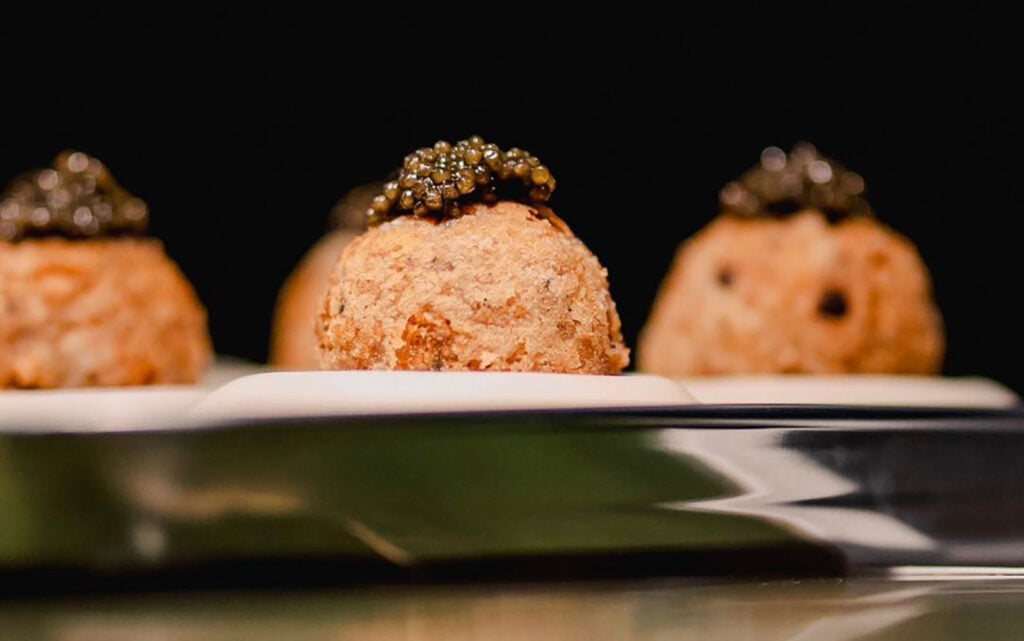
Scoffs
Whisky pairing: None.
Dish: Two small bites: Tattie and skirlie croquette, and a caviar venison & elderberry tart.
We start with the Highlands translated into canapé form. Tasty stuff. I like the name “Scoffs,” it’s a disarming, distinctly Scottish bit of humour. That bodes well, and suggests this experience will feel high-end but still human.
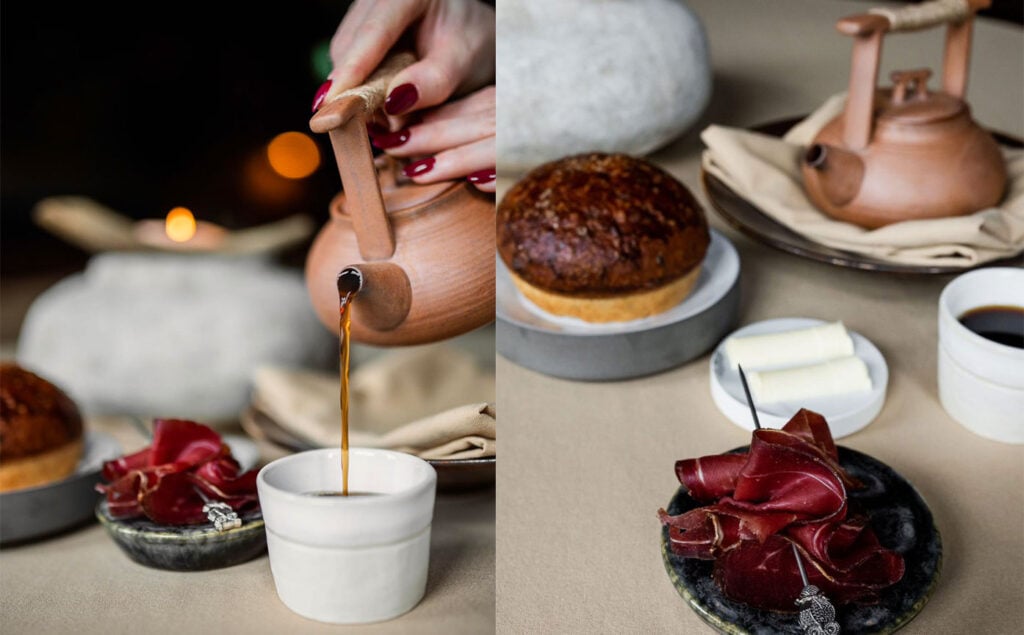
Amuse
Whisky pairing: Craigellachie 13 Year Old.
The dish: A quartet of bites: Bullshot tea, potato and haggis panettone, whisky butter, venison charcuterie.
The opening course arrives as a small collection of pieces that invite you to decide how they meet. Butter your bread, lay on the charcuterie, and dip/chase with the tea was my approach. That made it almost like a beef dipped in gravy sandwich from a roadside American diner. Retold in a Highland accent. I liked the freedom to assemble, a bit of agency in a setting that’s usually rigidly choreographed.
Craigellachie 13 is a gutsy first partner. Meaty, sulphury, slightly feral around the edges, it works because the amuse has backbone. This is not about taming the whisky or dressing it up as something delicate. The course suggests this meal will be about equals at the table.
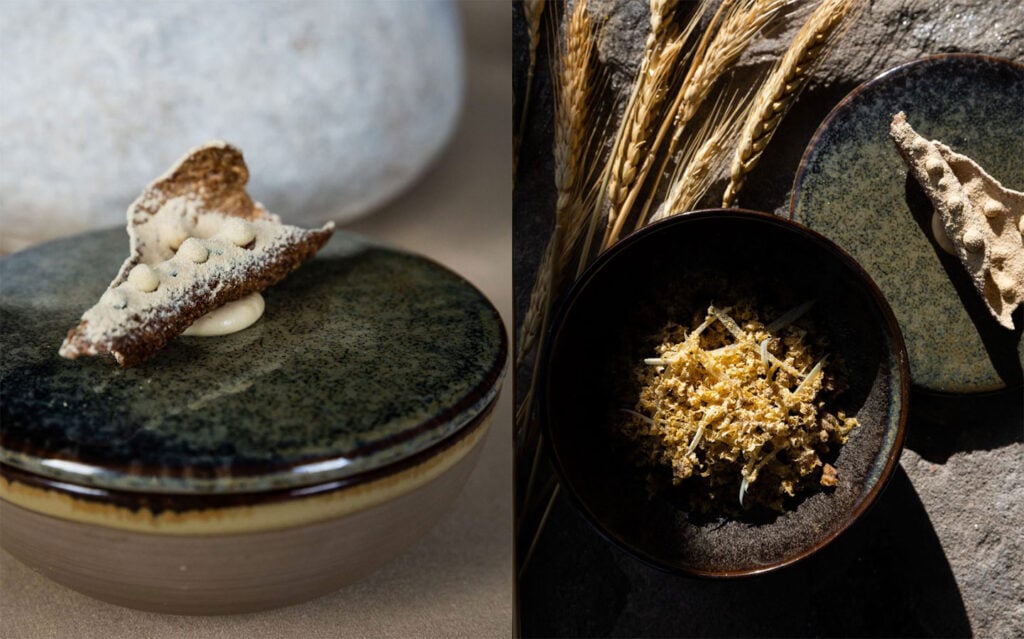
Fermented Barley
Whisky pairing: Benromach Contrasts Air Dried Oak.
The dish: Acorn soy egg yolk, caramelised yeast, fermented onion, malt vinegarrette.
Probably my favourite meal of the evening, essentially barley cooked to a risotto-like texture with egg yolk and smoke. It feels like sustenance for someone sheltering from rain in the Highlands, elevated only by technique and quality. The barley carries chew and presence. The yolk folds through the grains, while pickled onion and malt vinegar lift the weight.
The Benromach has a dry smoke and nutty edge that leans into that tang, adding a flash of campfire and grain sweetness.
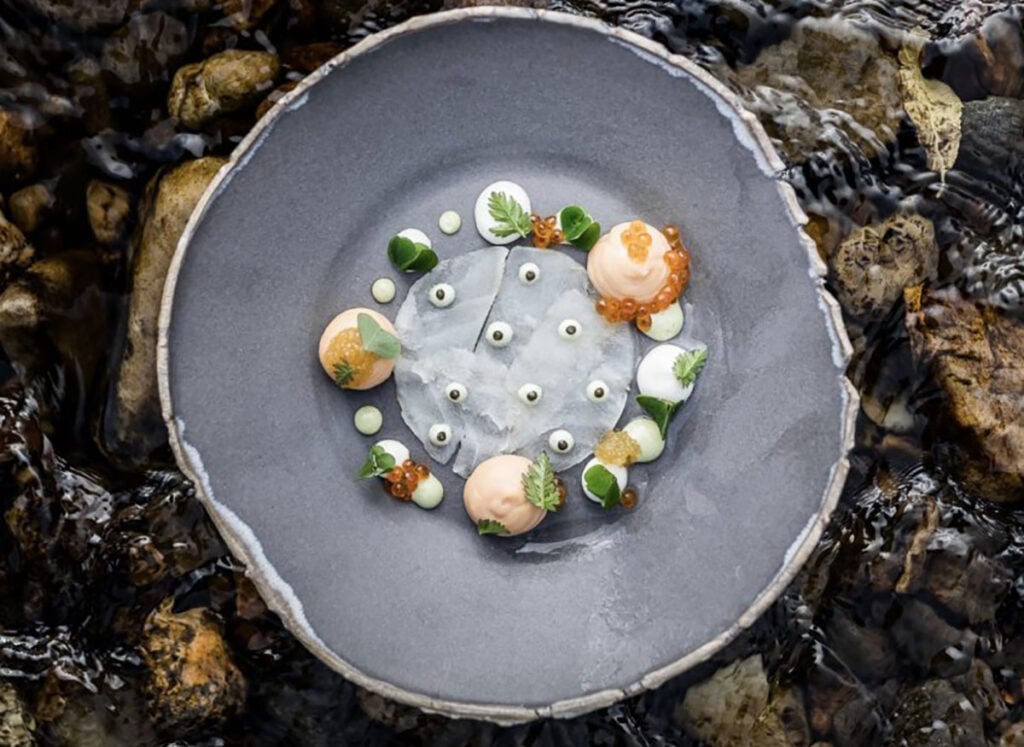
River Spey
Whisky pairing: Mortlach 12 Year Old.
The Dish: Cured pike, wood sorrel emulsion, river fish roes, smoked trout mousse.
The next course might be the most ambitious plate of the night, and the most conflicted. Individually, the pike is a little muted, the smoked trout overwhelming, and the roes lean decorative. The sorrel emulsion is enormous, bracing, almost confrontational.
Combine everything, and the dish snaps into focus. Freshwater and green notes collide with smoke. It tastes like a deconstructed Hakushu, filtered through Speyside. Beautiful.
The Mortlach 12 pairing on paper seems misplaced, the Beast among the delicacies and fish. But this dish has much more bite than bark, and so the whisky isn’t lost.

Venison
Whisky pairing: Speyburn 18 Year Old.
The Dish: Venison, cherry plums, engine room stuffing, acron miso, oak bark gel, and game jus.
Venison arrives as inevitability. The engine room stuffing nods to hunting terminology and lived knowledge of land. The jus is poured from a copper dog, another nod to the world outside the window. A distillery-country ritual that will delight tourists. The venison is a touch overdone, the stuffing is incredible, and the oak bark gel adds a cool woodland note, like the smell of wet timber after rain.
Speyburn 18 is a perfect partner. Generous, oily, faintly honeyed, this is the course where whisky has its most natural peer.
Polly’s Tipple
Whisky reference: Tormore new make spirit
The Dish: Frozen new make palate cleanser with Douglas fir gel.
The next course is a frozen new make from Tomore distillery and Douglas fir gel. Polly Logan is the distillery manager, hence the name. The Douglas fir has a resinous, tannic bitterness and a grassy tang that’s refreshing but also sharp.
Initially, I found it easier to admire intellectually than to enjoy physically. Then, with time, the freezing new make does something alchemical: it slows the volatility, lets the esters and cereal sweetness step forward. You end up tasting what distillers smell during a spirit cut. It’s so strong, not so much cleansing the palate as clearing the page.
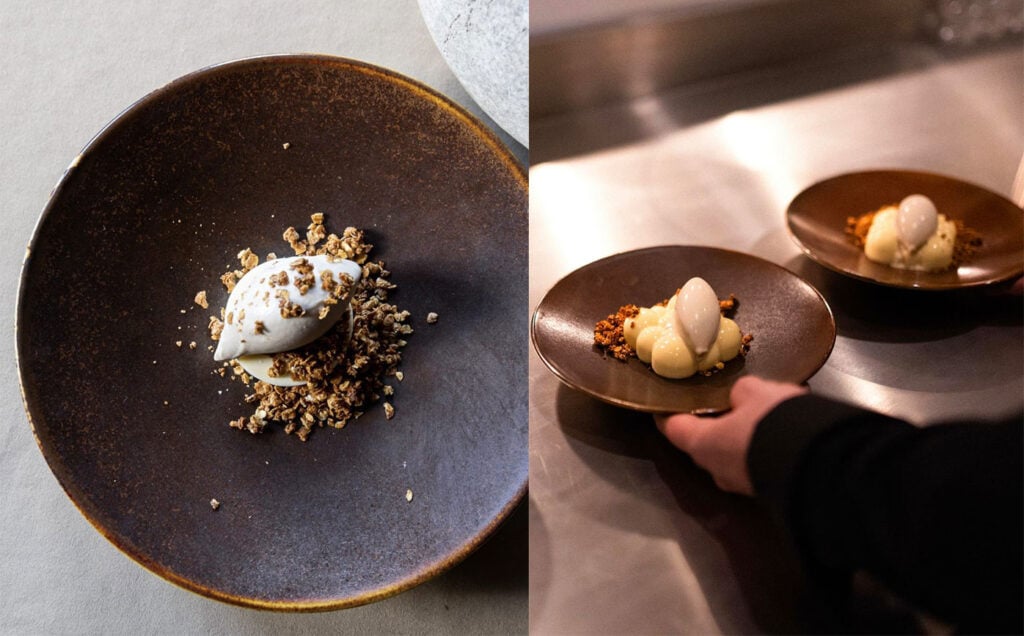
Vernal Grass Mousse
Whisky pairing: Balvenie Caribbean Cask
The Dish: Candied oats, cask trim ice cream. A vanilla grass mousse with cask-strimming ice cream and oats.
The final course takes us to the warehouse. Venal grass is usually trampled in these parts. Here, it brings a pure vanilla flavour to the mousse. The cask trimming ice cream is light and keeps the mousse honest, the candied oats adding bite. It’s just lovely.
The whisky is Balvenie Caribbean Cask. It’s not daring, but it works. Rum warmth, soft toffee, and a relaxed sweetness that allows the dish to breathe. It pairs. It really pairs.
A pine macaroon follows. Forest air in a single bite.
