Trade
Trade

As the world celebrates all things Emerald Isle, at MoM Towers we want to present the case for its oldest spirit: Poitín.
St. Patrick’s Day, observed annually on 17 March, can be a divisive occasion. For some it is all fun and festivities. A chance to celebrate Ireland and its people’s contribution to the world. For others, it is an infuriating time of year. A day of international patronisation, stereotyping and cultural appropriation. One that leads to a night out only possibly outdone by New Year’s Eve on the ‘God, why did I bother?’ scale.
I’m all for having a good time and need little excuse to do so. But St. Patrick’s Day at its best is about connection. Many Irish families left their homeland because they had to. Those who settled elsewhere carried a longing for home with them. Diaspora traditions, however imperfect, are often the echo of that longing.
So let’s cherish what really matters this year, and leave the leprechaun outfits at home. If the day is going to celebrate Irish culture properly, then it should celebrate the real thing. Whiskey, of course. But also a spirit older, rougher and far more rebellious.
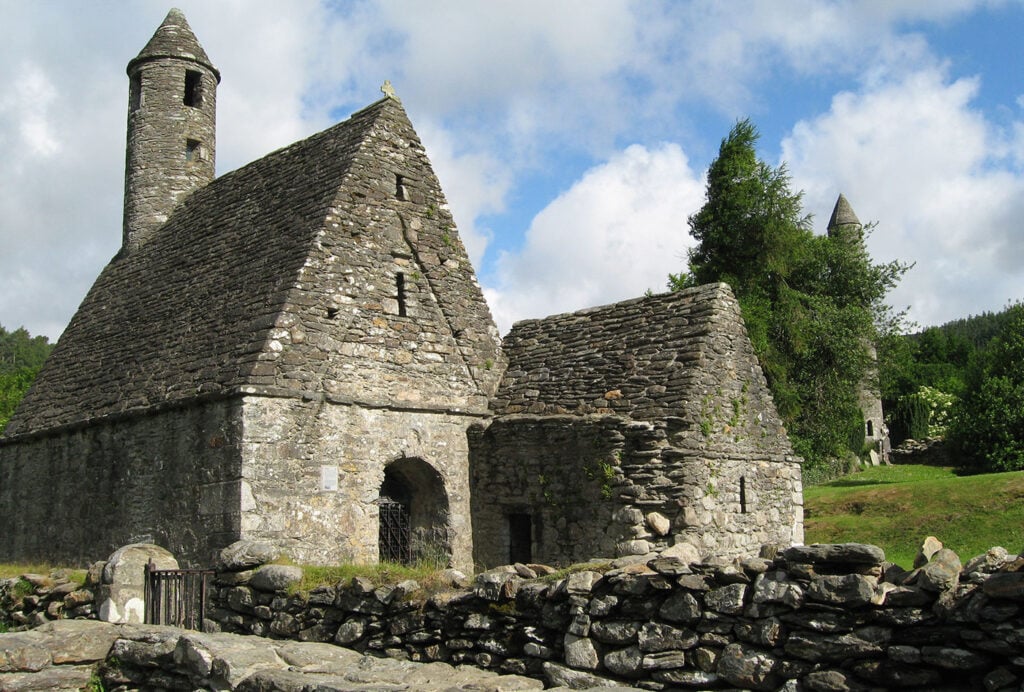
Poitín would have been made in locations such as Glendalough
Humble beginnings
Poitín is Ireland’s ancient spirit, and it takes its name from the Irish word pota, meaning “pot”, a reference to the small copper stills traditionally used to distil it. Incidentally the Irish word póit, meaning hangover, may come from the same root. A linguistic warning passed down through the centuries.
The birthplace of poitín distillation in Ireland is an issue of much dispute. What is not debated is that distillation arrived in Ireland surprisingly early. Scholars generally agree the technique reached the island sometime between the 6th and 9th centuries, introduced by monks who had encountered distillation in Mediterranean monastic centres. At first it was used primarily for medicine, perfume and alchemical experiments. Early distillates were often referred to as uisce beatha, the water of life.
Monastic settlements such as Glendalough, founded around 584 AD by St Kevin, became centres of learning and experimentation. While the story that St Patrick himself knocked up the first batch of poitín after running out of sacramental wine is about as historically reliable as a pub story told after eight pints, there is little doubt that monks were among Ireland’s earliest distillers.
A rural tradition
Irish monks were the master distillers of their time and royalty from across Europe came to recognise this fact. They would often write to them asking for the latest batch. For a time, poitín carried little controversy, and enjoyed a healthy reputation.
Over time the practice moved beyond monastery walls. Farmers and rural communities began producing their own spirits using whatever ingredients were available. Barley was common, but oats, potatoes and occasionally even sugar beet appeared depending on the region and harvest.
Unlike whiskey, which would later become a commercial industry centred in cities like Dublin, poitín remained something else entirely. It was rural. A spirit made on farms and in cottages, shared among neighbours rather than shipped across oceans.
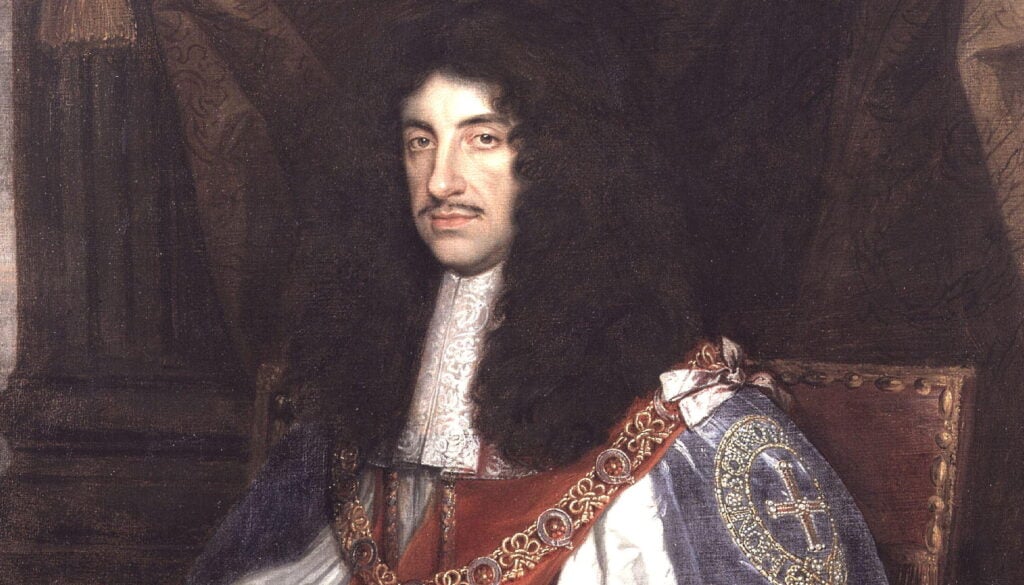
For King Charles II, it was a case of ‘down with this sort of thing’
The church and state take a stand (what could go wrong?)
For centuries poitín existed quietly alongside other forms of distillation. But, despite its association with monks, the Church’s official line on the spirit soon became strict and dismissive. A view shared by the British government. Surprise, surprise.
There were several failed, localised attempts to curtail its influence and creation. Then the first major legislative move to crackdown on poitín production came in 1661 when King Charles II introduced the first excise tax on alcohol and outlawed private distillation. Centuries-long traditions suddenly become a crime, rendering large populations in Ireland criminals. Nice one, lads.
Things worsened with the advent of The Pot Still Act of 1771. Supposedly introduced to prevent the wastage of corn, it seemed apparent at the time that it was a further measure to undermine personal distillation. Many “legitimate” distillers were forced to close down too. A law passed in 1823 that cut the duty on Scotch whisky didn’t help. An 1832 report on illicit distillation stated: “Poitín must have been plentyful in past days but Alas! those days are gone, nowadays poitín is almost extinct.”

The popularity of porter put paid to poitín
Going underground
Yet, it was only in the early 1820s that a legal distiller from Dublin claimed that “poitín accounts for a half, if not two-thirds of all spirit sales in Ireland.” So what’s the truth?
Production did not stop. It simply moved out of sight. Illicit stills began appearing in the sort of places excise officers hated travelling to: the mountains of Donegal, the boglands of Connemara, the valleys of Kerry, the Wicklow uplands. Stills were deliberately small so they could be dismantled quickly. Lookouts watched roads and coastal approaches. When authorities appeared, the equipment vanished into the landscape. Some were even ferried from tiny island to tiny island during the night.
Ireland’s agricultural economy was tied to poitín in this era. Surplus grain or potatoes are not easily be sold or transported. It’s the same as what happened with corn in the early days of bourbon production in Kentucky (where Celtic immigrants played a big hand). Distillation is a way to transform surplus into a portable, high-value product. A few sacks of grain could become a jar of spirit worth significantly more than the raw crop.
Only the good die young after centuries of rich history and tradition
Poitín was a kind of informal currency. Farmers paid labourers with it. Fishermen traded catch for it. It appeared at weddings, wakes, harvest celebrations and winter gatherings. All while being illegal. The law’s attempt to destroy poitín only gave it a mythology.
Not a very positive one, admittedly. Much like moonshine, there’s a bootleg bandit identity that both plagues poitín. It will make you blind, they say. It’ll ruin your life. The truth, as ever, was more complex. There were plenty of local distillers making fine spirit, sharing in a craft passed down by generations. Poorly made spirits are indeed dangerous. However, historians note that many of the horror stories surrounding poitín were actively promoted by authorities and licensed distillers trying to discourage illicit competition.
Historic poitín could reach 70% to 90% ABV, sure, and it was rarely aged. But it was often diluted. Some common sense applies here. Most people are not putting away 90% ABV spirit a few times a week. They’re adding water. Even the auld boys.
Back with a complicated, legislative bang
Despite its resilience, urbanisation gradually weakened poitín’s rural traditions. Porter took off, and licensed whiskey industry grew rapidly. Large distilleries in Dublin such as Jameson, Powers and Roe expanded dramatically during the late eighteenth and early nineteenth centuries, producing vast quantities of pot still whiskey for export.
By the mid twentieth century poitín had largely vanished from everyday Irish life, surviving mainly in remote regions and family traditions. Entire generations grew up hearing stories about it but never tasting it themselves.
The first step towards licensed, legal production came in 1987 when Oliver Dillon, from Bunratty Winery, was allowed to produce poitín for export purposes only (incidentally, this is the same year The Pogues referenced the spirit in their classic Fairytale of New York, when they spoke of ‘The Rare Ould Mountain Dew’ – coincidence? Obviously).
By 1989, legal production for export was finally allowed, and in 1997 the Irish Revenue Commissioners allowed the drink to be sold for consumption within Ireland. In 2008, poitín was granted Geographical Indicative Status by the EU. This was perhaps the biggest step as it represented an acceptance of and even pride in the spirit’s heritage. After more than three centuries of prohibition, the outlaw spirit had come home.
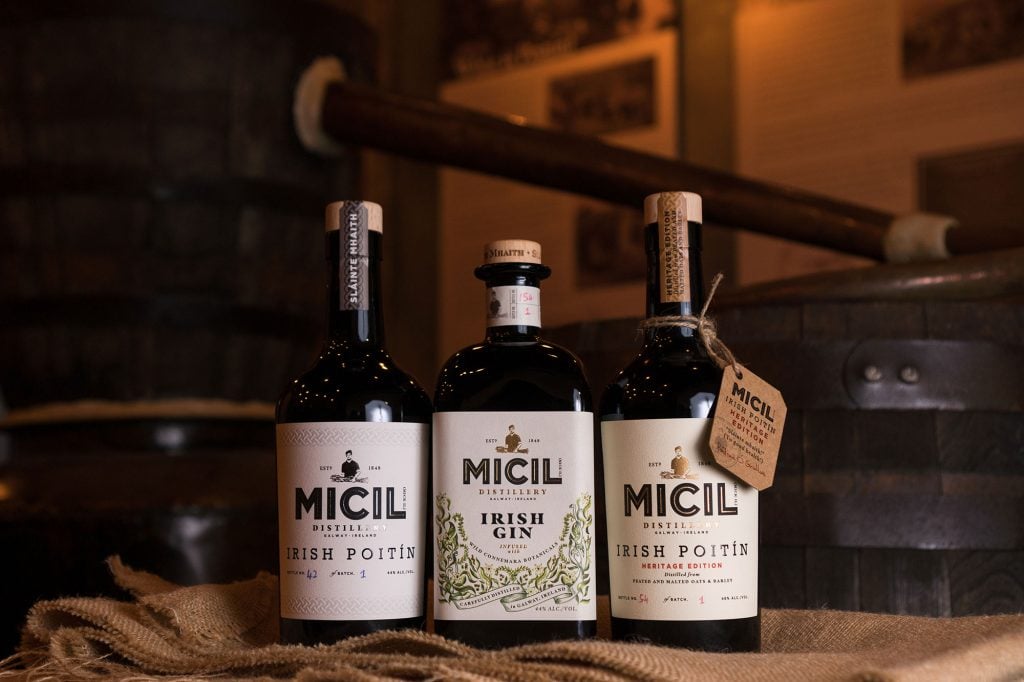
Poitín is available to buy today from Master of Malt
Poitín today
Part of the appeal is that poitín is a surprisingly simple spirit to make. The traditional method would involve heating the still with open turf fires, and calls for the use of an oatmeal and corn flour paste to seal the still joints and avoid alcohol loss. Another feature is throwing a sample of the spirit onto the still to see if it catches fire. This helps determine the ‘cut points’ – where the distiller separates the heads from the spirit and the spirit from the tails.
But things have changed since poitín was made in secret up in the mountains, away from the watchful eye of the law. There’s a healthy tension between the arrival of modern ideas and techniques while wanting to preserve the historical distillation process. Stainless steel fermentation tanks or vacuum distillation are not uncommon today. The GI regulations are flexible. You can use from cereals, potatoes, whey, sugar beet or molasses, and either pot stills or column stills. Poitín is typically bottled unaged, though some producers experiment with short maturation.
The result is a spirit that can vary enormously in style. Some versions resemble unaged whiskey. Others lean towards agricultural spirits like cachaça, agricole rhum, or mezcal. Strength also varies widely, though most modern examples sit somewhere between 40% and 60% ABV. Micil uses peat in its heritage poitín and the botanical bogbean, a throwback to 170 years of family tradition.
The modern revival
Producers like Micil as well as Bán Poitín, Killowen, Blackwater, and Glendalough have embraced the modern revival. Bartenders too. A high proof, clean but characterful spirit ticks a lot of boxes and makes for a versatile cocktail ingredient. You can easily substitute poitín for white rum, Tequila or unaged whiskey depending on the style.
Poitín is hardly mainstream now. Compared to whiskey, even Irish gin, it’s an absolutely tiny category when measured by sales. A new generation of distillers may be treating it as a serious product rather than a historical curiosity, but the average person on the street will need more exposure, if not convincing.
The case is simple. Poitín is delicous. It’s a document of historical interest. And it’s properly, proudly Irish, like Taytos or Brian O’Driscoll. St. Patrick’s Day presents a chance and an excuse to enjoy a spirit that is all about pride and provenance. Not a fabricated Disneyland version of what is Irish.
We’ll leave you with a couple of cocktail recipes and the words of a mid-19th centur poet from Meath. From all of us at MoM, Happy St. Patrick’s Day!
‘Bad cess to this poitín:
Woe to those who don’t take it –
Many a thirsty heart
does it lift
There’s none from king to beggar
Who wouldn’t like to be near it,
The more he gets used to it
The more he will like it’
Sláinte!
Poitín cocktail recipes
Bars like The Sun Tavern in Bethnal Green helped introduce many drinkers to poitín through dedicated tastings and cocktail programmes. If you fancy exploring it this St Patrick’s Day, cocktails are a great starting point.
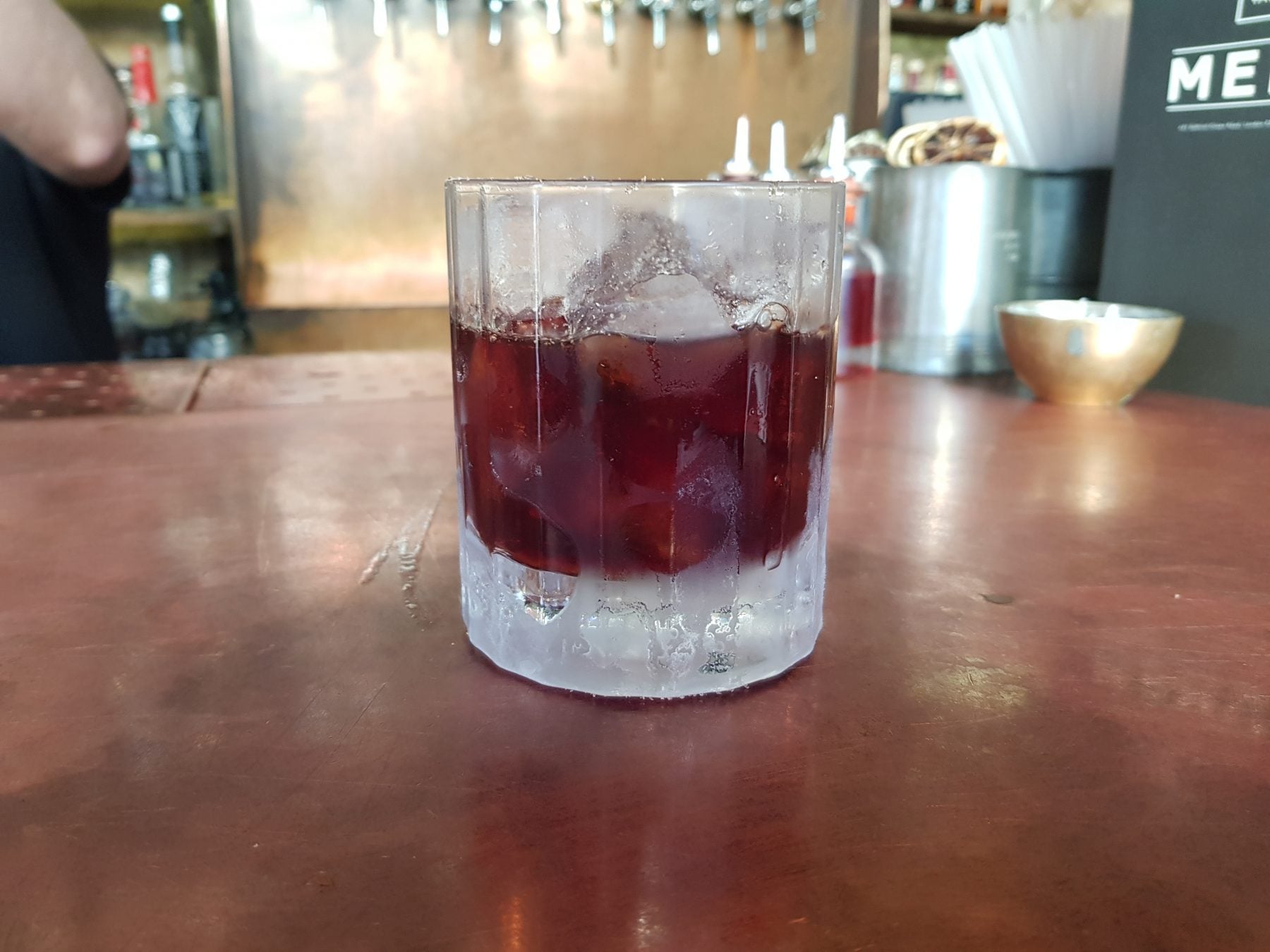 The Root Of It AllThe Root Of It All
Ingredients: 30ml Micil Irish Poitín, 20ml of Cockburns Fine Ruby Port, 25ml of Amaro Averna and three dashes of Toasted Nut Bitters.
Method: Pour all ingredients and ice into a glass and stir well. Garnish with a sprig of star anise and ground some fresh nutmeg on top.
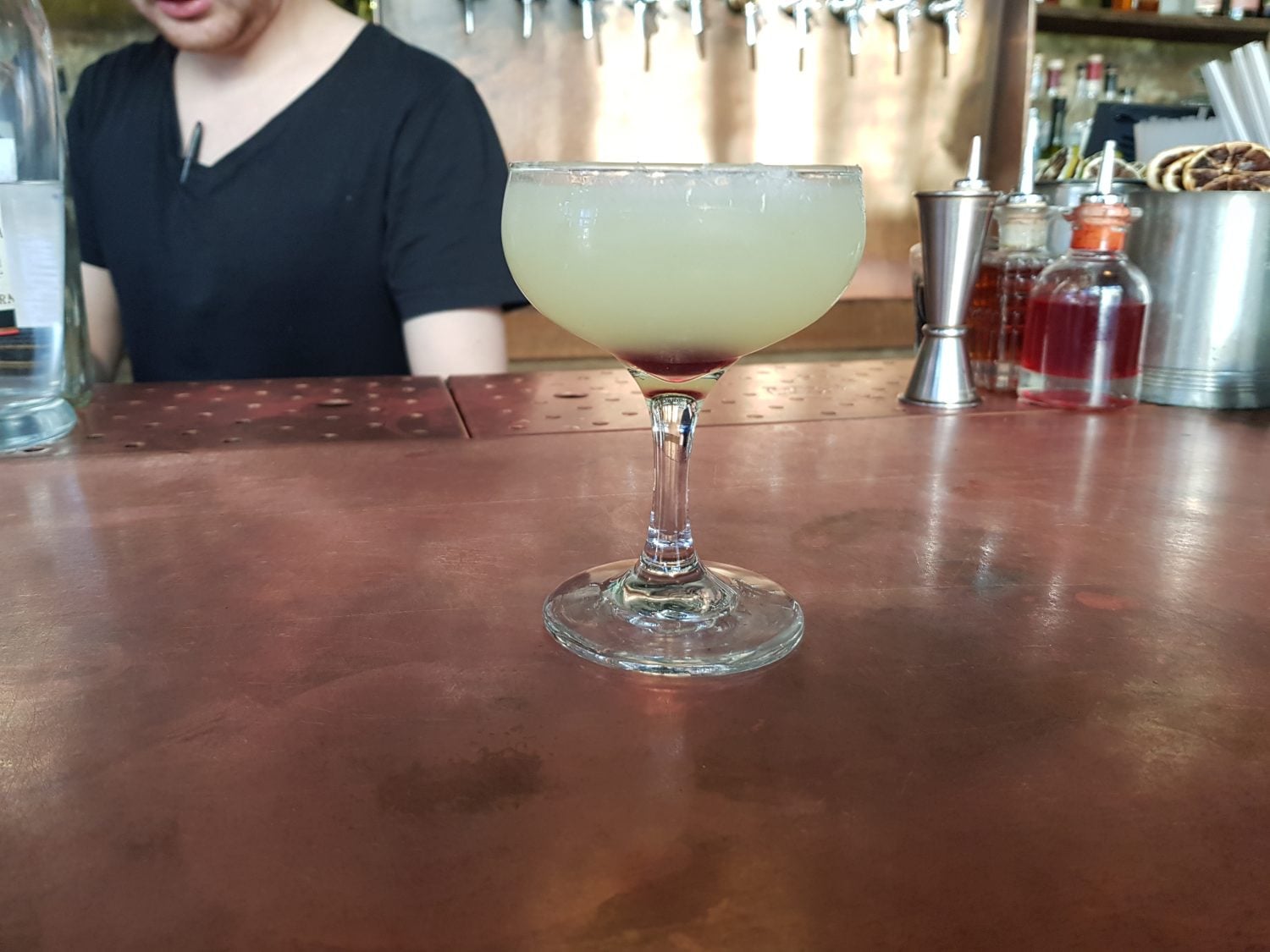 The WakeThe Wake
Ingredients: 10ml Micil Irish Poitín, 10 ml Suze, 30ml El Dorado 3 Year Old White Rum, 25ml lemon syrup and 15ml sugar syrup (these two examples should work: Monin’s Lemon Syrup and Monin Pur Sucre de Canne (Pure Cane Sugar) Syrup)
Method: Pour all ingredients and ice into a cocktail shaker, shake well and pour with a mesh cocktail strainer. Add an olive to garnish.