
New whisky distilleries. Once, that was a concept that excited me so much. All the possibilities. As we enter 2026, I find myself in more stoic territory. There have been so many openings in the last decade alone. They can’t all last.
Look back at the first edition of this article in 2022, and Bankhall is much different now, although the rest have thrived. Our picks for 2023 and 2024 look strong so far, as do many of 2025s nominations. But even just a few months after that was published, the Spirit of Manchester experienced major turbulence.
I’m confident that from all our selections so far, there will be some new classics. Distilleries that make a real mark. What is most promising is the increasingly practical mindset of newcomers. After years of rapid expansion, the most exciting projects now are those built on patience, purpose, and a clear sense of identity. The distilleries worth watching are not racing to release spirit at the first legal opportunity. They are thinking long-term, investing carefully, and asking harder questions about sustainability, flavour, and relevance.
We’ve already explored revivals like Historic Castletown Mill and Coleburn. Now join us to see the top whisky distilleries to watch in 2026.
Top whisky distilleries to watch out for in 2026
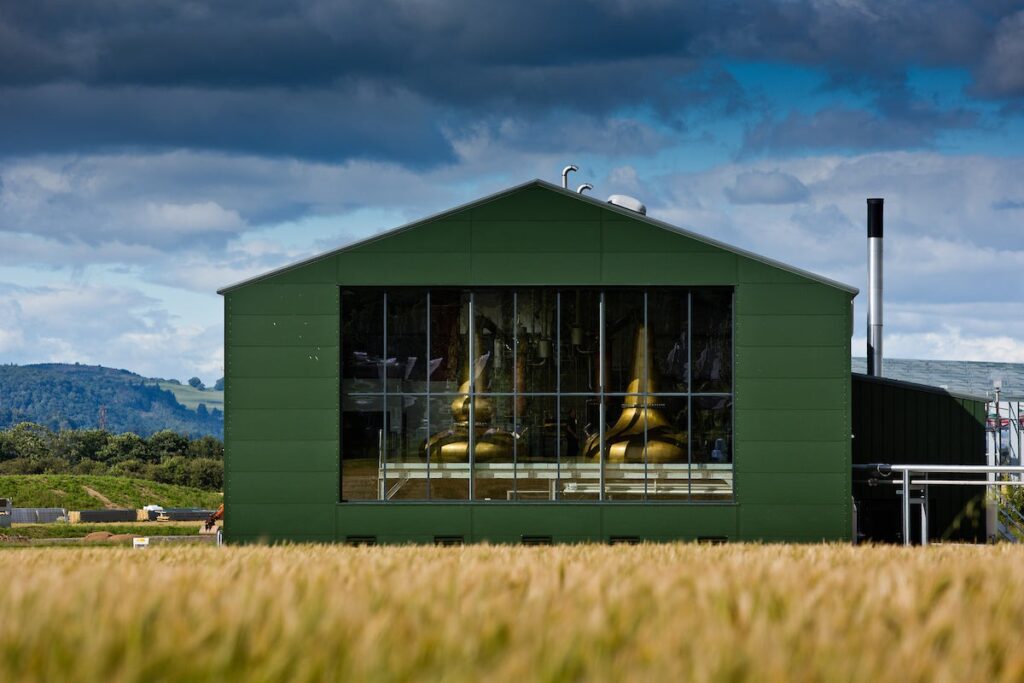
The Aberargie Distillery has been quietly ticking away for years now…
Aberargie Distillery
Aberargie Distillery sits on a 300-acre family farm just outside Perth. Refreshingly unhurried, distilling began back in 2017. Despite this, and its backing from Morrison Distillers, many people hadn’t heard of it until it started showing off at whisky shows this year.
The Scotch whisky maker has a proper barley-to-bottle philosophy, a spirit style rooted in richness, fruit, and waxy texture (+ the occasional peated run), and generations of agricultural knowledge to count on. Golden Promise barley, grown on the family’s own land, underpins production, reinforcing Aberargie’s commitment to provenance over volume. The inaugural release comes in March 2026.
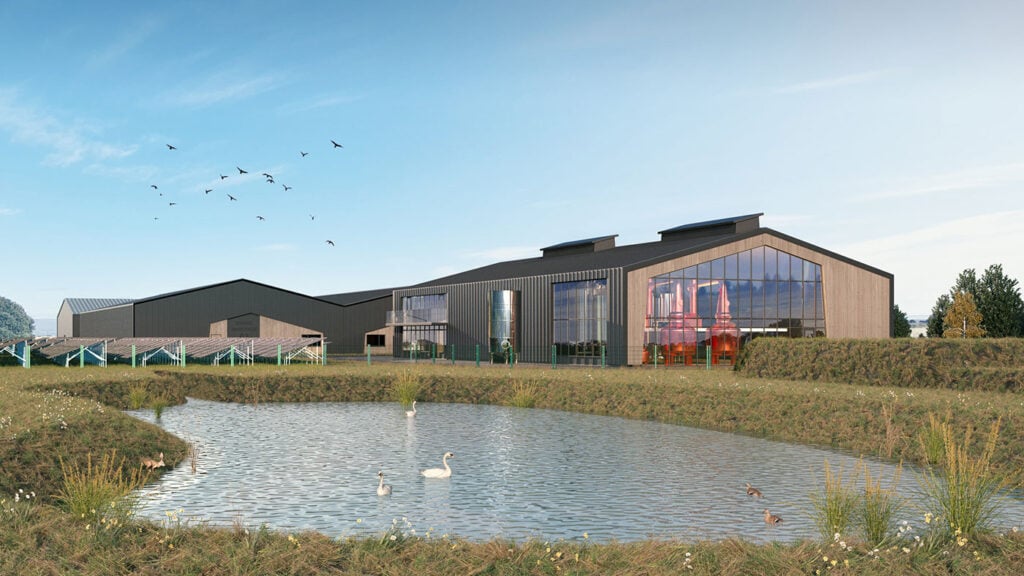
The plan is for production to commence in late ’26
Struie Distillery
Struie Distillery represents the next evolutionary step for the team behind Dornoch Distillery. Located at Dornoch South and named after the nearby Struie Hill, this new site takes lessons learned over nearly seven years of hands-on distilling and applies them on a much larger, more ambitious scale.
It’s very modern in its energy-efficiency, with solar-powered high-temperature heat pumps, off-grid operation, and patent-pending heat upgrading systems. Initial capacity will be around 250,000 litres of alcohol per year off-grid, with the ability to scale to 400,000 LPA using supplementary renewable energy. Spirit production will be mostly unpeated runs alongside dedicated annual peated campaigns. Add new maturation warehouses and a visitor centre housed in Dornoch’s restored gasworks building, and Struie looks set to become a benchmark for sustainable whisky production.
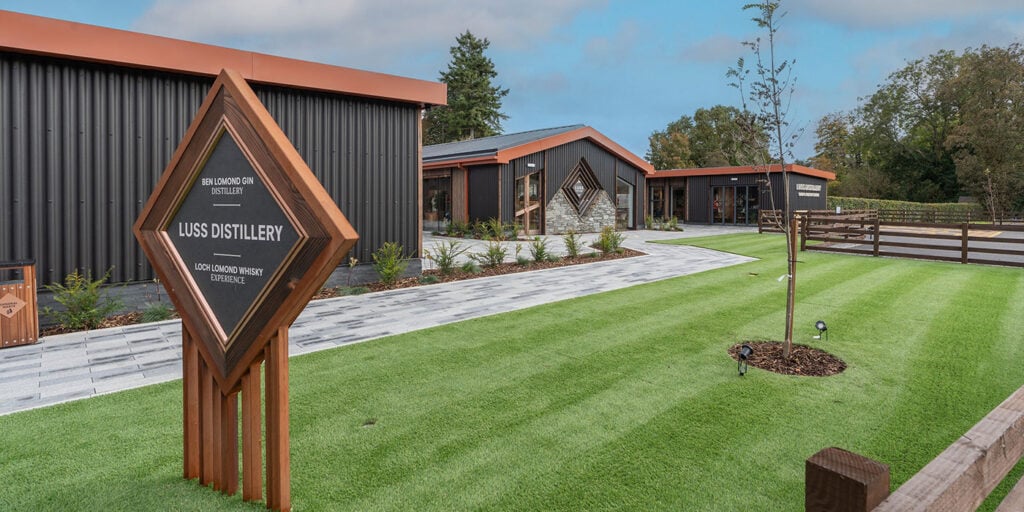
The Loch Lomond Group has a shiny new toy
Luss Distillery
Opened in autumn 2025 on the west bank of Loch Lomond, Luss Distillery gives Loch Lomond Group a true waterfront home for its whisky and gin brands. Built partly within a converted smokehouse, the site combines production with a full visitor experience, including tours, tastings, and a café overlooking the loch.
While undeniably scenic, Luss is more than a postcard distillery. It strengthens Loch Lomond’s identity by giving drinkers a tangible place to connect with the brand and its distinctive distilling approach. Expect this to become one of Scotland’s most visited distillery destinations as word spreads.
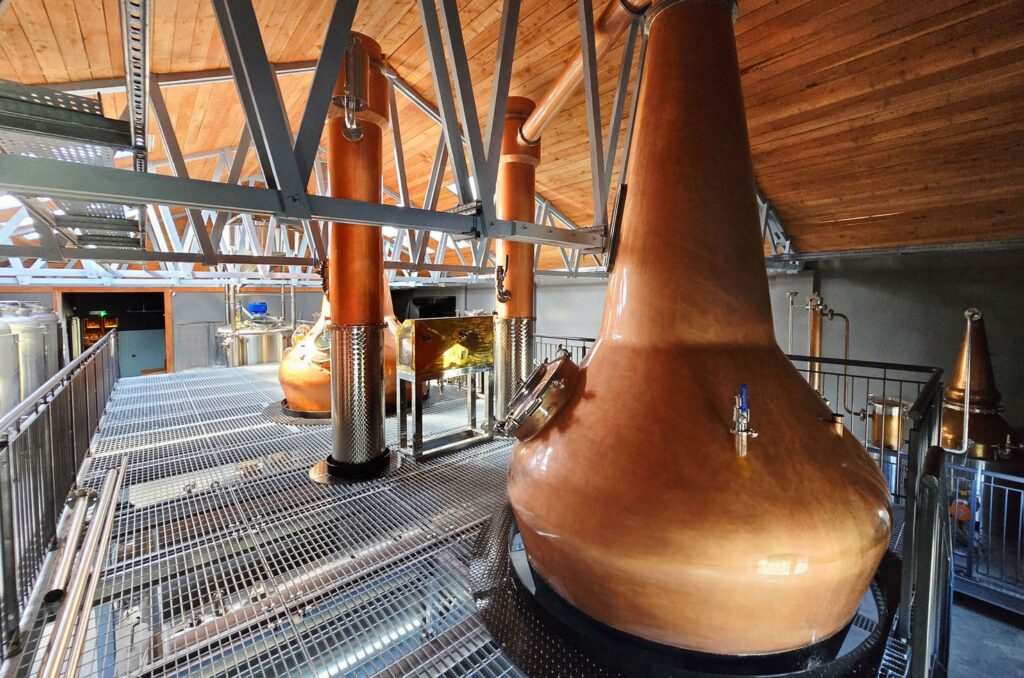
Lerwick’s stillhouse
Lerwick Distillery
For those who enjoy getting in early, Lerwick Distillery is one of the most intriguing new whisky distilleries in the UK. It became Shetland’s first-ever whisky distillery last year, operating at 60 degrees north in a truly oceanic, sub-Arctic climate.
Founded by locals Martin Watt and Calum Miller, with master distiller Ian Millar involved, Lerwick explores how whisky behaves when maturation takes place under dramatically different environmental conditions. While the first Shetland single malt is still several years away, visitors can already tour the distillery and get a glimpse into one of the most geographically distinctive whisky projects in the world.
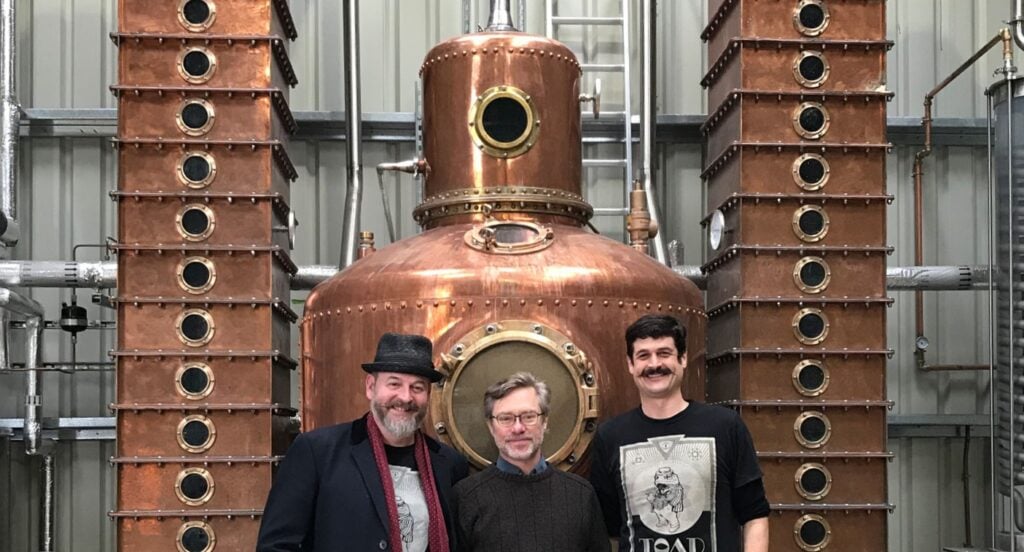
Tom Nicolson (left), seen here at the original Oxford Artisan Distillery, is pitching a comeback
The Oxford Spirit Group
You know that Fielden has risen from the ruins of The Oxford Artisan Distillery. But did you know the original founder has his own plans?
The Oxford Spirit Group is redeveloping the New Barn stillhouse with plans to open it to visitors by summer 2026. Phase one centres on reinstating distilling operations, while phase two will introduce tasting rooms, dining spaces, visitor facilities, and technical upgrades. There are even plans for on-site accommodation. It is a multi-million-pound investment in English whisky built around long-term cultural and community integration, rather than short-term output.
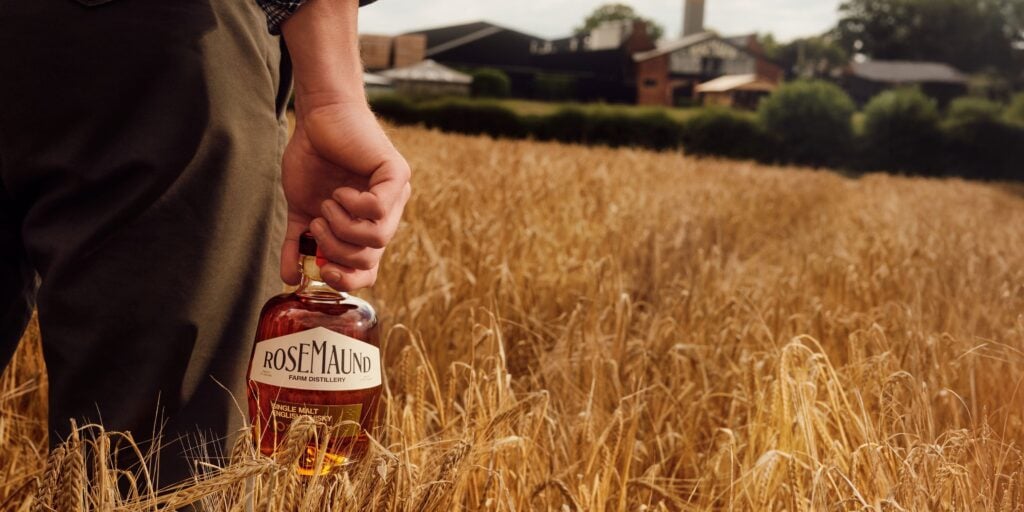
Rosemaund Farm has Guy Ritchie. Does your distillery have Guy Ritchie?
Rosemaund Farm Whisky
After selling their gin and vodka business to Diageo, the Chase family reclaimed their Herefordshire distillery and remaining whisky stocks to launch a new chapter focused solely on English single malt. The inaugural release is already 10 years old, making it England’s second-oldest whisky. Distilling is set to resume in early 2026, with an emphasis on limited releases, slow growth, and eventually true single-estate whisky made from grain grown on the family’s own land.
With Tristan Stephenson overseeing blending and Guy Ritchie involved as a creative collaborator rather than a headline act, Rosemaund is a distillery to keep an eye on.
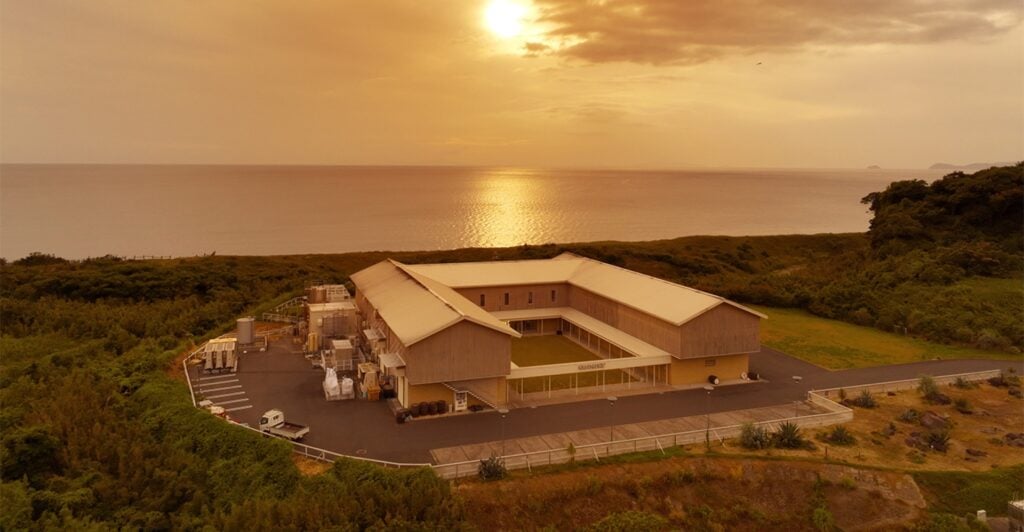
Kanosuke was a shochu producer originally
The great Japanese whisky renaissance
In 2017, Japan had around ten operational whisky distilleries. By the time we head into 2026, more than a hundred licences have been issued, with dozens of sites either distilling quietly or preparing to do so.
As Dave Broom outlines in The Japanese Way of Whisky, originally published in 2017 and updated in 2025, many of these new entrants come from outside whisky entirely. Shochu and sake producers, facing long-term domestic decline, have turned to whisky as a category with global demand, higher margins, and cultural cachet. Sakurao, Okayama, Osuzuyama and Kanosuke all began this way.
What separates the serious contenders from the speculative crowd is intent. The distilleries are interrogating place, raw materials, and process in ways that feel distinctly Japanese rather than politely Scottish.
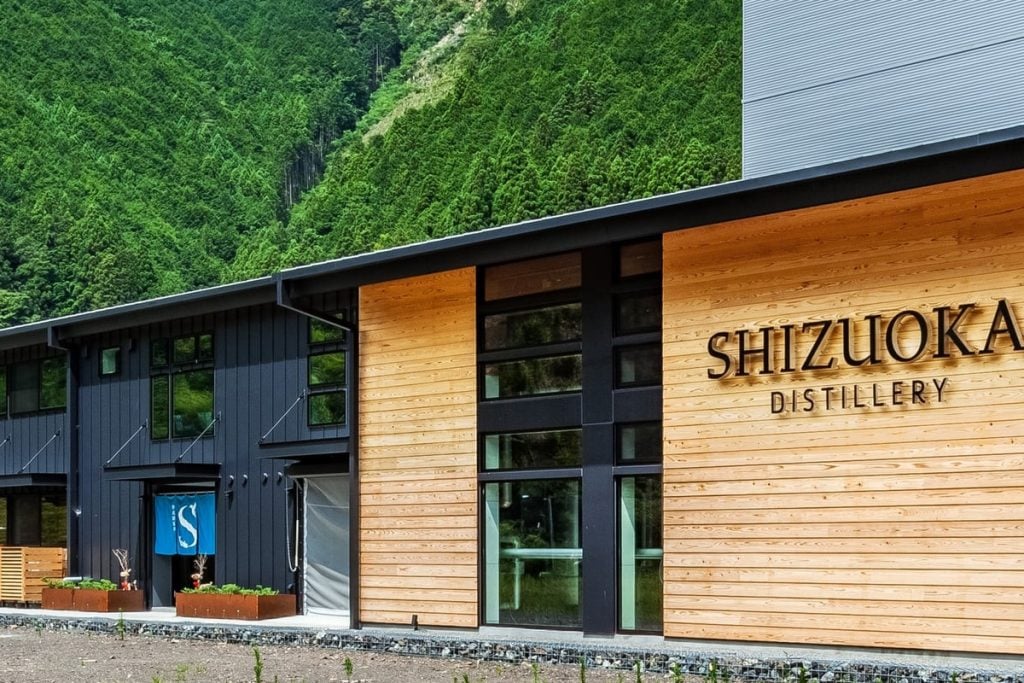
We’ve featured Shuzuoka before in these annual round-ups
Japanese whisky distilleries to watch
Broom outlines some names to keep an eye on, like Akkeshi in Hokkaido. It’s pushing full local sourcing across barley, peat, yeast and oak. Shizuoka continues to explore dual distillation identities by running one still on steam and the other on direct wood fire, while committing to locally grown Sachio Golden barley for a significant portion of its annual intake. Osuzuyama is pursuing a similar path with Sky Golden barley, aiming for half of its production to come from regional grain.
Others are experimenting at the edges. Hikari is playing with manuka-smoked barley, speciality malts and non-barley grains, including rye, wheat and rice. Wakatsuru’s Saburōmaru has rewritten the rulebook with the world’s first fully cast copper stills. Nagahama has embraced deeply unconventional maturation, using a disused school and an abandoned railway tunnel, which is both resourceful and sounds like potential nightmare fuel ripped straight from J-horror. There’s a joke here about there being enough spirits in these places already…
Still, innovation does not guarantee survival. Broom says the major question facing the new wave of Japanese whisky boils down to who will make it. It’s a struggle to age stock long enough, build distribution, and maintain quality under financial pressure. The Japanese whisky renaissance is real, but it is also ruthless. There’s a chance that only a fraction of these names will still matter in ten years.
