
Cù Bòcan Creation #7 is the latest in a long line of peated, experimental single malts made at Tomatin Distillery.
For the last two decades, the brand has diverted each winter from making intense, fruity Highland single malt to create a smoky whisky. One that was inspired by the lightly-peated spirit historically produced at Tomatin more than a century ago.
These whiskies, given the name Cù Bòcan, are well known for their fun finishes and unusual flavours. Since the release of Cù Bòcan Creation #7 marks 20 years of peat at Tomatin, we thought you might want to take a look back at the history of this cult favourite.
Buy Cù Bòcan Creation #7 here.

Meet Cù Bòcan Creation #7
What does Cù Bòcan mean?
Cù Bòcan translates to “Ghost Dog” in Gaelic. Literally, “cù” (dog) and “bòcan” (ghost or hobgoblin).
It refers to a mythical spectral hound that is said to haunt the village of Tomatin. Which is in Scotland, and is where the distillery is. In case you couldn’t guess. Legend has it that a distillery worker felt compelled to touch the dog’s fur. As he reached out his hand, the dog dissipated into a plume of ghostly smoke over the moorlands… Pretty badass.
Should you ever meet this hellhound, you might want to pronounce Cù Bòcan correctly. It’s Koo Boh-ch-an, with emphasis on the ‘Boh’.

Tomatin is a single malt of its own renown, but the distillery also makes Cù Bòcan
The making of Cù Bòcan Creation #7
The latest release, Creation #7, is the seventh edition in the Creations series. It was aged in rare Pineau des Charentes Rouge and new American oak casks, chosen by blender and global brand ambassador Scott Adamson.
Pineau des Charentes is a fortified French aperitif made by blending fresh grape must with young Cognac and ageing the mix in oak, giving it a lush balance of fruit, sweetness and subtle spirit warmth. It sits somewhere between dessert wine and brandy, offering notes of ripe grapes, honey, nuts and soft oak, and is usually served chilled before a meal.
Casks of it are not very common in whisky at all. But Tomatin has plenty of experience in using fortified wine casks. “Creation #7 is Cù Bòcan’s most limited Creations release to date and is more than a whisky but an invitation to explore,” Adamson explains. “The Pineau des Charentes Rouge casks are rarely used in Scotch whisky maturation and influence the lightly peated spirit to unlock nostalgic and unexpected flavours.”
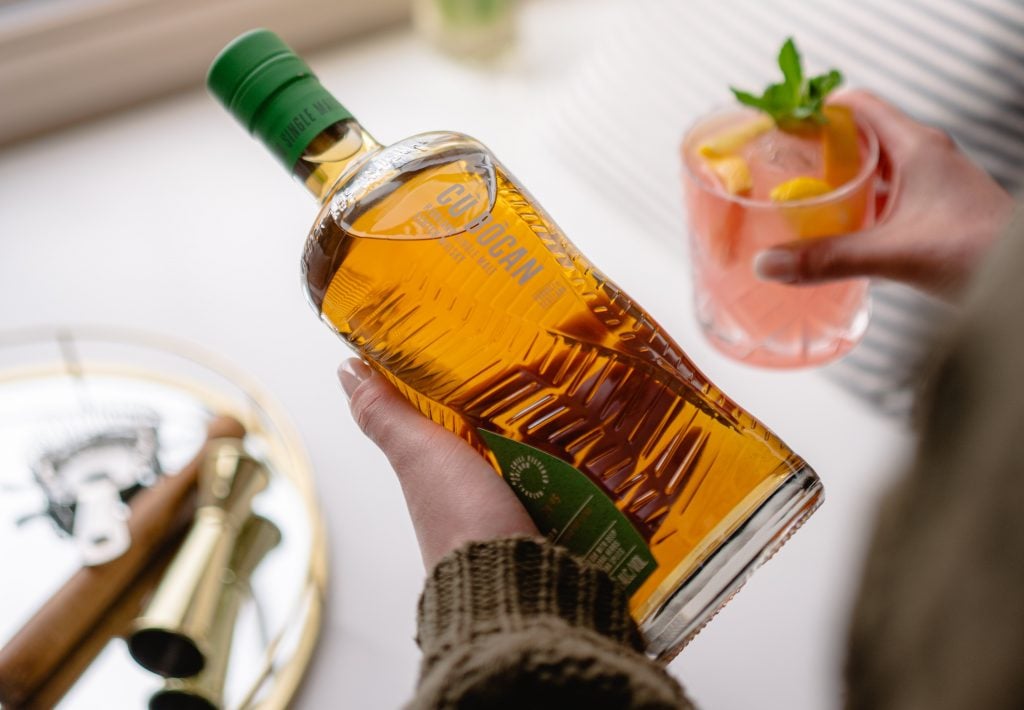
Cù Bòcan’s Creation range has proved very popular
Cù Bòcan Creation #7: Rhubarb and Custard meets whisky
As a whisky cask, Pineau brings a rounded, orchard-fruit richness, gentle sweetness and a mellow, winey depth that softens edges and adds an easy, natural glow to the spirit maturing inside. In the case of Cù Bòcan Creation #7, we were told the casks help develop a distinctive flavour profile of rhubarb, custard, heather smoke and sweet oak spice
The new release is presented in Cù Bòcan’s bespoke bottle, housed in a vivid pink and yellow carton. It’s a rhubarb and custard reference. That’s a whisky pairing you have no excuse not to try now. The engraved contours on the bottle aim to echo the wisp of Cù Bòcan’s signature smoke and the staves of the casks that shaped it.
Cù Bòcan Creation #7 is natural in colour and non-chill filtered, and bottled at 46% ABV. Only 3,000 bottles are available worldwide, 1,400 of which are in the UK.
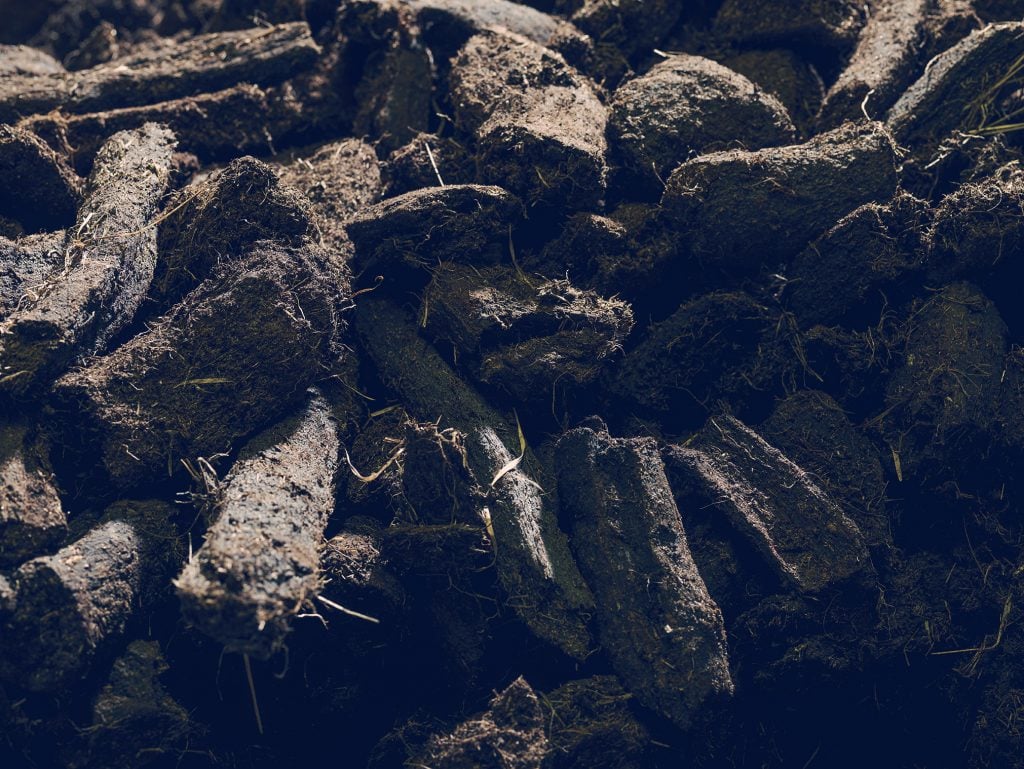
This is peat. Lots of whiskies derive signature flavour profiles from these humble flavour bricks.
20 years of peat at Tomatin
Tomatin is a restless distillery, one that houses several brands like The Antiquary, Talisman and Big T. But outside of its own single malt, Cù Bòcan is its most famous brand. The Highlanders have been closing the distillery’s calendar since 2005 by making peaty whisky, in an act that has become something of a seasonal ritual.
Back in the early days of the distillery, we’re talking 1897 and beyond, local peat would have been cut, dried, and set alight in the kiln to dry barley or used to fire the stills. As the demand for unpeated styles grew during the 20th century, Tomatin ceased production. It wasn’t until 2005 that it revived its peated runs for Cù Bòcan.
Cù Bòcan’s distillation coincides with incredibly low water temperatures, allowing for faster distillate condensation and creating an oilier mouthfeel in the new make spirit. For the last week of production that year, a batch of optic barley, peated to 15ppm, makes about 60,000 litres of lightly peated spirit.
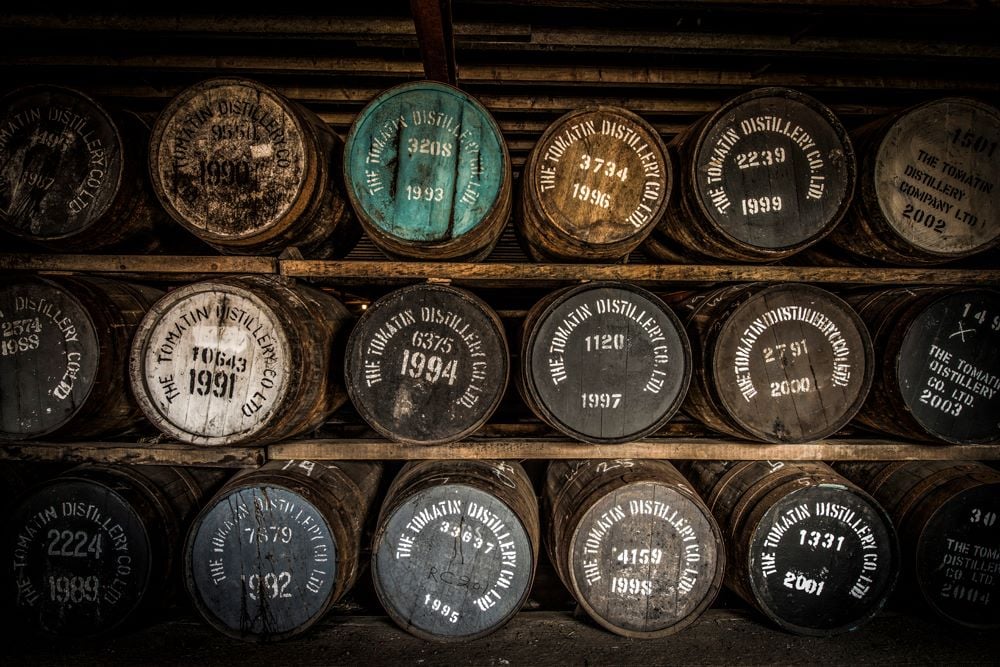
There are all kinds of casks ageing at Tomatin
Beyond the beaten cask
It was on 3 September 2013 that we saw the first bottle of Cù Bòcan. It was a single malt at 15ppm, matured in a combination of bourbon, sherry, and virgin oak casks. Since then, the Cù Bòcan brand has grown with several vintage releases as part of the brand’s limited-edition collection.
The standout feature, aside from the smoke, is the variety of different cask types. And we mean a variety: bourbon, new oak (European and American), oloroso and Pedro Ximénez sherry, Moroccan Cabernet Sauvignon, Tawny Port, Cognac, North American rye, Islay whisky, Japanese Shochu, Black Isle Brewery Imperial Stout, Bacalhôa Moscatel De Setúbal Wine, Colombian Andean oak, and rum casks from Jamaica, Guyana, and Barbados. All of these casks have held smoky Tomatin single malt and have featured either alone or, more commonly, in some kind of mix, in Cù Bòcan releases.
Cù Bòcan rebranded in August 2019. The constant has been Highland peatiness and a willingness to explore flavour through maturation. This combo has made it very popular. I expect we’ll sell out of Cù Bòcan Creation #7, so I’d grab a bottle while we have them. You can do that by clicking the link. It’s not very subtle.
Buy Cù Bòcan Creation #7 here.

We love us some Cù Bòcan whisky
Cù Bòcan Creation #7 tasting notes
Nose: Plenty of rhubarb/raspberry sharpness meets woodsmoke, toasted almonds, shortbread, and cooked apple. There’s a herbecaousness in the backdrop and plenty of honey too.
Palate: Buttery pastries, red fruits, nuts, and honey meld in a sea of heathery smoke.
Finish: Creamy, smoky, sweet and sharp.
