Trade
Trade

According to Mark Twain, “too much good whiskey is barely enough.”
Well, uncomfortably soon, we might find out if that’s true. Whisky – be that Scotch, American or Irish – has, with monotonous regularity, a very bad habit of shooting off its own foot.
Bear with me: short and grossly simplified history lesson coming up.
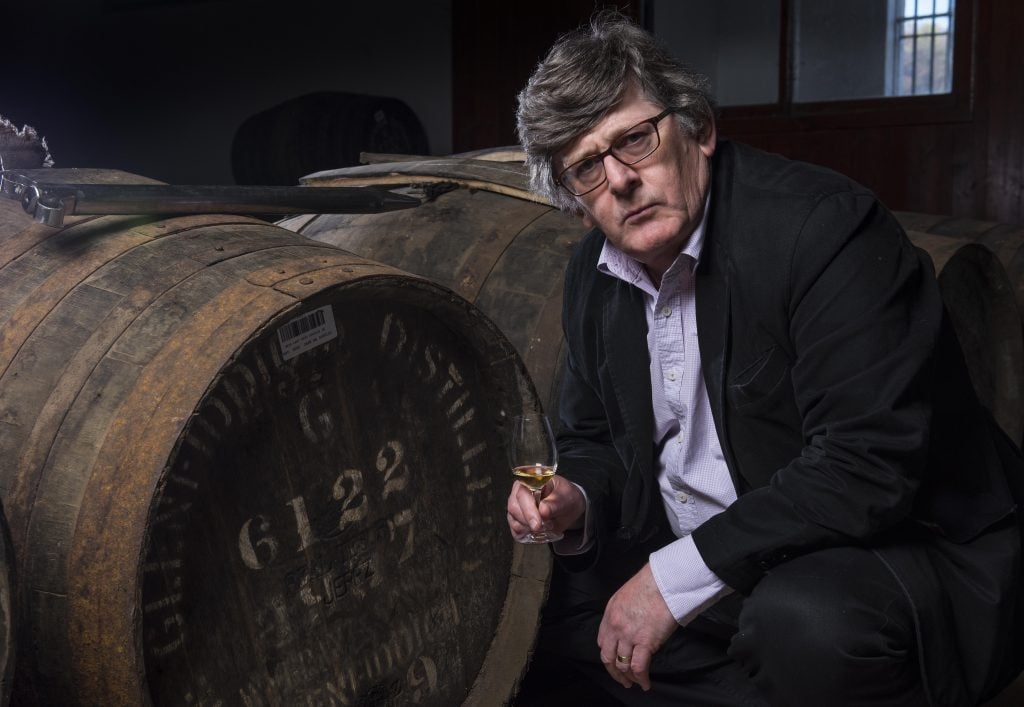
Ian Buxton at Glenfiddich
Are We Heading For a Whisky Crash?
At the end of the 19th century, the Irish whiskey industry, which was heavily invested both financially and emotionally in its large pot stills and regarded grain spirit as ‘sham whisky’ and blending as adulteration, turned its back on the future. While other factors then came into play, it’s taken the industry more than a century to recover. Our American friends, having just got over the self-inflicted wound of Prohibition, decided that rye was finished and bourbon belonged on the bottom shelf. That’s taken a while to sort out.
And the Scots, contrary to their national reputation for caution and parsimony, are overly fond of some boom and bust, be it the Pattison crisis of the late 1890s or the closures of the 1920s, which – lesson not learned – were neatly repeated in the mid-1980s when the industry finally confronted the consequences of over-production. Not to be outdone, shortly afterwards, the Japanese industry thought seppuku a smart move. Reacting to economic recession and dropping sales, a series of cutbacks and closures explain why Japanese whisky of any age is so very expensive today.
So, that’s one thing the world of whisky has in common. Here’s another: we may be on the brink of repeating the same mistake because, wherever you look, distilleries are being expanded and new ones built as if the current good times will never end. The thing is, top-line numbers don’t tell the whole story. While there may be literally thousands of boutique distilleries being built anywhere you can cast a quaich, they don’t actually matter all that much. Sure, they do if you’re an investor. Furthermore, they add to the gaiety of life and people like me get to write articles about them, but in terms of the volume they add to total production they’re insignificant.
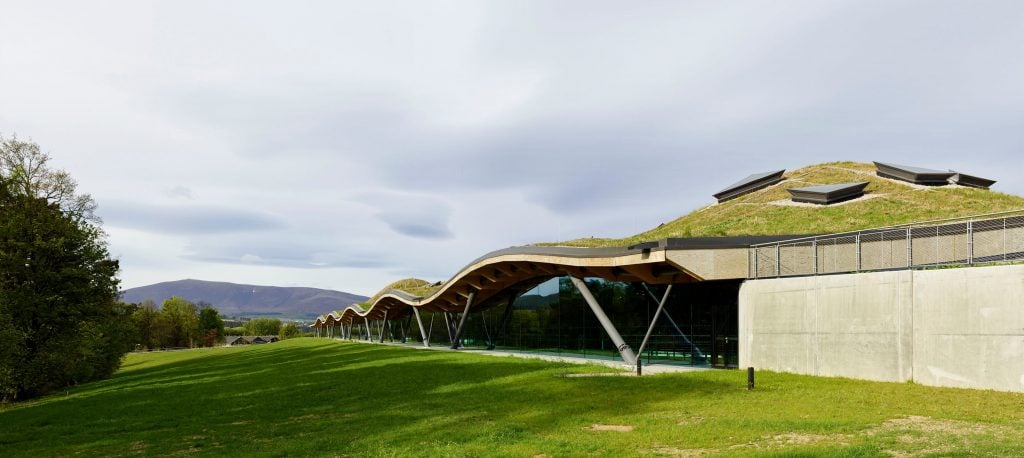
Macallan’s spanking new distillery
The maths ain’t mathin’
If you doubt that, here’s a sum: it would take 125 (that’s one hundred and twenty-five, count ‘em) tiddlers of 100,000 litres annual capacity to equal the output of one Roseisle. By the way, 100,000 litres is a perfectly decent little distillery: more, for example, than the projected individual outputs of Daftmill, Abhainn Dearg, Strathearn, Eden Mill or Dornoch. And, while a lot of new boutique distilleries are being built in Scotland, the total doesn’t approach 125.
So, I’m not that worried about the small fry, fascinating though they are. The problem (if there is one) comes with the less heralded fact that the big are getting very much bigger: Inchdairnie (up to 4 million litres); Ailsa Bay (12.5m); Roseisle (12.5m); Dalmunach (10m); Macallan (15m) and Borders (2m). That’s without considering expansion at Glenfiddich (to 20m), The Glenlivet, Glen Moray (now a 5m-litre plant), Glen Ord, Glenmorangie and the re-opening of Glen Keith. I could go on.
In fact, I shall. Exactly the same thing is happening in Kentucky and elsewhere in the USA. That’s without mentioning the States’ reputed 1,500 plus craft distillers which, however small any one of them may be, does eventually add up to an awful lot of liquor. Expansion in Ireland, chiefly at Tullamore and Midleton, but not forgetting Waterford and Bushmills, has also seen a headlong rush into micro-distilling – which is interesting, given how Jameson continues to dominate the category. Does the world need twenty or more tiny Irish distilleries? In Japan, following years of under-production and a sudden dramatic rise in demand (and hence those prices), they’re scrambling to catch up.

Artist impression of the new Port Ellen distillery
The world has never seen so much whisky
Now, while you can, of course, keep whisky in cask almost indefinitely, that requires barrels and warehouses, scarce and expensive resources that tax the patience of the most saintly accountant. Because a lot of this expansion has happened within a short period of time, a tsunami of newly-mature spirit can be expected on the market within the next five years.
In fact, the world has never seen so much whisky. Where will it all go? Who is going to drink it all?
I would like to conclude with the thought that the last time whisky grew this fast it all ended badly. Which is true, but I can’t because whisky has never grown this fast. The size of some of these giant distilleries is unheard of for single malt, and, for the industry as a whole, the scale of expansion is unprecedented. That’s worth thinking about, because it means an unprecedented level of risk of a very messy end to our current golden age.
Though he has neither a beard nor any visible tattoos or piercings, Ian Buxton is well-placed to write about drinks. A former Marketing Director of one of Scotland’s favourite single malts, his is a bitter-sweet love affair with Scotland’s national drink – not to mention gin and rum, or whatever the nearest PR is pouring. Once, apparently without noticing, he bought a derelict distillery. Follow his passionate, authentic hand-crafted artisanal journey on the Master of Malt blog. Or just buy his books. It’s what he really wants.