

Gordon & MacPhail whisky has a relationship with time like few companies. The family-owned firm has spent more than a century quietly building a liquid archive of Scotch whisky.
The full extent of its prowess was on show at the latest CASK Liquid Marketing Showcase on March 4, 2026. Celebrating its 15th anniversary at Kachette in Shoreditch, London, the event was ripe with spirits from the more than 30 brands in the portfolio, including WhistlePig, Ocho Tequila, El Dorado Rums, Renais Gin, and Chartreuse.
There were also masterclasses from industry leaders, and I attended one – Unlocking the Liquid Library of Gordon & MacPhail. It was hosted by Tristan Stephenson, (Curious) bartender, author, podcast host, master blender at Rosemaund Farm Distillery, and co-founder of Black Rock whisky bar. His guest was Richard Urquhart, Gordon & MacPhail sales director and member of the famous family that has helmed the company’s maturation policy since John Urquhart in 1915*.
The talk offered a glimpse into how that archive came to exist and why it continues to produce some of the oldest and most remarkable whiskies in the world. It also outlined the brand’s policy regarding its distillery, Benromach, one of Speyside’s smallest but most impressive whisky makers.

The Gordon & MacPhail shop in Elgin, in 1895
A different way of thinking about whisky
Gordon & MacPhail began life in 1895 as a grocery merchant in Elgin, in the heart of Speyside. Founders James Gordon and John Alexander MacPhail were selling tea, wine, spirits, and other goods. Like many merchants of the time, they also dealt in whisky, but their approach gradually diverged from the norm.
Instead of simply buying mature casks and bottling them, the company began purchasing new make spirit directly from distilleries. That spirit was then filled into casks chosen by Gordon & MacPhail and matured in their own warehouses.
It sounds simple, but it was a radical idea. By controlling the whisky from the moment it left the still, the company could shape the maturation process itself. The cask selection, the warehouse conditions, and the long ageing all became part of the Gordon & MacPhail house style.
Over time, this approach built an extraordinary inventory of whisky from across Scotland.
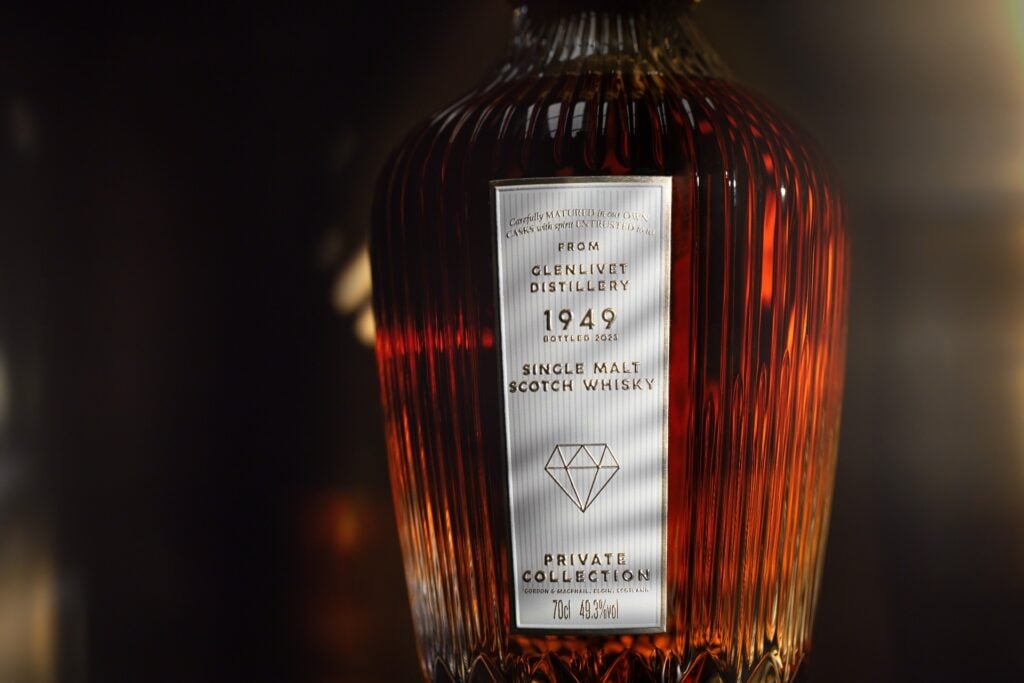
Whisky like this is almost par for the course for these guys
The origins of the single malt boom
In the mid-20th century, most distilleries focused on producing whisky for blends. Single malt releases were rare.
George Urquhart of Gordon & MacPhail saw an opportunity. In the 1960s, he launched the Connoisseurs’ Choice range, bottling single malts from distilleries that rarely released their own whiskies.
This helped introduce whisky drinkers to distilleries like Glen Grant, Mortlach, and Linkwood as single malts. At a time when single malt Scotch was barely known outside Scotland, Gordon & MacPhail were effectively writing the early chapters of the category.
Today, almost every distillery bottles its own whisky. Back then, independent bottlers like Gordon & MacPhail were the only way to taste many of them.

I also applaud when I see whisky like this
A library of casks
Because the company filled and matured spirits itself, it was able to make stock choices that individual distilleries would rarely make, such as keeping a great number of casks back decades. Some date back to the 1940s and 1950s, when whisky was still largely destined for blends, and few people imagined collectors chasing single casks half a century later.
These casks form what the company now refers to as its liquid library. Each one is a time capsule. Not just of whisky, but of production styles, barley varieties, and distilling practices that have long since changed.
Gordon & MacPhail has such a comprehensive library that distilleries have found they need to count on its liquid archive to taste what their own spirit was like decades ago, as so little of it remains in their own warehouses. I’ve heard tell of at least one big brand spending millions re-acquiring whisky from Gordon & MacPhail.
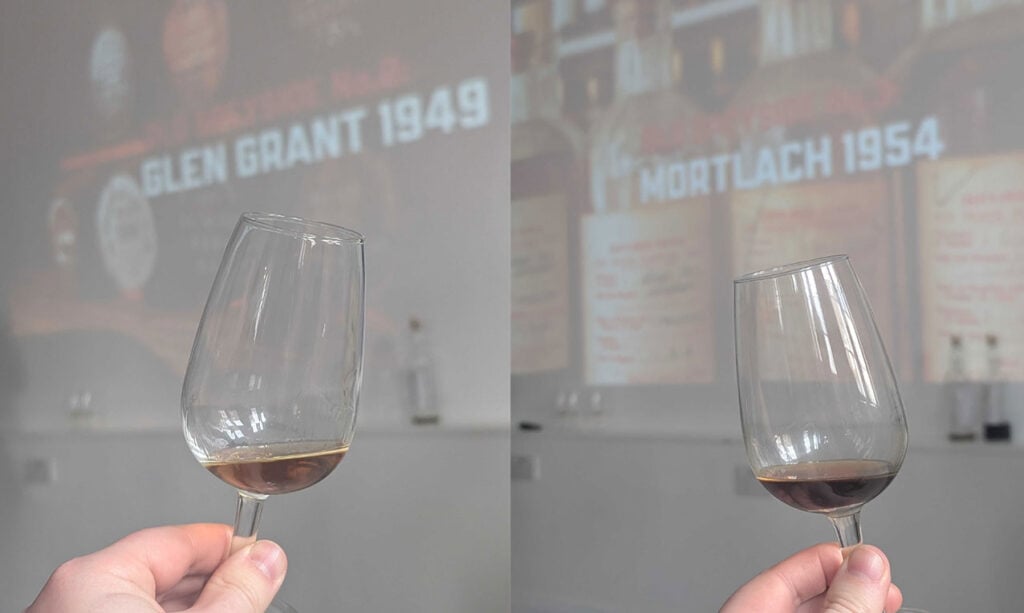
Some of the oldest whiskies I have, and will ever try. Look at the colour! Still so vibrant.
Casks that shape the decades
Cask management is the key. Historically, the company imported sherry in casks, which were then repurposed for whisky maturation. These “transport casks” were usually American oak sherry butts that were large and thick, creating a slower maturation than many modern casks.
That means you can taste a whisky from decades ago and it still has a relatively strong ABV (in the mid-to-high 40% range), isn’t cola-coloured, and doesn’t taste overly tannic. These whiskies remain balanced even after many decades.
At the masterclass, we had a 1949 vintage Glen Grant aged in transport sherry casks. Quince, pineapple cubes, cured Mediterranean meat savoriness, perfumed wood, sponge cake vanilla…. It was remarkably composed and vibrant. I wish I could bottle the memory. Next was a 1954 Mortlach single malt rich in damson, tinned mango, violet, molasses, gingerbread, and serrano ham. Another sherried corker, one that wasn’t drowned in tannin or cask influence. It is exceptional work, and they were very generous pours. Each glass must be worth hundreds, and the room was packed.

The small, charming Benromach makes a distinctive style of whisky
From merchant to distiller
After more than a century of working with other distilleries’ spirits, Gordon & MacPhail eventually decided to produce their own. In 1993, the Benromach Distillery was brought into the company fold, a market opportunity seized at a time of industry restructuring that gave it a site that suited its long-term vision for whisky production. The distillery was carefully restored and eventually reopened in 1998, exactly 100 years after its founding.
In recent years, the company has also opened a purpose-built site, The Cairn Distillery in Speyside. With the announcement in 2023 that Gordon & MacPhail will cease to buy any spirit for independent bottlings and purely rely on its own distillery stock, The Cairn and Benromach are ensuring future generations will continue to build the library from spirit distilled under their own roof.
But the wider philosophy remains unchanged. One rooted in an understanding that whisky can be measured not just in years, but in generations.
*London train shenanigans meant that Luke Todd-Wood, UK sales manager at Gordon & MacPhail, was also on hand to deliver a sermon on Gordon & MacPhail and its Benromach Distillery until Richard arrived. Luke was also present at the Benromach stand afterwards and, as usual, did a stellar job communicating a range that will appeal to any whisky geek. Benromach Contrasts: High Enzyme 2012 (bottled 2024) 70cl Whisky was my highlight. So bright and zesty.



