Trade
Trade

Zacal is a mezcal brand founded by four friends, Phil Clayton, Ian McCaig, Cri Osborne and Andrew Maidment, in partnership with third-generation mezcalero Milton Román Ochoa Corona. Two bottlings have been released so far: Manso Sahuayo, a delicate, single-varietal mezcal bottled at 45% ABV, and Manso Sahuayo y Bruto Ensamble, a complex blend of two agave distillates at 50% ABV.
It hails from Michoacán, Mexico. Not Oaxaca. Yes, it’s the state most drinkers know, where most of the brands are, where the regulatory body, the Consejo Regulador del Mezcal (universally shortened to CRM) sits. But mezcal is bigger than Oaxaca. Zacal tells that story, and many more.
I know this because I heard them first hand from Phil Clayton. We spoke about how four people from tech ended up chasing mezcal in Michoacán, why they went beyond Oaxaca, what it means to work with Milton, and how you bring a deeply traditional spirit to more people without flattening the thing that made you fall in love with it in the first place.
“The expose, not exploit line is a tough one,” Phil says.
What drew them to mezcal
“There was no industrialization,” he begins, explaining the attraction to mezcal. “Other drinks can’t even try to claim to be as artisanal. It’s a real labor of love, so much of it is a maestro having to work with nature and try to harness it but not restrict it. There’s a certain range of flavor variation, and the very best develop a certain amount of consistency in terms of profile, but you can’t control so many of the variables so everything in a single batch still has its idiosyncrasies. That makes it pretty unique”.
But for Phil, mezcal is not just interesting because of how it tastes. It is interesting because of what it represents. “What you have to love about mezcal is that it’s rooted in anti-establishment, anti-imperialism, rebel culture, the culture and history of what has become Mexico, because it’s intimately linked into that story.”
He points north west from Mexico City. “Drive a number of hours from Mexico City north west and you’ll hit Michoacán. That’s known as the Rebel State, because of its rich history, with a lot of the key figures from the War of Independence and then the revolution in the 1900s.”
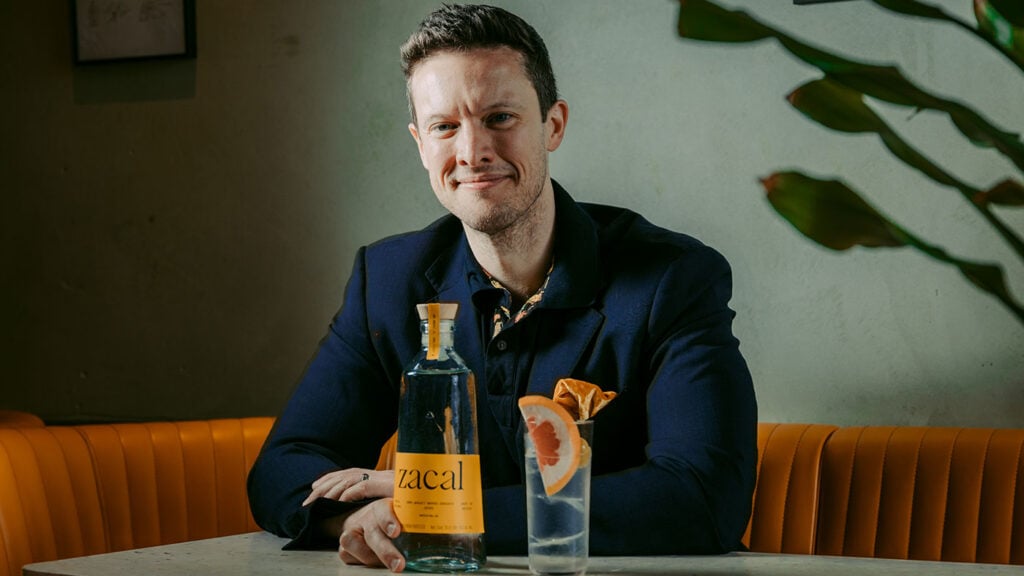
Say hi to Phil
Michoacán: The mezcal state
Michoacán is Purépecha country, a place of lake towns, ritual fire, corn culture, traditions that do not exist for tourists, even if tourists later discover them, and agave.
It’s one of Mexico’s great mezcal states, with a history stretching back centuries shaped by Indigenous knowledge, colonial-era distillation, family production, and the rugged landscapes around places like Lake Pátzcuaro. Mezcal means agriculture, ceremony, memory here.
Oaxaca is the defining modern state, but under the Denomination of Origin, the recognised Mexican states are currently*: Aguascalientes, Durango, Guanajuato, Guerrero, Estado de México, Morelos, Puebla, San Luis Potosí, Tamaulipas, and Zacatecas. As well as Michoacán.
Phil gives some background. “It was, between Jalisco and Colima, the most travelled site when the Filipino trades first came over in the 1500s. They make vino de coco, which is a coconut-based spirit. The locals had agave and made pulque**. They took from vino de coco that they could treat the agave the same way: cook it down, then use the heart and the sugar source in the middle of the plant to turn it and distil it using pot stills. Michoacán was a link between the two.”
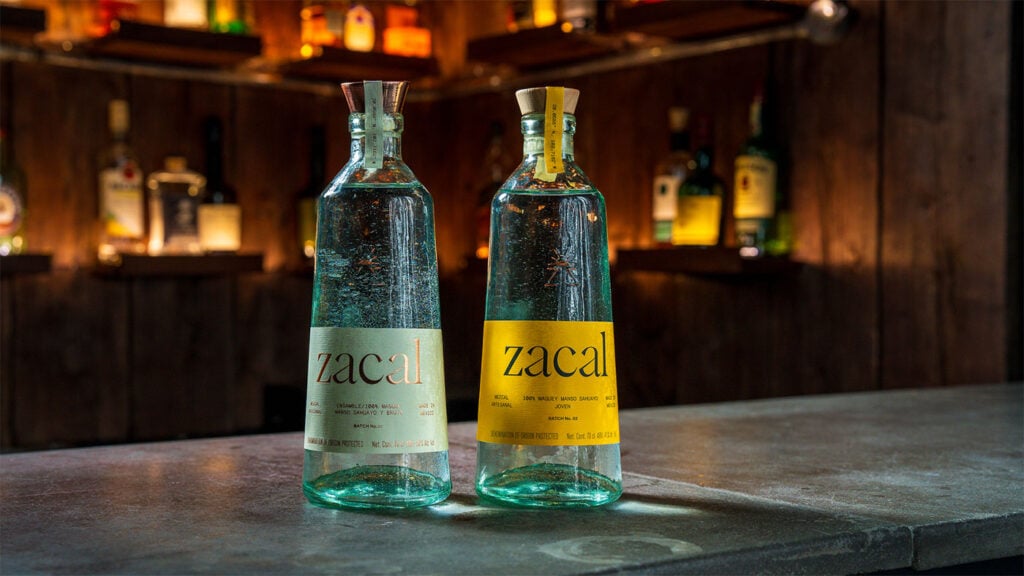
At present there are two Zacal mezcals available
Good advice
“Oaxaca has fuck all to do with mezcal’s origin story,” Phil explains. “What makes it special now is that it’s the base of the CRM, which is ironic in an anti-establishment story. It’s part of a big regulatory body, a DOM. That’s one of the great tensions in mezcal.”
Regulation protects a category, but it also creates borders, costs, paperwork, and sometimes production restrictions. “Monoculture, barriers to entry, a natural handbrake on the development of flavour,” Phil says.
Zacal’s route into Michoacán was also shaped by a very simple bit of advice from Deano Moncrieffe of Hacha fame. “Top man. He managed to not laugh at us when four male gringos said they wanted to get into mezcal in 2021. It was niche, but on people’s radar, and I asked for two bits of advice as somebody who sells this spirit. He said:
Don’t do Oaxaca. Don’t do espadín.
Find your niche, the provenance. Otherwise you’re fucked,” Phil continues. “There are so many things that have already been done. Without a story, your liquid could taste amazing, but it will still be one of many.”
The tension: progress with abandoning tradition
No faux-mystical “find your agave truth” nonsense. Just do not go where everyone else is going, and do not make the same thing everyone else is making. Armed with this brief, the founders did their research and settled on Michoacán. Soon they began to see it as an unsung hero, a place that did not get enough credit as one of the cradles of mezcal.
They also realised that it not only helped them stand out, but would provide some relief for the communities in Oaxaca who make mezcal. “Not being in the highly concentrated area that is Oaxaca is us trying to relieve some of the pressure and the tension,” Phil says. “We’re not creating mezcal from a plant supply that is now aggressively grown to keep up with demand, we’re trying to spread the weight.”
There is a tension in this process. Mezcal is traditional, but it cannot be frozen. A living craft has to move or risk calcifying. “Tradition versus progress is when you respect, but not revere. Milton says there are some things he will never change, ever. It’s his job to maintain the right things, but at the same time, he needs to put a little bit of his identity on the craft as well. You’re innovating almost to create your own identity.”
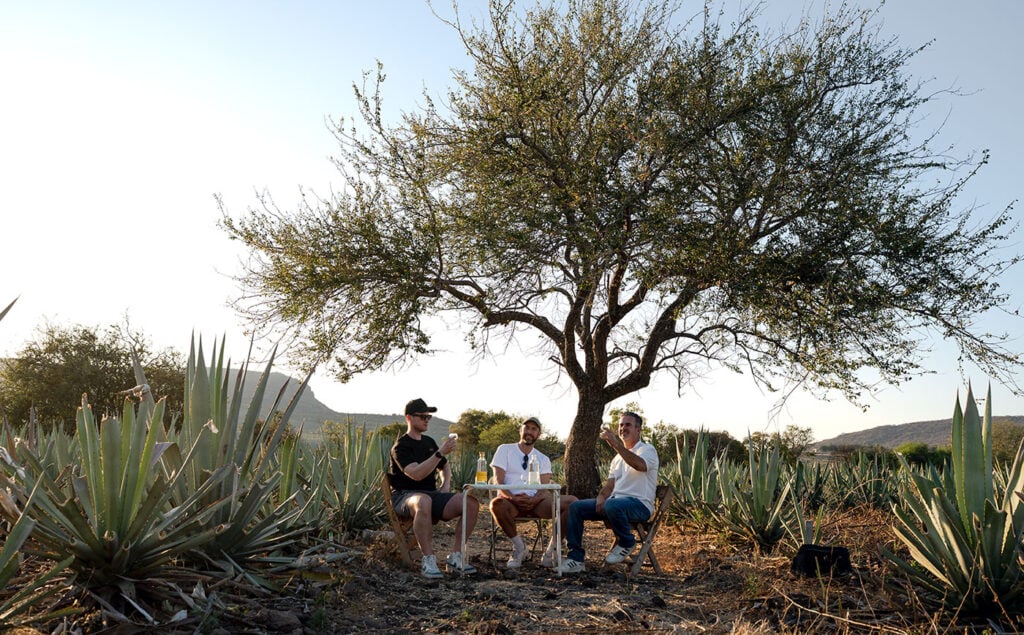
Phil, Ian, and Milton
Finding Milton
Milton refers to the creator of the mezcal Zacal presents. Finding him wasn’t simple. First, through Google Translate, pigeon Spanish, persistence, and no small amount of blind optimism, they managed to get in contact with the head of the union of mezcaleros in Michoacán.
“Eventually he understood and said, if you’re serious, I’ll take you around,” Phil recalls. “For eight days, we met folks he felt really represented the state. And I will say the first seven days were absolutely a disaster. I mean, don’t get me wrong. We tried some really lovely stuff. But we were looking for someone who was going to be part of the business”.
Plenty of producers were happy to sell spirit. Plenty were open to white labelling. But Zacal wanted a co-founder, a shareholder, to develop a mezcal brand with their expertise. “Good luck, because how many of them ever want to do that? They’ve got their own way of doing things handed down by three or four generations. They’re happy for you to white label it, but they don’t necessarily want to work with anybody. Totally understandable.”
By the end of the trip, the group was close to giving up. “We very nearly cancelled the last person and just got an early flight out. Jet-lagged, hungover, tired, emotional. We thought we fucked up.”
The final visit took them to a town in Michoacán to meet Milton Román Ochoa Corona.
Mezcal, the Milton way
“I thought, I hope to God you’re good, because I love the name,” Phil continues. This time, something clicked. “It was an awesome feeling to have after spending a week not getting that feeling from anybody whatsoever.”
Milton was making mezcal from agave grown in the region, including Manso Sahuayo and Bruto. What he had commercially was one thing. What he wanted to make for himself was another. Then Milton asked if they wanted to try what he wanted to make for himself. “Fucking right we do,” Phil says. “This is why we’ve come. The secret you keep to yourself. He had what was his more standard mezcal. They’re incentivised to grow and sell Tequila, there’s no real money in mezcal. It was a family project, not a commercial concern.”
Compared with the double distilled mezcal, Milton’s triple distilled spirit was, in Phil’s words, “night and day”. He explains: “Mezcal is very traditional about being double distilled, outside of some flavoured expressions. But unaged, out-and-out mezcal that’s triple distilled? It concentrated the flavours, it stripped out the smoke, but lost none of the complexity and depth of flavour. I’m yet to taste a mezcal that does what this does.”
A lot of people still think of mezcal as smoke first, agave second. But Phil underlines that there’s more to mezcal than smoke bombs in Mexico. “Some producers dial it up to the point where you can’t taste the agave, where the mezcal is from, perhaps to differentiate from Tequila. That blew us away.”
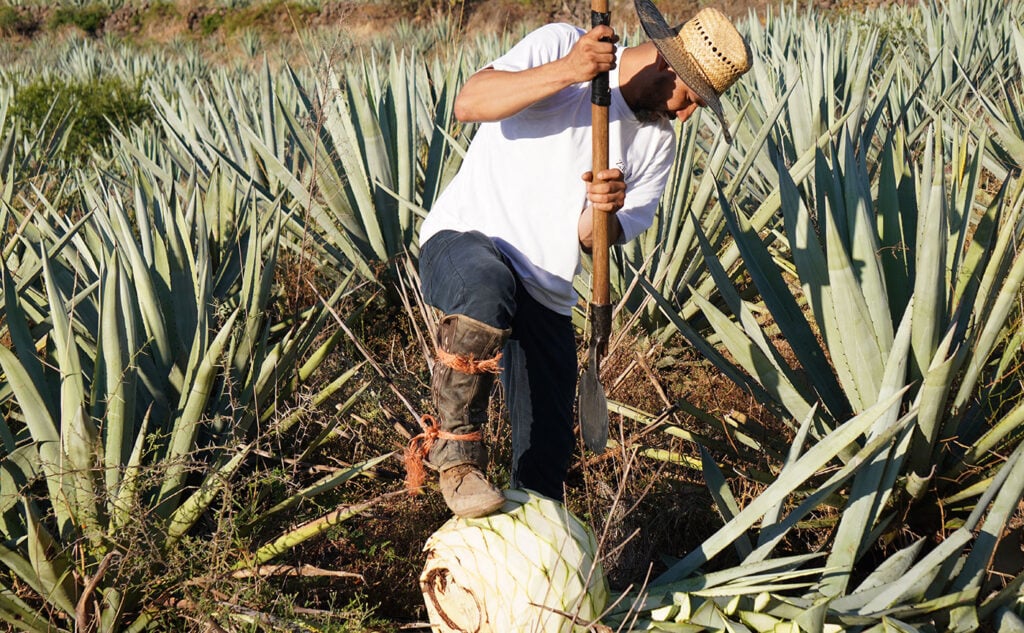
A Jimador harvests the local organic agave to be used for Zacal mezcal
When Zacal became Zacal
Four years later, after legal work, approvals, licences, import issues, and the realisation that they would have to become an importer and wholesaler in the UK themselves, Zacal finally arrived. And the early signs have been strong. Within a few months, Zacal had picked up a run of industry awards and accreditations, though Phil prefers another word.
“Validations,” he says. “We’re listing in around 70 venues. It’s been a heck of a year, but it’s been pretty hard going.” The founders all came from tech backgrounds: Facebook, now Meta, Google, Salesforce. Phil thinks it has helped. There is, after all, a line there between useful outsider and unbearable disruption merchant.
“We’ve got such a different background to pretty much anybody else that works in the industry. I think we’ve brought a mindset and a very different network of people, which is good and bad. We’ve come in with a whole load of naive mentality, but also question a lot of things about why. Why does it have to be like that? Why can’t we change? Question everything.”
The process of making Zacal mezcal
Zacal’s mezcal is made at Milton’s family-run vinata in Michoacán, using a process designed to retain complexity without letting smoke flatten everything else. One of the distinctive details is a small chimney used during cooking to draw smoke away from the agave. That reduces the heavier smoky character to allow more of the plant, fermentation, mineral and floral notes to come through.
The cooking itself is slow and physical. “They will spend hours basically piling up piñas from local agave varieties on top of each other,” Phil says. “They heat volcanic rock using a mixture of mesquite and encino wood, all sourced from the surrounding landscape. The latter is more floral, not as punchy. Milton uses very little mesquite”.
The underground oven is then covered with the red volcanic soil of the region, which the brand says imparts a distinct minerality. Holes are poked through the mound, giving the oven breath and allowing the agave to cook without becoming aggressively charred. “It creates a sort of agave pie,” Phil says. “It caramelises, and what that means is you don’t get the charring that often adds a lot more smoky flavour.”
When Phil visited in January, he tasted the cooked Manso Sahuayo piña. “You can eat it. It’s a bit pineappley. It’s sweet. You’re drinking and eating the plant at the same time. It’s wicked.”
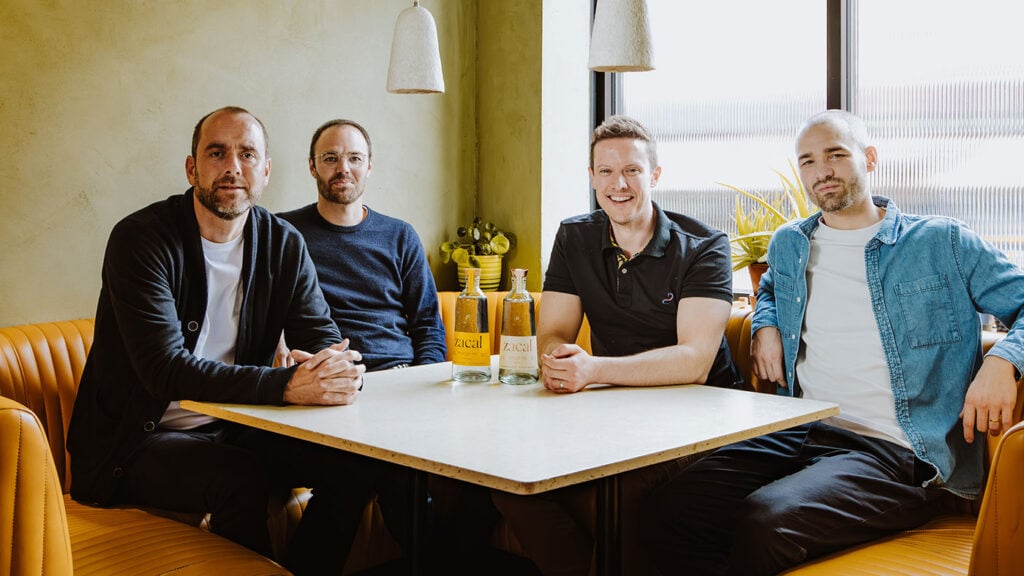
The founders of Zacal mezcal
Slow work, done properly
After cooking, the agave is hand mashed, then fermented wild in brick tanks with wood built into them. “It will ferment for four to five days,” Phil says. “The wood keeps it cool and adds more surface area for things like yeast and bacteria to become part of the natural fermentation process.”
He estimates fermentation is 60% to 70% of the flavour, but distillation is also central to Zacal’s character. Milton distils once in steel, then twice in copper. The spirit is hand filtered and bottled. It is slow and not especially scalable, at least not if the point is to keep the thing that makes it special.
Phil talks about Zacal as someone who has had his tech instincts beaten out of him by mezcal with volcanic rock. “It’s so wonderfully frustrating and refreshing at the same time because nothing moves fast. Everything is slow. Everything is about not cutting corners, no compromise. It’s not about the minimum viable product. It’s actually about getting it right.”
The brand shows an awareness of the fine line of growing enough to survive, but not so much that the product turns into a costume. “If we really wanted to push it, we could probably make about 8,000 bottles a month,” Phil says. “Beyond that, you start to lose some of the magic. Milton would have to hire somebody to help him oversee the process.”
The bottle and the art
That approach runs through the liquid, but also through the packaging. The bottles are made in Guadalajara, about 90 minutes away from their base, and are recyclable and hand-blown using a mould, meaning they are consistent in shape but never identical. The copper stopper is made locally in Michoacán. The packaging is meant to reflect the rugged landscape of the region rather than some imagined sepia-toned Mexico that exists mainly in drinks branding.
The bottle’s shape, for example, takes inspiration from Michoacán’s volcanic landscape, particularly Parícutin, the famous volcano that rose from a cornfield in the 1940s and became one of the region’s defining natural symbols. “I can tell you that it took us six months to get right,” Phil says “A lack of compromise runs through the heart of everything we’ve done.” That sounds sentimental, but hold the bottle in your hand before you judge.
Then there are the handwritten notes. The team found a historian based in Sahuayo and trained him to write the note in English on amate paper. “It’s made from mulberry bark, smells amazing, and is what the old Aztecs used to write sacred documents,” Phil explains. “We know we’ve not left any stone unturned. We’ve done it exactly as we want to do it. It’s something you can be proud of.”
The glass is not the only thing made by hand. The label design came from Aldo, an artist and designer based between Mexico City and Guadalajara. Like Milton, he became more than a supplier. “We met him in a bar in Mexico City and asked him to help design the bottle and labels and the product itself,” Phil says. “He’s now a shareholder.” Aldo is also working on Zacalita, the brand’s sparkling mezcal margarita in a can, but more on that later.
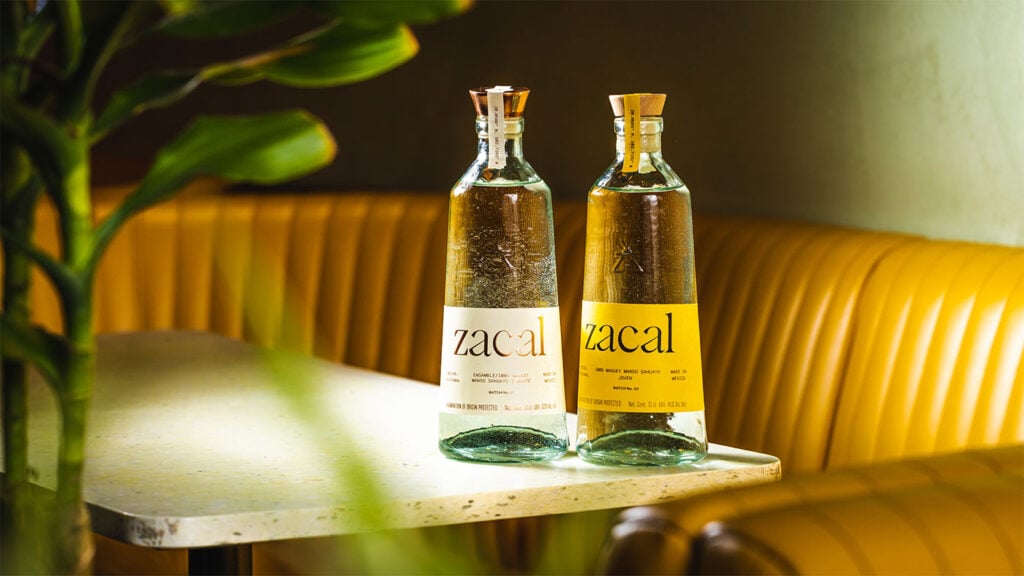
The bottles themselves reflect Zacal’s wider approach: no compromise
Taking responsibility while in Narnia
Sustainability is part of Zacal’s pitch, but it is also a practical necessity if you are working with slow-growing agave in a region where the plants, the communities, and the land all matter. Organic agaves, minimal water usage, recycled glass, local suppliers and regional craft partners are at the core of the business. It is also working towards carbon-neutral status and developing wider plans to support local communities in Michoacán.
They don’t intend to be outsiders who discover something extraordinary, then polish it into lifestyle content. “It’s a bit like Narnia,” he says. “You have to peel back the fur coats to find it. If you do that too much, you start to lose some of the magic.”
Phil says they walk a fine line between not wanting to ruin what Zacal mezcal is and maintain what keeps it special, but wanting to bring it to more people because they love it and think people should enjoy it. “It’s a very delicate balance between not fucking it and gentrifying it and destroying what makes it special.”
Future plans
At first, Phil and the team thought Zacal could be an entry point into mezcal. Then they realised their own palates had moved. “We were becoming desensitised to what 95% of people would drink. Actually, what they are is incredible high-end spirits, and we shouldn’t try to make them into anything else. Otherwise we all make compromises which are unnecessary.”
Phil mentions tasting puntas, the heads of the second distillation, and wondering whether a future release might explore that intensity. “We did think about that. Could we do a limited edition? People would have a go at that.” That’s the kind of outlook we’re dealing with here. It’s exciting.”
Another route is ancestral mezcal, a stricter, more traditional category of production. “One of the things we’re exploring is ancestral mezcal,” Phil says. “You basically cannot use any material or anything that was not traditionally used around about 200 to 300 years ago. An ancestral only from Bruto is in the process of being developed now.”
But what of the current crop? Let’s meet them.
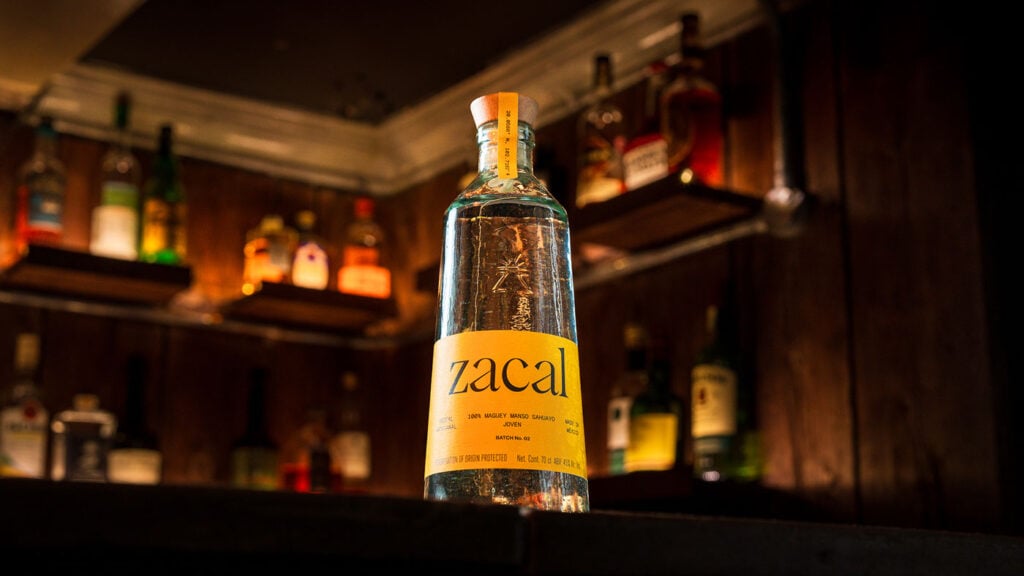
Your introduction to Zacal
Zacal Manso Sahuayo
Zacal Manso Sahuayo is made with 100% Manso Sahuayo, an organic, semi-wild Cenizo agave variety grown in Michoacán. Bottled at 45% ABV, this is not a smoke bomb. It has citrus and pepper, but also tropical fruit and a touch of wild-fermented funk, almost lactic in nature. In the glass, the first thing Phil notices is texture. “The legs on it are quite substantial. This is 45% ABV, but I never get taken out by the smoke, and it doesn’t burn.”
Phil describes it almost like a single malt in Scotch terms, and says Sahuayo is a cousin of Espadín and Blue Weber. The plant grows at higher altitude, around 1,800 to 2,000 metres, where the colder climate means it takes longer to mature. “You get a bigger plant,” Phil says. “It matures after about seven to eight, sometimes nine years. It gives you a very high Brix level and sugar, and it also produces a lot more esters and natural depth because it is grown for as long as it is.”
Before it becomes mezcal, the plant itself is not exactly gentle. The jimadors harvest the agave in the field, dig it out, shake it down, then shave off the leaves, which Phil compares to hypodermic needles. “Some jimadors wear body armour, basically,” he says. “But the guys who really know what they’re doing don’t wear anything, just thick boots. They don’t even wear gloves.”
Manso Sahuayo y Bruto Ensamble
If Manso Sahuayo is the graceful one, Ensamble is where Zacal goes stranger and more intense. Made from a 50-50 blend of Manso Sahuayo and Maguey Bruto, it is bottled at 50% ABV and designed for sipping, with a herbaceous, floral, oily profile and a lightly smoked finish.
Phil holds a glass before his nose and notes that you can almost smell it’s going to have a big, thick, oily texture. “It’s like an orange with the skin on, almost puckering smelling it, but you’d never guess it was 50% ABV. I’m yet to taste a mezcal that does what this does. Milton has this romantic idea of the two blends mellowing and meeting each other. I want to understand the mechanics and the chemistry.”
Bruto is huge. Properly huge. “You don’t probably have to be able to speak Spanish to work out what Bruto means in English,” Phil explains. “It grows about three meters high, a fully mature plant would fill the room.” We’re in Café Pacifico in London, for reference. “When they flower, they’re called alto because the quiote, or the flower that comes out of it, can be 40 to 50 feet. You go out on horses to find it. They’re not difficult to miss.”
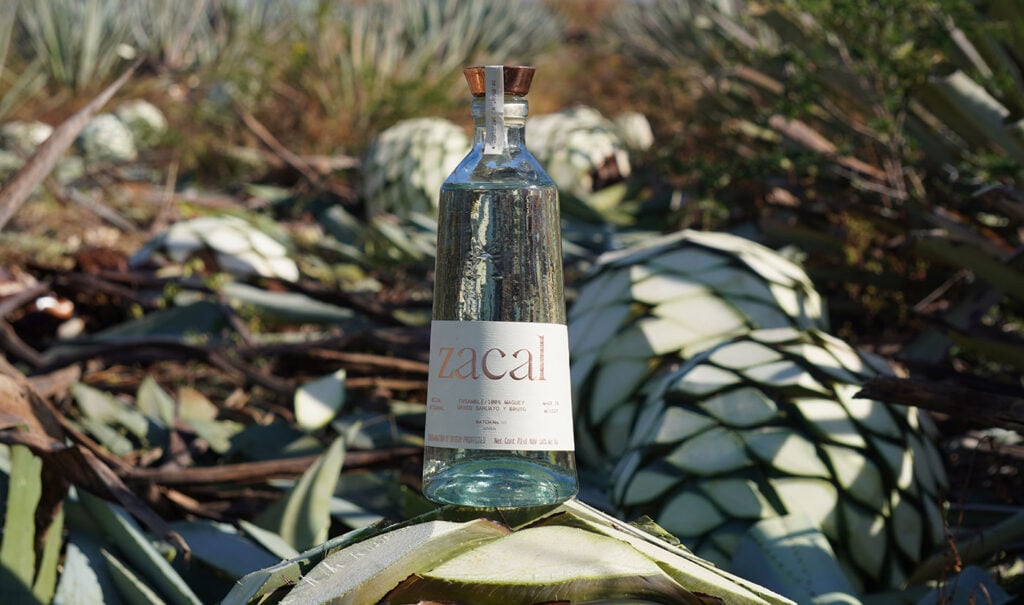
Look at the size of those piñas
The brute
Manso is cultivated, or semi-cultivated, grown in fields at around 1,800 to 2,000 metres. Bruto is a wild inaequiden agave*** that grows higher, around 2,000 to 2,500 metres depending on where it is found, and takes around eight to ten years to mature.
“It’s a pig to work with because the piñas weigh half a tonne, and yet they produce probably no more than five or six bottles per piña,” Phil remarks. “But it produces a huge, herbaceous, beautiful flavour.”
It is also a rite of passage for the mezcalero, Phil says. “It is so difficult to manage and harvest. If you fuck up, you have to go get another one. They’re also heavily regulated.” What it helps Zacal create is worth it in the founder’s minds, however. “Manso is the mild, you meld that with the brute, and there’s a little poetry in those two contradicting things working together,” Phil says.
Mezcal in cocktails
One thing Zacal has learned quickly is that good mezcal does not need to dominate a drink to announce itself. “It looks great on the bar. They love the taste,” Phil says. “The challenge is more how do you, in the right way, introduce it into cocktails?”
The answer is that, with a high quality mezcal, a little can go a very long way. “You don’t have to use much of this stuff. 10 to 15ml and you’ll notice it.” That makes Zacal highly substitutable. Not in the sense that it disappears, but in the sense that it can sit inside classic structures and bend them.
“Negroni, Old Fashioneds,” Phil says. “It allows other ingredients to sing, though you still know mezcal is in there.” He mentions a Mezcal Martini with a pearl onion. There is also talk of the Margarita needing something extra. Which brings us to Zacalita.
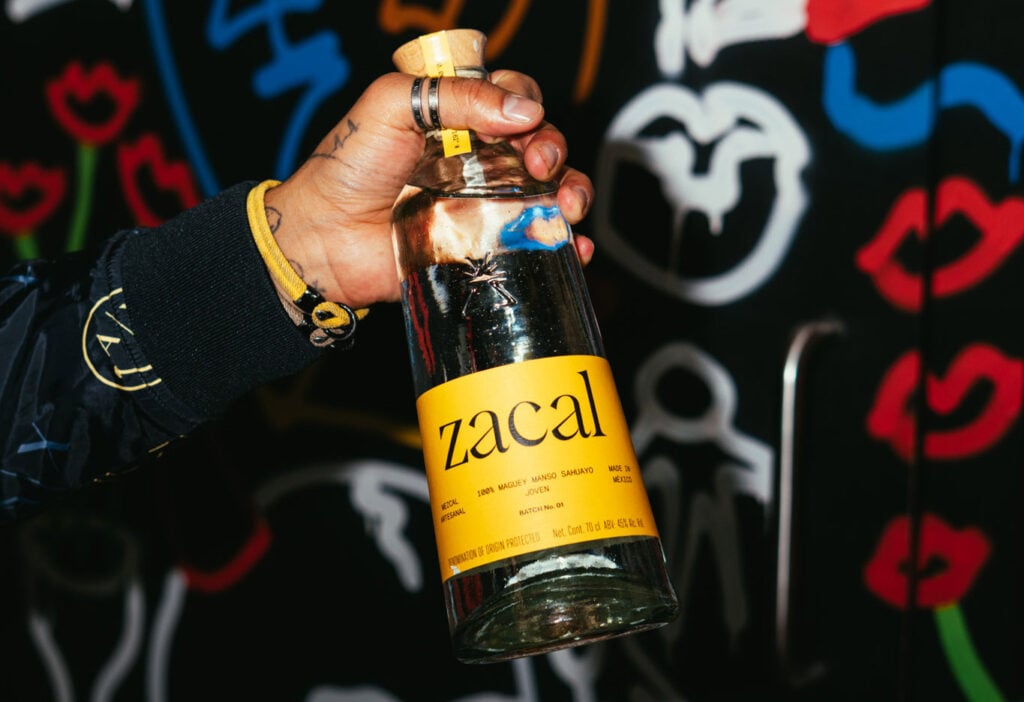
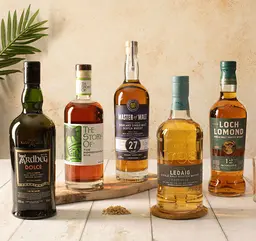
You can buy Zacal from Master of Malt
Zacalita
Zacalita is Zacal’s sparkling mezcal margarita in a 200ml can. It is 7% ABV and made with Manso Sahuayo mezcal, High Fidelity triple sec, black cardamom distillate, lime and soda. It’s a full sparkling Margarita, not a Margarita-flavoured drink.
“This was an opportunity for us to make something whereby we could still do it to bar quality specs and bar quality, but it’d be convenient because it’s in a can,” Phil says. “You can maintain the craft, but you’re not asking too much of people.”
That is the route into mezcal for a lot of drinkers. A cold, sparkling Margarita that tastes like the thing it says it is. Phil has some realism among the romance of the story. “90% of people really will only ever drink agave spirits in a cocktail, but when they’re there, they are at the start of the journey.”
The can does not numb Zacal. It opens another door. “This is not meant to be for everybody,” Phil says of the core spirits. “As far as I’m concerned, if it’s for everybody, then it’s for fucking nobody. But Zacalita cracks the door wider.” There are two recipes at the conclusion of this article for those want a play.
Beyond Oaxaca
Zacal’s point is not that Oaxaca is unimportant. It has been central to mezcal’s modern global rise, and many of the world’s great mezcals are made there. The point is that mezcal is not one place, one plant, one flavour, or one regulatory story.
Michoacán brings something else. Zacal is trying to tell that story without claiming to own it, which is the tricky part. Phil knows the balance is fragile, the risk is becoming exactly the thing mezcal does not need: another outsider brand extracting a story from somewhere it barely understands.
Zacal has the story, the bottle, the awards, the liquid. Most of all, it has the partnership with Milton, and the resolve to let the mezcal remain specific.
Two Zacal serves
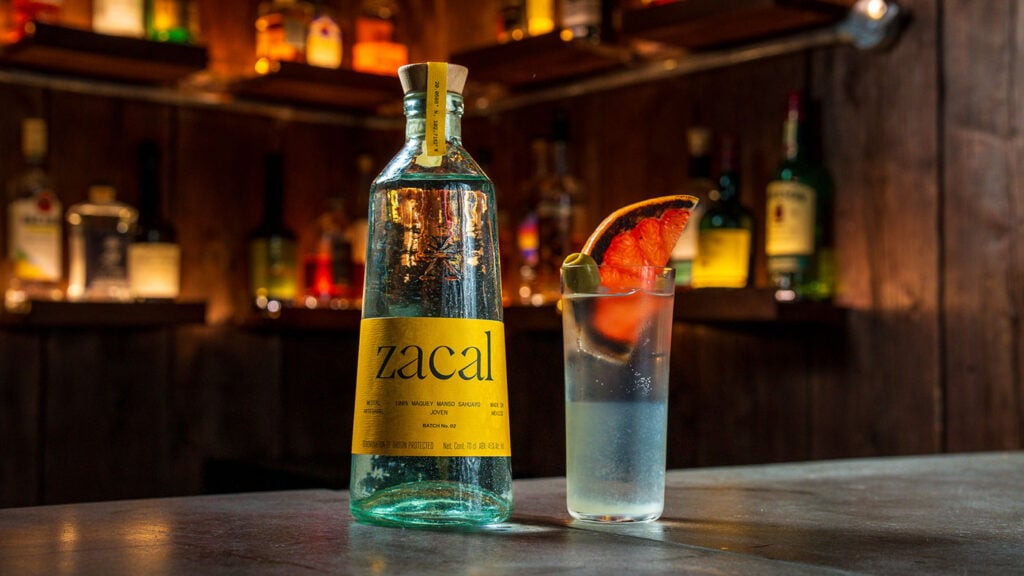
The Mariposa
The Mariposa
Named after the monarch butterflies, one of Michoacán’s natural wonders, the Mariposa is a fresh, elegant aperitif with citrus, elderflower, dry vermouth and tonic.
Ingredients
40ml Zacal Manso Sahuayo
5ml lime juice or a squeeze of lime
15ml dry vermouth
10ml elderflower cordial
Top with tonic
Charred grapefruit slice and olive, to garnish
Method
Add the Zacal, lime, dry vermouth and elderflower cordial to a glass. Add ice, then top with tonic. Char the grapefruit slice, add it with the olive, and serve.
The Cerveza Cooler
A long, bright, beer-topped serve that puts Zacal into properly refreshing territory.
Ingredients
40ml Zacal Manso Sahuayo
10ml lime juice or a squeeze of lime
10ml elderflower cordial
Top with lemonade and Mexican lager, such as Corona or Modelo
Lime wheel and cucumber slice, to garnish
Method
Add the Zacal, lime and elderflower cordial to a glass or jug. Add ice, then top with lemonade and Mexican lager. Garnish with a lime wheel and cucumber slice.
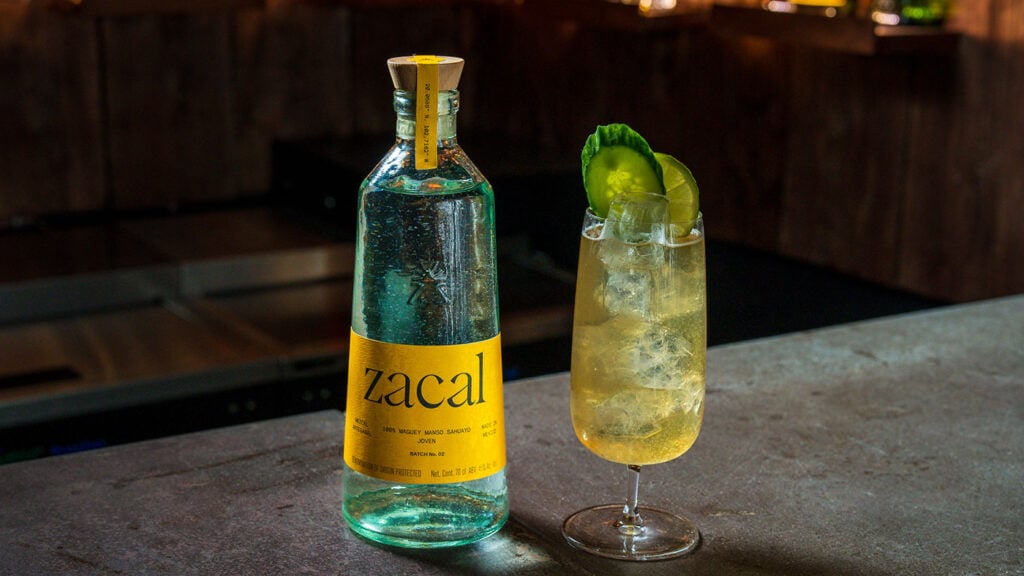
The Cerveza Cooler
*Tiny but important caveat: it is not always the whole state. Oaxaca, Durango, Guerrero, San Luis Potosí and Zacatecas are covered state-wide, while places such as Guanajuato, Michoacán, Puebla, Tamaulipas, Aguascalientes, Morelos and Estado de México are covered by specific municipalities.
**Pre-Hispanic beverage made from the fermented sap of the maguey with a consistency like kombucha.
***Agave inaequidens is a species of agave native to western and central Mexico, particularly the states of Michoacán, Jalisco, and México. It has been distilled for generations in Michoacán, and the name inaequidens means “unequal teeth”, referring to the irregularly sized spines along the leaf margins.