Trade
Trade

Lancaster Spirits Co. has not released its first single malt whisky yet. It’s not expected to reach the market until 2027. That is not stopping it from planning the next one.
The young English distillery has begun a limited peated spirit trial, its first move into smoky, phenolic whisky-making. Over four weeks in 2026, it will fill just 20 first-fill bourbon barrels using peated malt from Crisp Maltings, starting at 50 PPM.
This is not an attempt to build a little Islay in Lancashire. It’s a young distillery with long-term thinking that is building flavour into its future: peated stock that can stand alone, or give blender Max McFarlane another tool when the distillery’s English whisky starts coming of age.
We spoke to Chris Pateman, commercial manager at Lancaster Spirits Co. to find out why Lancaster is heading into peat before its first aged single malt has even reached the shelf.
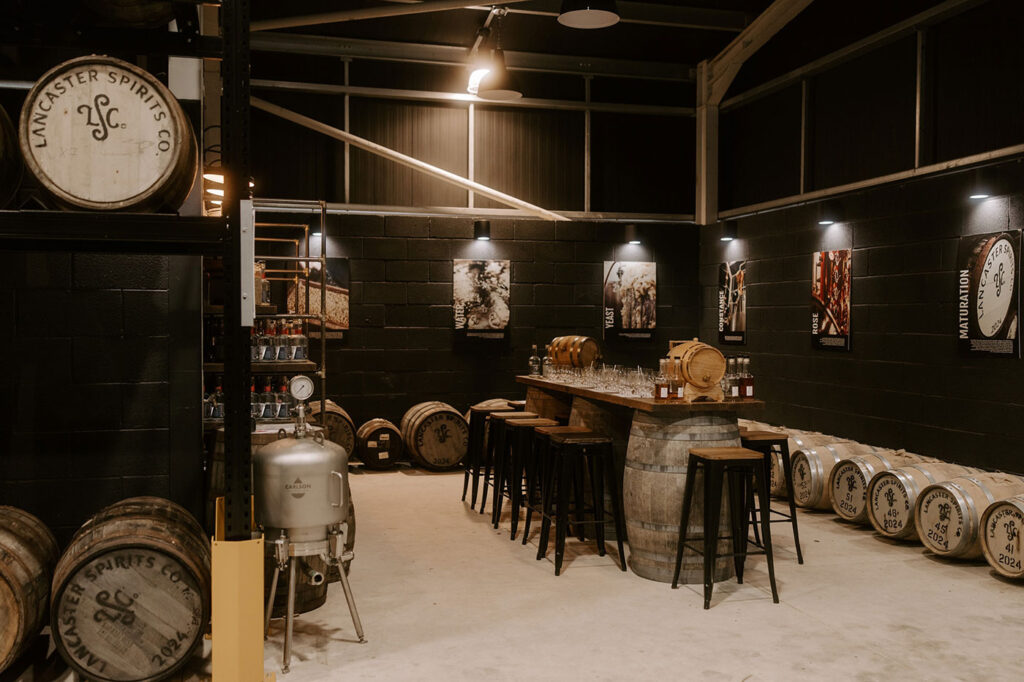
Peat has been added to party at Lancaster
The trial
Each 200-litre bourbon barrel will be filled at 63.5% ABV, consistent with Lancaster Spirits Co.’s existing unpeated spirit, and will be laid down for a minimum of three years before it can be legally considered single malt whisky. The new-make spirit will not be released for bottling at this stage.
Should the trial prove successful, the distillery intends to introduce peated production as an annual fixture, potentially extending to a four or six-week run in future years. A small allocation of the 20 barrels will be made available for purchase, with casks priced at £4,200 each, consistent with the distillery’s existing first-fill bourbon barrel offering. Several casks have been pre-sold ahead of June’s announcement.
“Producing peated spirit gives our blender a wider spectrum of flavour to play with in the future. Blending both our peated and unpeated spirits will enable us to add layers of complexity and depth of character,” says Chris Pateman, commercial manager at Lancaster Spirits Co. “We believe that utilising peated malt within our mash bill will give us a whole new dimension to our spirit, emphasising existing flavours, whilst realising wholly new ones. It’s all about depth of flavour”.
Pateman tells me the current unpeated spirit is complex, sweet and fruity, thanks to old-school, traditional production techniques. The process begins in the company’s award-winning brewery and uses live brewer’s yeast to aid a long fermentation of up to seven days. He also calls it a robust spirit, one that benefits from ageing in highly active casks such as different types of sherry casks and wine barriques.
“We hope to create a peated spirit that lets that fruity character play a role whilst balancing it with the smoky characteristics from the peated barley, all whilst retaining the creamy/oily texture”.

Say hello to Chris Pateman of Lancaster Spirits Co
A new direction
Starting at 50 ppm is quite an ambitious level. Lagavulin is around 35 ppm, for reference. Pateman tells me using peated malt at 50 ppm and combining this with differing levels of pale ale malt within the mash bill over a four-week period gives Lancaster room to experiment with the flavours developed and balance the peat smoke influences from the wash and spirit.
Peated malt is measured in parts per million (PPM). That unit is misunderstood, but essentially quantifies the level of phenol, or smoke flavour, present in the barley following the peat-smoking process. Not after distillation, however. For this trial, Lancaster Spirits Co. will work with peated malt sourced from Crisp Maltings, starting at 50 PPM, producing a spirit with a notably robust and characterful smoky profile.
“So, the wash will have a PPM of between 10 and 20 once mashed with our pale ale malt, but varying this each week, we can decide which mash bill is most harmonious. Each week, we’ve been altering the mash bill with increasing levels of peated malt to see how this influences our spirit. We’ve decided to keep all the other variables the same so that we can focus on the spirit itself – all of the spirit will be filled into first-fill bourbon barrels so that it is easier to compare the spirit as it matures in the years to come”.
A new direction
It’s not just about introducing more robust, smoky, and earthy characteristics otherwise not found within the Lancaster spirit. Pateman says they want to exaggerate some of the malty characteristics in the signature spirit, whilst maintaining the fruity and estery notes that people expect. Texture is important too; with an ambition to maintain the oily, weighty quality in the spirit.
This is ultimately meant to be whisky with a smoky barbecue feel. Subtle, oily, slightly meaty and slightly earthy. Not an Islay imitation.
Equally important for Pateman is a focus upon filling only the finest wood, sourcing first-fill seasoned casks from reputable bodegas, distilleries and wineries.
“Our small team is tasked with ‘active cask management’, monitoring the progress of every cask, re-casking and marrying casks as required to add layers of flavour.”
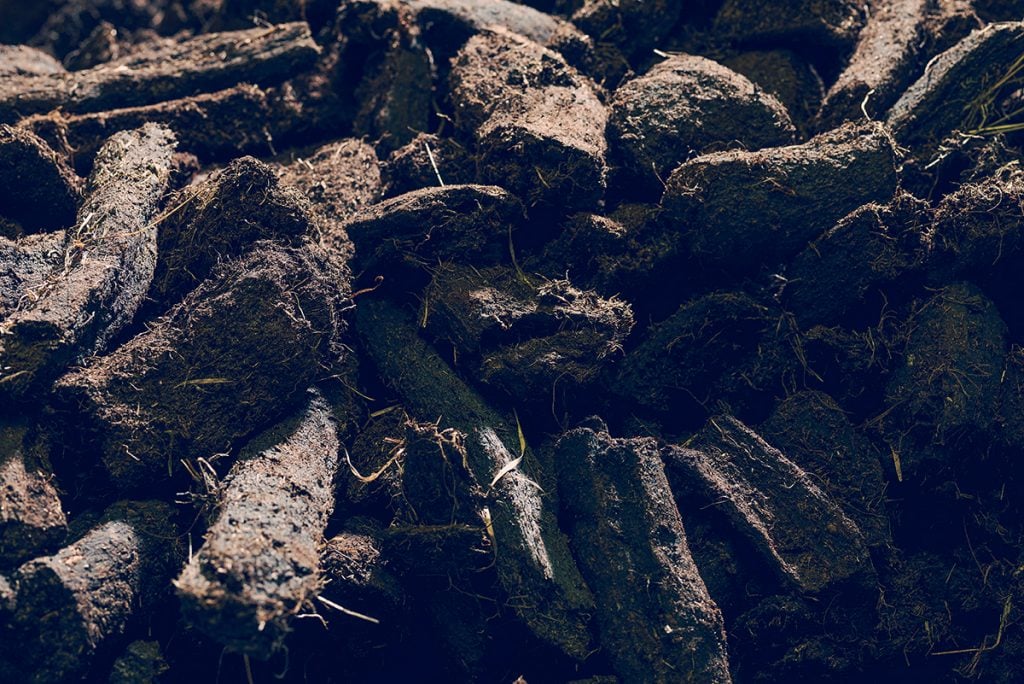
Peat, glorious peat
Keeping peat in its place
To avoid contamination, all the peated spirit has been held and transferred with different vessels and containers to minimise flavour transfer from the peat. The stills and all associated equipment will be deep cleaned each week, between the different mash bills, and there will also be a week without whisky production to try and minimise the risk.
“Our concern was the impact that the peated malt would have upon our mash tun and, in turn, our beer; thankfully, no issues have been detected over the last few weeks,” Pateman confirms.
While this is an exciting development for Lancaster Spirits Co., it’s hard to see peated English whisky becoming its own category any time soon.
“English whisky has a growing reputation for high-quality, flavour-forward whiskies that are crafted in small batches, and peated spirit will help to complement that,” Pateman says.” I do not foresee a region of England becoming renowned for peated whisky such as the Outer Hebrides…”
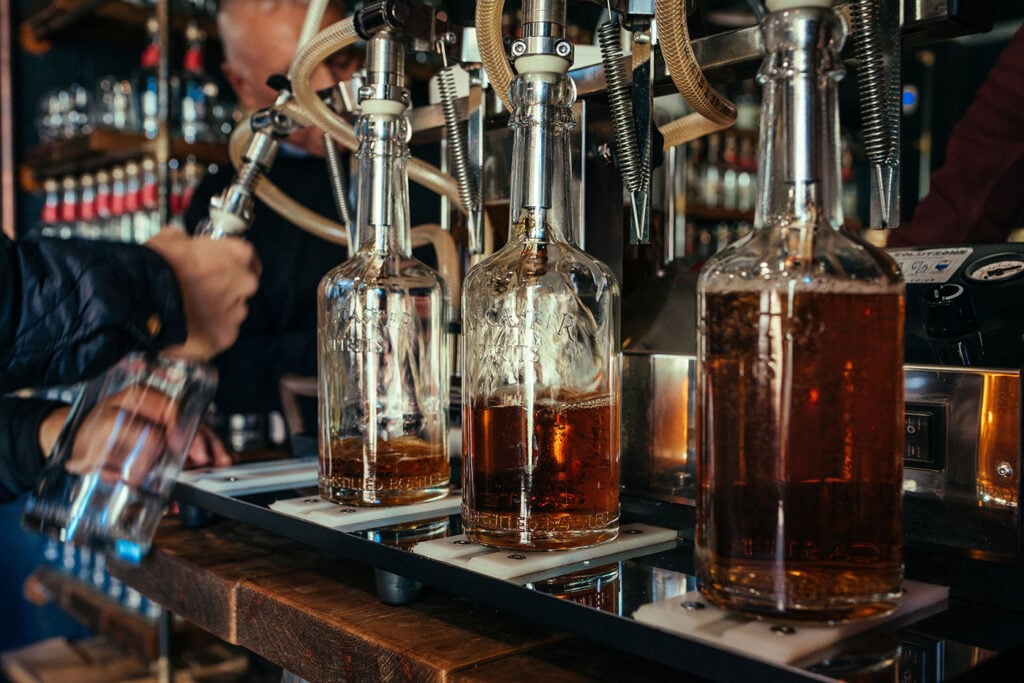
We await the first whisky from Lancaster. Will it have a touch, or more, of smoke?
The future of Lancaster Spirits Co. peated whisky
What English distilleries can do with peat that most Scotch producers can’t is experiment with different quantities and types of peat to develop flavour. Pateman says most Scotch producers are shackled by their scale, and that the majority of Scotch producers are focused on producing spirit in the most efficient, cost-effective way possible.
What will happen to the original 20 barrels is a matter of wait and see. They won’t be vatted together in large quantities, though, the plan is to utilise the flavour more effectively for both standalone releases and future blending components.
“Everything we do at LS Co is craft, small-batch and flavour-led. I foresee us marrying both peated and unpeated spirit for larger releases (2,000-5,000 bottles), as well as single cask and smaller vattings (500-1,000 bottles),” Pateman says.
If the trial becomes an annual fixture, peat will account for approximately 10-15% of their total production. For now, these 20 casks are a marker in the ground. Lancaster Spirits Co. is already thinking like a blender: building options, testing flavour, and making sure the future house style has more than one dial to turn.