What is peat?
Peat is a wonderful natural product that drastically alters the taste of whisky. But what it is it, and how does it do it? Here are the answers.
Jump to section
Author:

Reading time: 5 minutes
We love our peated whisky and for that, we have peat to thank. But we appreciate that to most people who didn’t grow up in Scotland, Ireland, or other peat growing areas, it’s not exactly the most familiar substance. So here’s a handy little guide to nature’s greatest flavour brick.
What is peat in whisky?
To look at peat, it resembles a brick of black mud. But it’s much more complex than that. Peat is an organic fuel consisting of partly decomposed plant material, like wood, seaweed, plants or flowers. It’s found in bogs, where the wet conditions compact the organic matter, but a lack of oxygen means the deposits can’t fully break down.
It forms over thousands of years, meaning today’s peat will have begun life as a plant around the time aliens first put together Stonehenge for a laugh. While in the whisky world, peat is most associated with Scotland, it’s also found in Ireland (often called ‘turf’), as well as the US, Canada, Scandinavia, Siberia, and even Indonesia.
People realised that when harvested, peat could be burnt and used as fuel. Of course, when it’s dug out of a bog it’s still wet, so it needs to be cut into ‘bricks’ and dried first.

Peat has to be dug up and cut into bricks. Before that, it looks like this.
How is whisky peated?
The question is, how do you peat whisky, and what is peated whisky? Well, fire is a key part of the whisky-making process, and burning peat makes that fire. As you may well know, whisky is made from grains like malted barley. The malting entails allowing the grain to germinate in water to unlock the natural sugar content. Those sugars are what the yeast eats and converts to alcohol in fermentation. But before that, you need to dry the grain with heat to stop it growing, or you’d have a fully-fledged seedling on your hands.
That heat needs a fuel source. Coal, electricity, gas, and oil are the most common. But peat is the most famous. It wasn’t initially a stylistic choice, however, but a practical one. In places like Islay, fuel sources weren’t in big supply. There were hardly any trees to cut down. Coal would have to be shipped over. Anyone who has done the journey to Islay will know it’s not a simple one. Never mind with great big bloody lumps of coal to haul over.
But what Islay and other remote areas and islands had in abundance was peat. So that’s what was used and that’s how peated whisky is made. In the process, whisky makers realised this unique fuel source was aromatically influencing the resulting spirit. For which we have a family of compounds called ‘phenols’ to thank.

Peat being dug up for to be used in whisky production for Highland Park
How does peat influence the taste of whisky?
The flavour of the peat is released when burnt (don’t try and eat it, that would be gross), and that profile is formed by the kind of plant matter that decomposed in that particular bog and at that particular time. Every brick of peat has its own character, meaning it exhibits a kind of terroir. The question “What does peat taste like in whisky?” has a multitude of answers. Overall it’s smoky, but that could be a sweet smoke, an earthy smoke, an ashy smoke, or even a medicinal smokiness. For some, peat in whisky smells like TCP.
In Scotland, for example, the peat Orkney tends to have a higher proportion of heather creating a lighter, sweeter character compared to peat on Islay. The latter has more coastal and iodine aromas as the peat is partially formed by coastal minerals and plants (like seaweed, shells, Poseidon’s trident, etc.).
While peat is by no means unique to Islay, the personality of its peat became so well renowned and in demand that peated whisky has become intrinsically linked with the Queen of the Hebrides. Are there peated whiskies in Speyside? Sure, historically even more so than now, but brands like Benromach and Benriach still produce smoky whisky today.

Laphroaig is a fine example of a peated whisky
Measuring peat
It’s not just which peat you use that will affect a whisky’s flavour, but how much you use and how you use it too. Like the Nandos spice scale, peat has different levels of intensity, from delicate whispers of smoke to full-on dragon’s breath. Its concentration is measured in ppm, which stands for Parts Per Million of phenols. In theory, the higher the ppm, the smokier the whisky.
To give you an idea of how this translates to taste, Ardbeg uses malt that's been peated to 50 to 55 ppm, most Laphroaig releases have a phenol level of 45 ppm, while Bruichladdich’s Octomore releases often rank over 100 ppm. The latter actually holds the ppm record, with the 08.3 edition containing barley peated to a volcanic 309 ppm.
But ppm isn’t the only way of determining how peaty a whisky tastes. The way it's fermented, distilled, and matured all play a role, so if you were to compare, say, Lagavulin 16 Year Old and Caol Ila 12 Year Old, you would know the latter tastes noticeably less smoky than its neighbour. But both are peated to a phenol level of 35 ppm.

Peat is a part of its natural habitat
Is peated whisky sustainable?
The use of peat does raise sustainability questions. It’s a key part of the ecosystem that supports natural carbon storage, water quality (a quarter of the UK drinking water comes from peatland), and helps prevent flooding. It’s also essential for biodiversity, with species like the large heath butterfly and the bog bush cricket being endemic to lowland raised bogs.
Peat is a cheap and accessible fuel source, but the long time it takes to form means it is a finite resource. When peat is extracted, the plant matter in the bog decomposes, reducing the benefits listed above and causing greenhouse gases to be released. The carbon store in the peat itself is then released when the peat is burnt. For this reason, peatlands are becoming increasingly protected under SSSI status (A Site of Special Scientific Interest).
The commercial use of peat has already damaged 80% of the peatlands in the UK, while reports suggest that one of the two main sources of peat for whisky is set to run out in the next decade. Diageo owns Port Ellen Maltings and is given extraction rights for a 1,000-acre site at Castlehill currently owned by NatureScot, but the group is under pressure to revoke access to the drinks giant.

There is a cost to cutting peat we have to consider
Peat, whisky, and a sustainable future
It is worth noting, however, that the whisky industry uses a very small amount of peat from a handful of sites in Scotland, with peated whisky production accounting for just 1% of all peat extraction. Farming, the horticultural industry, and fuel in fireplaces massively outrank peat’s use in whisky, however, those industries will likely succumb to pressure from environmental groups and government incentives faster, so the whisky industry will increasingly become a major player.
The environmental impact of harvesting peat bogs is clear, but so is the cultural significance and economic value of peated whisky, so addressing this issue requires the whisky industry to be forward-thinking. For its part, change is happening. The Scotch Whisky Association is committing to conserving and restoring Scotland’s peatland by 2035. The group is also developing a Commitment to Responsible Peat Use plan to deliver an environmental net gain and supports the International Union for the Conservation of Nature (IUCN) UK Peatland Strategy 2040.
Brands are on board too, with Diageo funding the restoration of around 700 acres of peatland on Islay and also has a wider aim to make its 28 single malt production facilities net-zero by 2030. Oban Distillery and Royal Lochnagar have also switched over to burning a biofuel created from vegetable oil residue, while biochar, a high-carbon form of charcoal that is produced via pyrolysis, is also a viable alternative.

Peat: it's a humble but wonderful thing
Embracing the world of peated spirits
Peat is a fascinating substance that creates a wonderful style of whisky. There’s no doubt its one of the most distinctive flavours out there. That can make it the marmite of the whisky world. Some people love it, some people hate it. It’s an acquired taste that some find abrasive and challenging at first.
Don’t rule it out, though. Peat is a full-bodied flavour with so much to offer and the peated whisky category is one full of culture, heritage, and nature. Hopefully understanding it will help if you haven’t been converted yet. Warning: Once you do fall for peated whisky, it’s a lifelong love affair. There’s no turning back…
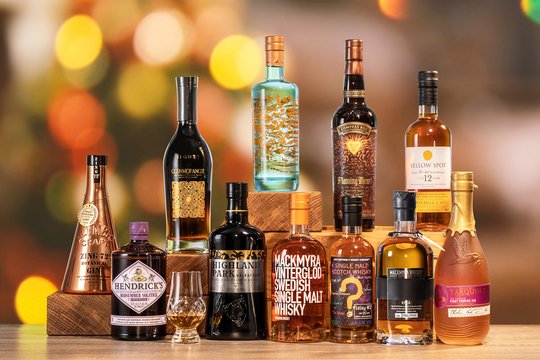
Peated whisky to try
These whiskies are all peated and all beautiful because of it.
More whisky guides
Find out how whisky is made, about the different types of whisky available, and more...
Discover more whisky guides
Find out how whisky is made, about the different types of whisky available, and more...