A guide to the Highlands | Scotch whisky regions
The largest Scotch whisky region of them all: this is our handy little explanation of the big ol' Highlands. Covering history, Speyside, the Islands, and more, this is your ultimate guide to the Highlands.
Jump to section
Author:

Reading time: 10 minutes
The mighty Highlands is the most geographically large region of them all, stretching from Loch Lomond in the south west to John O’Groats in the north east and beyond to the isles of Arran, Skye, Mull, Jura and Orkney.
We’ve actually separated the islands, even though the Scotch Whisky Association classes them within the Highlands, for reasons we have explained in our guide to Islands. Speyside can also be classified as the Highlands, which is confusing, but we clear that all up in our guide to Speyside.
The Scotch Whisky Regulations of 2009 says The Highlands ‘…means the line beginning at the North Channel and running along the southern foreshore of the Firth of Clyde to Greenock, and from there to Cardross Station, then eastwards in a straight line to the summit of Earl’s Seat in the Campsie Fells, and then eastwards in a straight line to the Wallace Monument, and from there eastwards along the line of the B998 and A91 roads until the A91 meets the M90 road at Milnathort, and then along the M90 northwards until the Bridge of Earn, and then along the River Earn until its confluence with the River Tay, and then along the southern foreshore of that river and the Firth of Tay until it comes to the North Sea.’
In the beginning…
Whisky has been in the Highlands since the beginnings of whisky production in Scotland, when the art of distillation was possibly brought over by missionary monks from Ireland, or crusaders returning from the Arab world. Maybe an angel appeared to a Scottish farmer in a dream with an awful thirst and an idea of what to do with some of that excess barley. In the early days, much of this whisky would have been made illicitly, by folks simply cobbling together their own makeshift stills and making aqua vitae, the original form of whisky that was often flavoured with local herbs and fauna.
Records from the Register of the Privy Council in 1614 show a man being accused of breaking into a private house, as well as assault, and knocking over some ‘aquavitie’ in the parish of Gamrie in Banffshire. An Excise Act passed in 1644 by the Scots Parliament fixed duty at 2/8d (13p) per pint of ‘aquavitie’ or other strong liquor. By 1690, we get the earliest reference to a distillery in the Acts of the Scottish Parliament when Ferintosh distillery near Dingwall in the Scottish Highlands, Ferintosh, famously referenced by Robert Burns in his poetry.
In this time whisky was produced in Scotland without any regional distinction. That was until the Wash Act 1784. It enforced certain duties and legal requirements while creating a border across Scotland that ran between Dumbarton on the Clyde and Dundee on the Tay that was designated the ‘Highland line’. Everything below it was the Lowlands, everything above it the Highlands.
Legalisation and boom
The whisky made then in the Highlands was a precursor to the single malt Scotch whisky of today, made in small pot stills from malted barley, unlike the whisky made in the Lowlands which was often mixed grain and, after 1830, in the new column stills. Avoiding the rampant taxation on the production and distribution of alcohol in this era was easier for the remote Highland distillers and many of the distilleries were illicit. But it was quality stuff, popular throughout Britain and often smuggled into London at the behest of the wealthy elites. There were some big name legitimate distilleries founded in this time too, like Bablair (1790), Oban (1794), and Glen Garioch (1797).
Taxation eased after the Napaolenic wars ended and in 1816 taxes were divided by three and the use of smaller stills (at least 40 gallons) was permitted again, which caused the number of registered distilleries in the Highlands increased from 12 to 39 in 1817 and to 57 in 1859. Many Highland distilleries we know and love today were established in that period, like The Dalmore in 1839, Glenmorangie in 1843, GlenDronach in 1826, and Talisker in 1830.
The famous Excise Act of 1823 sought to bring more legitimacy, easing the means to obtain a licence to distill and bringing in a lower excise tax of £1.1 per gallon of capacity per year in the Highlands. But distilleries there were now limited to these tiny 40 gallons or less stills and could only use locally grown barley. The whisky produced had to be consumed in the local district too, and the number of distilleries was reduced to two per parish. Some distillers simply went underground again, as enforcing rule in the wild Highlands was complicated and demand was satisfied locally. The tide was turning, however, and with technology and transportation advancements came a boom of distillery openings in the Highlands by the latter half of the 19th century. By 1883 Scotland had over 2200 licensed stills producing almost 19 million gallons of spirit every year.

The misty Highlands have been home to whisky making for centuries
The diversity of the Highland style and distinction
While the Highlands was distinguishable for its brand of characterful malt whisky made in small pot stills, before long different regions began to develop their own style. Back then, the Highlands covered regions that are distinct now like Speyside, Campbeltown, and Islay, but their whisky was more of a reflection of where it was made (then compared to now) and that meant pungent, oily, smoky whisky became a feature of Campbeltown, while smoky, maritime, medicinal whisky was made on Islay, and with the expansion of the Great North Railway and the popularity of Glenlivet, a huge wave of distilleries opened in what we now know as Speyside.
These differences were underlined by the blenders of the time, who in this era became the dominant force in Scotch whisky. It wasn’t so much a case of preference between Lowland grain whisky or Highland malt whisky, instead the demand was for whiskies that married the two and more to create something greater than the sum of its parts. Blenders would group by region and quality, like Alexander Walker II using the term “North Country” to group together Highland and island whisky he used to make Johnnie Walker Red and Black. As the smoky Islay or the characterful Campbeltown became more distinct in the whisky they made, so too was the way they were understood and categorised by blenders. The formation of the regions we know today was germinating.
In 1909, the Report of the Royal Commission on Whisky and Other Potable Spirits was published by the UK government. A comprehensive survey of Scottish and Irish distilleries, it listed regions including Highlands, Lowlands, Islay, Campbeltown, and Speyside. The Highlands was still the most all-encompassing of the regions, and remains so today. But categorisation didn’t mean anything then to consumers and frankly producers had bigger fish to fry. .
20th century boom and bust
If you’ve taken the time to read through all of our Scotch whisky region guides, firstly thank you, and secondly, you may have noticed a theme. There’s a very distinct boom-bust pattern that occurs in the Scotch whisky industry of the 20th century. These periods of rapid growth followed by sharp declines were influenced by a variety of factors, including changes in demand, economic conditions, and regulatory changes.
A first crash came in December 1898 when Pattisons Ltd was declared bankrupt, a massive blending and export business that overextended itself with borrowing. It was fuse to light a match that contributed to a massive financial crisis as the market for Scotch whisky contracted sharply and several distilleries closed or were mothballed. Then came the First World War, before its end saw a boom driven by exports and a desire to celebrate the end of the conflict. Prohibition came into law in the United States in the 1920s, however, and severely restricted one of Scotch whisky's largest markets, leading to a significant downturn. The Great Depression followed that, and these factors combined to lead to a raft of distillery closures across Scotland. In The Highlands, we lost the likes of Auchinblae in 1929, Ballechin in 1927, Glencawdor in 1930, and Glencoull in 1934.
A brief recovery post-Prohibition was quickly flattened by the Second World War. After that, a post-World War II boom saw global economies recover and demand for luxury goods like Scotch whisky, increase. That led to a huge period of production, which turned out to be overproduction as the whisky loch of the late 1970s and 1980s hit. As consumer preferences shifted towards lighter spirits, such as vodka and white rum, and the global economy faced oil crises, inflation, and recessions, distilleries found themselves with vast stockpiles of whisky that wasn’t in demand. It is said by some that there was enough whisky stockpiled in Scotland's warehouses to fill an entire loch, or lake. So another raft of closures followed. Distilleries like Glenugie, Glenury, Glenlochy, Glen Mhor, and North Port were all demolished in the 1980s in the Highlands. Most notably, Brora, which had operated since 1819, was mothballed in 1983.

The Highlands has an exciting future thanks to fine new producers like Nc'nean.
The Highlands today
However, in the late ‘80s an appreciation for single malt had begun. Into the 1990s single malt Scotch whisky was setting the stage for a period of huge growth and innovation in the 21st century. Encouraged by the demand, new distilleries were established, and some previously closed distilleries were reopened. One of the first was Arran DIstillery, established in 1995, marking the revival of whisky production on the island after 150 years.
The most northerly mainland distillery arrived in Thurso in 2013 when Wolfburn Distillery was re-established near the site of the original distillery from 1821. In 2017, organic whisky maker Nc’nean Distillery was opened by Annabel Thomas on the Morvern peninsula, while Adelphi opened the Ardnamurchan Distillery, producing both peated and unpeated whisky. Another notable opening was GlenWyvis Distillery in Dingwall, which opened in 2017 thanks to a community ownership scheme. On 9 October 2017 came the exciting news that Diageo was re-opening the Brora distillery and then on 19 May 2021 it was announced the reopening was complete and the first new cask of spirit had been filled. In 2018, VisitScotland teamed up with eight distilleries to create the first Highland Whisky Festival.
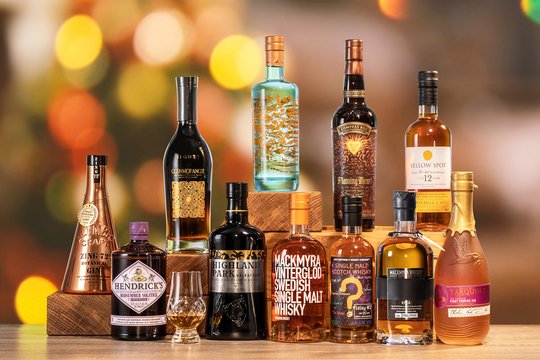
Today, the Highlands continues to be a bastion of both innovation and tradition in the Scotch whisky industry. This geographical diversity contributes to a wide range of whisky profiles, with sherry bombs from GlenDronach and The Dalmore, the waxy and complex Clynelish and Deanston, the light and sweet Tomatin and Glencadam, or the smoky and coastal Ledaig, Talisker, Oban, and Highland park. Distilleries like Glenmorangie have also been at the forefront of experimental cask selections and finishes as well as variations in barley types that have defined the last decade or so of Scotch whisky production.
The Highlands’ continually expanding flavour profile is something to celebrate and you should never run out of out fine whisky options here.
More whisky guides
Find out how whisky is made, about the different types of whisky available, and more...