Guide to 50 year old whisky
50 year old whisky represents some of the rarest, most exclusive spirit on the planet. It can be an absolutely astonishing experience, though the world of whisky of this age can be a little hard to navigate; it’s not always easy to find the stuff, and when you do, it’s important to know what you like and why.
Now, keep in mind the age statement on the label refers to the youngest whisky in the bottle. This means not only is this whisky at least half a century old, but many include spirits even older still! And after 50+ years maturing in oak casks, the result is as multifaceted and characterful as it is rare.
You see, the vast majority of aromas and flavours in whisky are imparted during the ageing process. Oak itself offers up a wide variety of flavour compounds, lending notes of spice, caramel and vanilla. Most whiskies (particularly those made in the Scottish style) are also aged in barrels which previously held something else, usually bourbon or sherry, though sometimes all manner of exotic spirits and drinks. As the whisky ages, it picks up all this flavour and depth, and even becomes more concentrated, as part of the spirit evaporates each year (known in Scotland as the “Angel’s Share”). After 50 years, most casks will have lost between 60% and 80% of their whisky to the angels! This makes anything left rarer still…
Jump to section
Author:

Michael Orson
Reading time: 10 minutes
Why buy a 50 year old whisky?
For connoisseurs and whisky lovers, these can be grail finds. They’re also unrivalled as gifts to celebrate life’s big milestones, be it a 50th birthday or wedding anniversary, or anything else for that matter. The diversity and breadth of styles and flavours mean that every time you sample a 50 year old whisky it is a unique, once-in-a-lifetime experience. Of course, it’s not always easy to come by, and it doesn’t come cheaply either. That’s not to say there aren’t some great value whiskies of this age… there are. Value is a subjective concept, however, and in this case, you have to factor in the production processes, the care and attention required to look after something for more than half a lifetime, and the tiny amounts of it that are out there.
What does 50 year old whisky taste like?
In whisky, be it single malt Scotch, a blended Irish Whiskey, or a blended malt from Japan, there is a huge variety in style and flavour. There is so much at play: the raw ingredients used, the use of traditional methods such as utilising a peat-fired kiln, the type of stills and the distillation process, and the type of oak cask used for maturation, among others. Take something like a peaty powerhouse from Ardbeg, located on the Isle of Islay. Some of their single malts are like bonfires, filled with tar and smoke, medicinal notes and spice. Then compare it to a rich, malty, honeyed, spicy dram from a Speyside distillery like Glenfiddich. You see our point.
Choosing the perfect 50 year old whisky
Selecting a whisky of this age is no different from any whisky experience: look for the style which offers up your favourite flavours and aromas. Regionality plays a massive role here, and there is perhaps no better way to choose a whisky than by looking at the very places in which it is made. After all, it is a product of its environment, offering up the characteristics of a country or region’s techniques and ingredients, as well as the terroir (the effects of the microclimate and environment). Firstly, however, we begin with the core styles of whisky.
50 year old whisky by style
50 Year Old Single Malt Whisky
Single malt whisky represents one of the most diverse and complex of all spirits. It has the potential to evoke so many emotions and conjure up so many memories and feelings. It can be soft, sweet and subtle, and at other times big, bold and muscular. That’s why we love it. And despite its capacity for variety and complexity, single malt whisky is made of just three simple ingredients: malted barley, yeast and water.
It all begins with the barley - a rich, nutty grain with a slightly sweet taste. That sweetness indicates the presence of sugar, which is crucial for fermentation. To ferment the barley, it is malted, which involves steeping it in water and allowing it to start germinating. The process is then ended by kilning the barley, before it is ground to make grist, and mixed with hot water in a mash tun where it is allowed to ferment. This fermented liquid is then distilled in pot stills at least twice, but sometimes three times. The final stage is a maturation in oak of at least three years, though frequently longer, and in some cases as much as 50 years or more! If you bottle malt whisky made at just one distillery, you have single malt whisky.
This is a style linked with Scotland, though today you will find single malt whiskies from numerous countries around the world, including Japan, Ireland, England, Wales… even India. However, many of these countries have not been making single malts for all that long, and so do bear in mind that very few regions have any whisky as old as 50 years of age…

Bottles of whisky
50 Year Old Grain Whisky
In terms of ingredients, grain whisky is not that dissimilar to malt whisky; it uses water, yeast, and a cereal grain. However, rather than solely malted barley, grain whisky is distilled from other grains as well. These will include the likes of rye, wheat, and corn, all of which have their own unique attributes. Another key difference is the use of continuous stills rather than pot stills in the distillation process. These very efficient stills have a higher yield than pot stills, but tend to produce a subtler, gentler, less intense spirit. Historically speaking, this is a style made almost exclusively for use in blends - you won’t find much grain whisky or single grain (grain whisky from a single distillery) bottled on its own. You’ll find even less still bottled after 50 years in casks…

Glasses of whisky
50 Year Old Blended Whisky
Due to the cost and higher yield to be found in grain whisky production, it is an appealing choice for spirits makers. However, when combined with the more expensive but more flavoursome malt whisky, you can end up with something with all the best features of both. At least, you can if you have a really good master blender on staff. That’s all blended whisky is - a mix of both malt and grain whisky. It’s also the world’s most popular style of whisky. However, to make a cost-effective blend, blenders will often use some younger spirit in the mix. The age statement on a bottle of whisky refers, by law, to the youngest spirit within it. For this reason, blends with age statements are in the minority, and 50 year old blends are, as you may have guessed, extraordinarily uncommon.
50 Year Old Blended Malt Whisky
Blended malt has been rather in vogue over the past few years, with some wonderful expressions released by some of the top independent bottlers. It’s also quite a popular style in Japan, with both Nikka and Suntory putting out some great stuff and experimenting with all the possibilities to be found when combining single malt whiskies from more than one distillery. That’s what blended malt refers to, although you may also have heard the historical terms “vatted” or “pure” malt whisky, both of which used to refer to a blended malt.
Distilleries and bottlers create blended malts for a number of reasons. Of course, using your different stocks of spirit to make a consistent and delicious product is one such reason. Another is “teaspooning”, which is when a distillery sells its spirit with a tiny portion of malt whisky from another distillery. This is done to prevent anyone else from bottling and selling the whisky under the original distillery’s name, as it is no longer (legally speaking) a single malt.
50 year old whisky by country
50 Year old Scotch Whisky
Here at Master of Malt, we are mad about Scotch whisky. It was our original love, and it was what we first started selling all the way back in 1985 when we first opened up shop. We simply adore the rich, malty, honeyed flavour, as well as the astounding variety on offer, and its capacity to tell the story of the place in which it was made. Scotland is a relatively small country, but the variations you’ll find across its whisky regions are unlike anything else in the world. Whether it's a peaty, smoky spirit from Islay, a light, floral Lowland malt, or a rich, honey-led Speysider, there is a huge amount on offer. So much so, in fact, that Scotch whisky is broken down into six subregions.
Speyside
On the map, Speyside is a relatively small pocket of the Highlands, situated in northwestern Scotland. It may be a small area, but it is home to more than fifty working distilleries, and in the past had even more. It also produces some of the more classic, approachable single malts.
Within Speyside, you’ll find rich, thick, sherry-matured whiskies from distilleries like Aberlour and Glenfarclas - the latter even has its own 50 year old which exudes all those qualities. You’ll also find sweeter, malty, honey-rich drams from the likes of Glenfiddich (which has bottled several fabulous 50 year olds in its day) and Balvenie. You can also get peated single malt from the region, from distilleries like Tomintoul and BenRiach, though this is fairly atypical.
Islay
One of our favourite regions in all of whisky, Islay is best known for its powerhouse smoke bombs. Big names like Ardbeg, Lagavulin and Laphroaig are all famed for their incredibly smoky, oily, peaty whiskies. Islay (pronounced “eye-luh”) is actually a small island, located off the coast of western Scotland. It is a unique place, benefitting from the Gulf Stream which gives it a much warmer, milder climate than mainland Scotland.
It is also an island full of decomposed, prehistoric sphagnum moss (peat to you or me). The flammable peat has been a staple source of fuel on Islay, and not just for heating houses. In fact, it has become a key part of whisky-making, used to fire kilns during the malting process. The phenolic compounds present in the peat are absorbed by the barley, which, in turn, takes on intensely smoky, tar-like, and sometimes even medicinal flavours.
Whilst a small island with just nine active distilleries (and a fair few legendary defunct ones), Islay has more variety than you may expect. Distilleries vary the levels of peat they use, and whiskies from Bunnahabhain (which uses very little peat) will taste totally different from the lapsang souchong notes of a Caol Ila, or the honeyed, heathery, citrussy and coastal palate of a Bowmore.
Highland
The Highlands spread over the largest surface area of any Scottish region and encompass some of the most stunning scenery on the planet. Within it are numerous distilleries making a myriad of whiskies, and these can be categorised broadly into four unofficial subregions.
Working our way around the compass, we begin with the Northern Highlands, which is home to distilleries like Glenmorangie, Dalmore, and Balblair. These are the more aromatic, fuller-bodied Highland malts, often with a lot of sweetness, fruit, nuts, and cereal notes.
The Southern Highlands offer up drier, lighter, less robust whiskies, often with notable fruit aromas. These are sometimes not dissimilar from Lowland spirits, and can be quite exquisite. Look for the likes of Aberfeldy, Edradour, or Glenturret.
The Eastern Highlands can range from drier, more savoury, herbal drams to slightly richer, more fruity spirits. In general, they lean sweeter, and you’ll often get plenty of spice. Fettercairn and Glen Garioch are examples of this, as is Royal Lochnagar.
Finally, the Western Highlands plays host to some real gems; distilleries like Oban, Glengoyne, and Ben Nevis put out full-bodied, intense, pungent malts, which often exhibit hints of peat smoke and sweetness.
Lowland
Most of Scotland distils its whisky twice, as is indeed the case for the majority of single malts the world over. However, in the Lowlands things are done a little differently, favouring a triple distillation instead. This gives you a much lighter, more elegant, softer spirit, and when you factor in the signature floral style, you can see why the region’s distilleries gained the moniker the “Lowland Ladies”. Littlemill, Auchentoshan and Rosebank are perhaps the most famous, and there are only a handful of others. This makes 50 year old Lowland whisky exceedingly scarce.
Island
Dotted all around the Scottish coastline there are some 790 islands. Of those, fewer than 100 are inhabited, and only a tiny handful of them make whisky. You’ll often detect the terroir in these whiskies, as many lie extremely close to the sea. However, they vary greatly in style and flavour.
On the Isle of Arran, you’ll find the Arran distillery, which makes a wonderfully malty, slightly tropical whisky. Skye is home to Talisker, which is a spicy, pepper, “volcanic” style of whisky. On Orkney, you’ll find two distilleries: Scapa and Highland Park. The former makes a light, citrussy whisky, whilst the latter is known for its rich-tasting malt with notes of smoke and heather. On the Isle of the Mull, Tobermory (https://www.masterofmalt.com/distilleries/tobermory-whisky-distillery/) offers a sweeter, herbal spirit, whilst the bigger-bodied whiskies of Jura are known for their oily character.
Campbeltown
One of the less famous regions of Scotland, Campbeltown only has three working distilleries: Springbank, Glengyle, and Glen Scotia. US Prohibition and the loss of that key market led to the closing of almost every distillery in what was once the most prolific whisky-producing region in the country.
In general, you could say that Campbeltown makes a fairly dry, and often rather pungent spirit. However, despite the tiny number of distilleries, there’s actually quite a lot going on in the region, and the style is rather broad. This is due, in no small part, to the Springbank distillery's unusual setup and its use of a range of different production processes. In fact, Springbank actually makes three distinct single malts: Longmorn (a peaty, twice-distilled whisky), Springbank (distilled 2.5 times, with medium levels of peat), and Hazelburn (distilled three times, and unpeated).
50 Year old Irish Whiskey
To characterise Irish whiskey, one might say it’s sweet, slightly floral, and quite fruity. Some of the most famous whiskeys in the world come from Ireland - spirits like Jameson and Bushmills, which are delightfully easy-going and eminently quaffable. Ireland is also the birthplace of a unique style of whiskey known as “single pot still”. This is like single malt whisky, but rather than just malted barley, it uses unmalted barley too. This addition brings peppery, spicy characteristics to the drink. There are also several fabulous single malt whisky distilleries, such as Teeling, or the beautifully peaty Connemara.
50 Year Old Japanese Whisky
Today, Japan makes some of the world’s finest whiskies, very much of the Scottish style. Indeed, the two founding fathers of Japanese whisky, Suntory’s Shinjiro Torii, and Nikka’s Masataka Taketsuru, used the techniques and methods of the Scotch distilleries when creating their own whiskies. Many of the distilleries in Japan are also at a higher altitude than their Scottish counterparts, which lowers the boiling point during distillation and thus produces a really flavoursome spirit. The climate also lends itself to a faster maturation, which gives you a whisky that belies its age.
In terms of style, Japanese spirits lie somewhere between the honeyed, malt-driven whiskies of Speyside, and the more perfumed, floral malts of the Lowlands. The longer-aged expressions command quite a pricetag and are very rare. If you have the opportunity to try them, you will find astonishing levels of complexity and depth.
Looking to learn more about 40 Year Old Whisky?
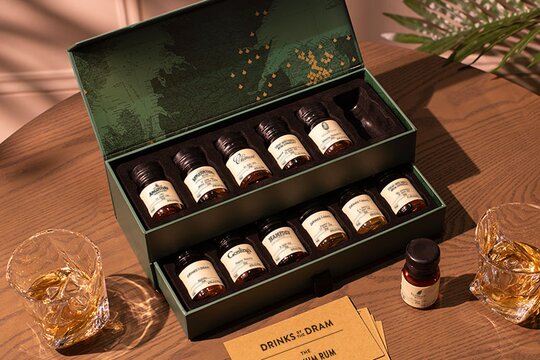
We’ve put together a tasting set made up of five 30cl samples of 50 year old whisky. This covers a broad range of styles and is a unique and marvellous opportunity to learn more about whiskies of this age.
More whisky guides
Find out how whisky is made, about the different types of whisky available, and more...