How is gin made?
Find out what gin is made of, and how all that juniper and botanical goodness gets into this magical spirit!
POPULAR CATEGORIES
Author:

Reading time: 6 minutes
Gin is fairly simple – it must be 37.5% ABV, made a base of neutral spirit that botanicals and flavours are added to, and perhaps most importantly, must taste predominantly of juniper. But that’s not what gets you excited about gin, we know that. Though those are the minimum requirements, alongside the juniper berry, botanicals and flavours from all corners of the world have been harnessed into a plethora of elegant variations, and that’s where gin really comes into its own – in its diversity!
What is gin made from?
The start of every gin begins with distilling a base of neutral spirit, often from grains, but it can be produced from anything. Essentially, you begin with a vodka, and then add the all-important juniper berries and other botanicals.
Juniper is the one botanical that must legally be found in gin, but there is often a ‘holy trinity’ of botanicals that are found in traditionally-flavoured gins: juniper, coriander, and angelica. After those three, citrus is one of the most common additions to more traditional gins, completing a balance of piney juniper, earthy roots, and zesty citrus.
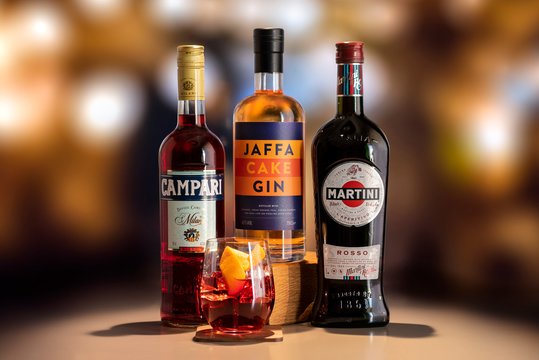
But that’s not to say distillers haven’t strayed from that well-trodden path – oh no! Nowadays you can find all sorts of different ingredients in more contemporary gins, from Jaffa cakes to ants (the latter adding a unique citrusy flavour, funnily enough). The world of flavoured gin is vast, and you can find out all about it in our Types of Gin guide here. Though it’s worth remembering they can’t stray too far – if the juniper is forgotten about, then it can no longer be classed as gin.

Botanicals used in Cotswolds Dry Gin.
How is gin made?
There are a few different ways for producers to get these flavours into a gin. The first is steeping, where botanicals are macerated for a length of time (sometimes up to 48 hours) in the grain spirit base, during which time it’s heated and distilled, and it’s the heating process that releases most of the flavour from the botanicals. The next is vapour infusion, where the botanicals don’t come into direct contact with the spirit (generally used for more delicate flavours like flowers). Here, the botanicals are placed in a basket inside the still, and the spirit vapour passes through picking up the aromas and flavours along with way before it condenses. In some cases, both of these processes will be used simultaneously!
A third variation is vacuum distillation, where the redistillation of botanicals takes place in a vacuum (bet you didn’t see that coming). This is used because the vacuum creates a lower boiling point for the alcohol, meaning that the flavours of the botanicals can be harnessed at a lower temperature, preserving fresher and more delicate flavours.
There are other divergences too, namely the one-shot versus the multi-shot method. No, this has nothing to do with actually taking a shot of gin, before you get ahead of yourself! As the name suggests, in the one-shot method a botanical recipe is added to a given amount of neutral spirit, and once the botanicals have been redistilled the end spirit is diluted with water, and then bottled. Job done.
But the multi-shot method requires a greater quantity of botanicals to produce a spirit with a more concentrated flavour. After it’s distilled with the botanicals, this ‘concentrate’ is then diluted twice – the first time with spirit, bringing down the flavour intensity of the concentrate and increasing the volume, and the second time with water, bringing it down to bottling strength. The multi-shot method allows distillers to produce much more gin, all while using less energy and time. You wouldn’t be able to tell which method is used in a blind tasting, but if you really want to try then we won’t stop you!
Though not very common these days, another way to impart flavour to gin is to age it. Once a historic practice that was born out of necessity, aged gin fell out of favour with consumers. Unlike other aged spirits, gin generally only needs a matter of months in a well-seasoned cask, rather than years.
Botanicals can also be added after distillation depending on the style of gin being made, though if this is done then it cannot be classified as a London dry gin. This is, however, how cold compounded gins are made. These are often nicknamed as ‘bathtub gins’, referring to the period during 1920s Prohibition when illicit producers would create their own illegal gin by infusing botanicals in spirit in their bathtubs! It wasn’t a good time to own a walk-in shower, that’s for sure. Nowadays the process is a lot more refined, and this maceration results in particularly oily, aromatic gins, made by leaving the juniper and other botanicals to steep in the spirit at room temperature.
When sugar is added to gin post-distillation, that’s when you’ve got an Old Tom gin, which funnily enough has no laws surrounding it. But generally, in flavour terms it’s somewhere between genever and London dry in style. Dating back to 18th century England, it’s likely to have sugar or generally sweeter botanicals like liquorice in it, and is also more likely to have been aged.
Gins to try
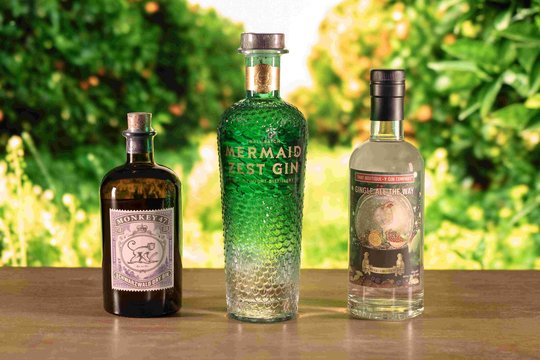
A selection of delicious gins to explore.
More gin guides
Keep reading all about gin, the different types of gin available, what to mix it with and more...