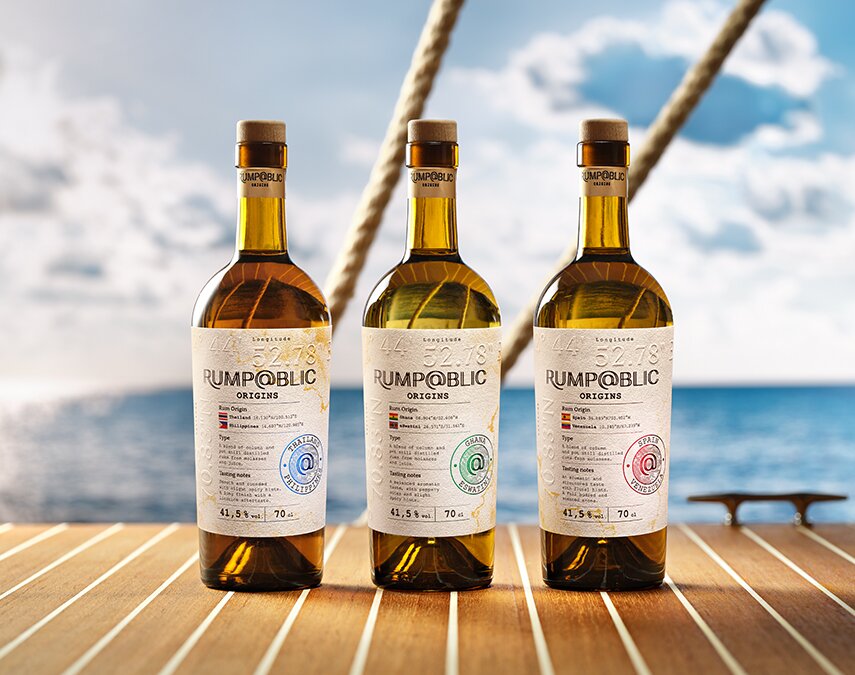
Rump@blic rum is here!
The Republic of Rum
Inspired by historic sugarcane routes and the rum industry they created, Rump@blic wants to create “The Republic of Rum”, a showcase of the various styles, production methods, environment, and culture of rum.
The Origins range champions rum’s global heritage with blends from “The Rum Belt” and renowned rum-making areas. Blends of column and pot stills assembled by Sicilian experts, each expression focuses on the distinctive distillation techniques, and ageing methods of each country they are rooted in, resulting in complex, layered rums. Each bottle is signed with its country of origin’s geographical coordinates, as well as an authentic Rump@blic travel stamp.
The Rump@blic Origins range
Let’s take a look at each of these delicious rums with a perfect serve to follow. Each is delicious for sipping neat but can be elevated in the right cocktail.

Rump@blic Origins Spain/Venezuela
Rump@blic Origins Spain/Venezuela is a blend of two molasses rums aged for three years, one from Spain (36.889°N/03.402°W) and one from Venezuela (10.345°N/67.239°W). The blend is 75% column still Spanish and 25% Venezuelan pot still rum.
Tasting Notes
Nose:
Butterscotch and gentle notes of burnt brown sugar, grilled pineapple, fragrant spices, plantain, toffee, a touch of mellow oak.
Palate:
Silky soft with caramel and muscovado, vanilla, toasted coconut, coffee, buttery notes toasted oak, toffee popcorn, tangerine peel.
Finish:
A floral touch of hibiscus arrives for the finish, backed by vanilla pods and fudge, wrapped up with elegant sweet fruit and subtle aloe vera.

Rum@plic Mojito
A mighty Mojito for those who love that classic rum cocktail style. The Origins Spain/Venezuela is a perfectly refined and smooth base in this drink.
Prep
3 mins
Serves
1 person
Ingredients
Method
Garnish
Sprig of mint
Rump@blic Origins Thailand/Phillippines
Rump@blic Origins Thailand/Phillippines is a blend of 25% Thai rum, aged between 4-23 Years and distilled from molasses, with 75% unaged column still Philippine rum distilled from juice. The coordinates are Thailand (14.130°N/100.523°E) and Philippines (14.607°N/120.985°E).
Tasting Notes
Smooth and round with a spicy touch. A long finish with liquorice aftertaste.


Rump@blic Mai Tai
Make a Mai Tai that will transport you to whatever tropical paradise you see in your mind. This is not a complicated recipe, but it’s an effective one.
Prep
3 mins
Serves
1 person
Ingredients
Method
Garnish
Orange twist

Rump@blic Origins Ghana/Eswatini
An African rum, this Origins expression is a blend of 55% unaged Ghanaian pot still rum distilled from cane juice and 45% unaged Esawatini column still rum distilled from molasses. It’s said to have a “balanced aromatic taste with peppery notes and slightly spicy hints”.
Tasting Notes
Nose:
Fresh, vegetal notes of green grassy sugar cane, herbaceous, with a touch of brine, overripe banana, a touch of polished furniture, sugar-dusted fruit salad.
Palate:
Honey sweetness, herbaceous cane juice, vibrant notes of ripe tropical fruit, a touch of caramel, bitter citrus peel beneath.
Finish:
Gentle heat develops, pungent peppercorn warmth, lingering vegetal cane.

Rump@blic Daquiri
The Daiquiri is a simple but sublime rum cocktail that lets the spirit shine. Use fresh lime juice and this serve will sing for you.
Prep
3 mins
Serves
1 person
Ingredients
Method
Garnish
Lime twist
A republic of rum
Rump@blic has mapped out a "rum belt", selecting rums from producers around the world, shining a light on different styles and exploring diverse distilling and finishing methods. This "Republic of Rum" has no boundaries but takes its inspiration from historic sugar cane routes.
Sugar cane originates in Papua New Guinea and Asia, where it has been cultivated since 6000 BC. Cane gained high value and spread from Asia to the Mediterranean in the 3rd - 7th centuries via the troops of Alexander the Great, reaching places like Persia, Syria, Egypt, and Sicily. Colonisation in the 15th and 16th centuries saw sugar cane reach Central and South America, and become a highly profitable commodity in Europe.


Then rum came along...
The following centuries saw progression in distillation and maturation techniques, and rum became a hugely desirable commodity in its own right, with spirits from countries like Jamaica and Barbados traded globally.
The invention of the Coffey column Still in 1830 enabled producers to make high-ABV alcohol on a large scale. Bacardi House in Cuba installed its first column still in 1862, paving the way for the rum producer's worldwide acclaim. Prohibition and the Great Depression in the 1920s and '30s USA saw the whisky market plummet while Cuban rum experienced a surge in popularity, in turn inspiring producers in countries like Jamaica to explore blending their own heavy styles of rum with lighter ones.