Witchmark Distillery: English Whisky Made Magic


A witchmark is an apotropaic symbol. A small carved sign believed to ward off evil, bad luck, and other unwelcome forces. Derived from the Greek apotropaios, meaning “turning away”, these marks were scratched into buildings across England centuries ago.
You still find them today carved into barns, doorways and beams, particularly across the south west. They come from a time when pagan ritual and Christian belief comfortably overlapped, when life was uncertain, and people needed something to believe in. A good stiff drink probably helped too.
Now those same symbols are watching over something rather different: a modern English whisky distillery. One that also happens to make vodka and gin with enough personality to challenge the lazy assumption that white spirits simply pay the bills while whisky matures.
Welcome to Witchmark.
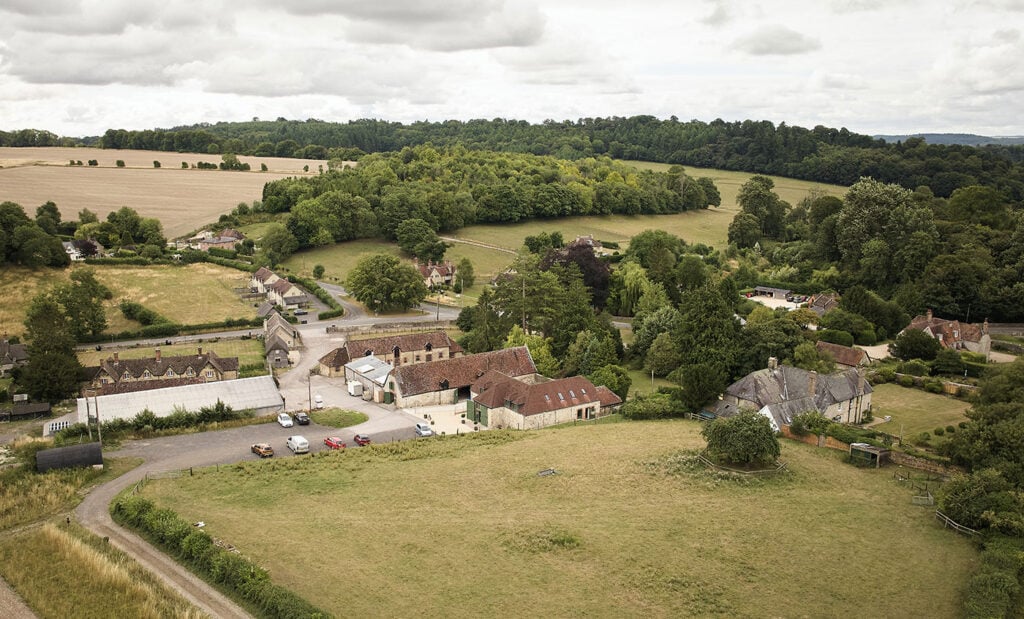
Welcome to Witchmark!
The lions and the Witchmark
Witchmark Distillery sits within the 9,000-acre Fonthill Estate, set amid the rolling chalk downlands of Wiltshire, just 12 miles from Stonehenge. The distillery occupies a restored 17th-century barn whose timber beams still carry the original witch marks that ultimately gave the project its name.
It took the founders 18 months to settle on that name, but once they noticed the symbols etched into the estate buildings, the decision made itself. And while Witchmark may be young, the people behind it are anything but.
Managing director Alistair Munro and commercial director Jon Carson have CVs longer than a giraffe’s scarf. Operations director Eddie Large spent 17 years running an artisan drinks business and originally built his reputation through brewing, knowledge that translates naturally into whisky production. The advisory board is strong, too. Chairman James Espey OBE helped launch some of the most recognisable names in Scotch, including Johnnie Walker Blue Label, Malibu and Chivas Regal 18. Alan Rutherford OBE, founder of The Last Drop Distillers and former Diageo production director, also lends guidance. Veteran blender Colin Scott, whose career at Chivas Brothers spans nearly half a century, has already visited the distillery to taste early cask samples and advise on the spirit’s development.
But every distillery needs someone who actually makes the thing. At Witchmark, that person is lead distiller Namratha Gorur.
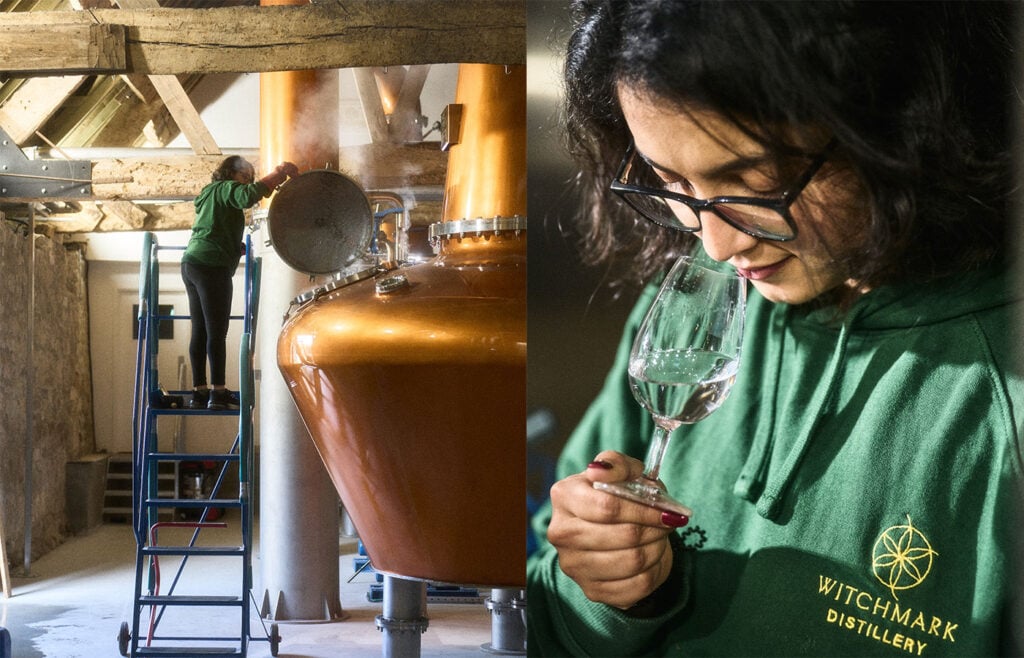
Say hi to Nam
Namratha Gorur: The maker behind the mark
Gorur took a slightly unconventional route into whisky. She began with a Bachelor’s degree in Biotechnology Engineering in India before moving into fermentation science and ultimately the MSc Brewing and Distilling programme at Heriot-Watt University in Edinburgh. Before arriving in Scotland, she worked in microbiology and quality control at food technology company ITC, alongside internships at breweries and kombucha producers that cemented her interest in fermentation.
“Working with fermentation really captured my attention,” she explains. “Once I understood how much flavour and character come from those processes, I knew that was the direction I wanted to go in.”
After completing her MSc, she began her distilling career at Halewood Artisanal Spirits’ former Bankhall Distillery site in Blackpool, working primarily in whisky production under distiller Vince Oleson, formerly of Widow Jane in New York. Oleson describes her as one of the most dedicated and professional distillers he has worked with and a natural leader on the distillery floor.
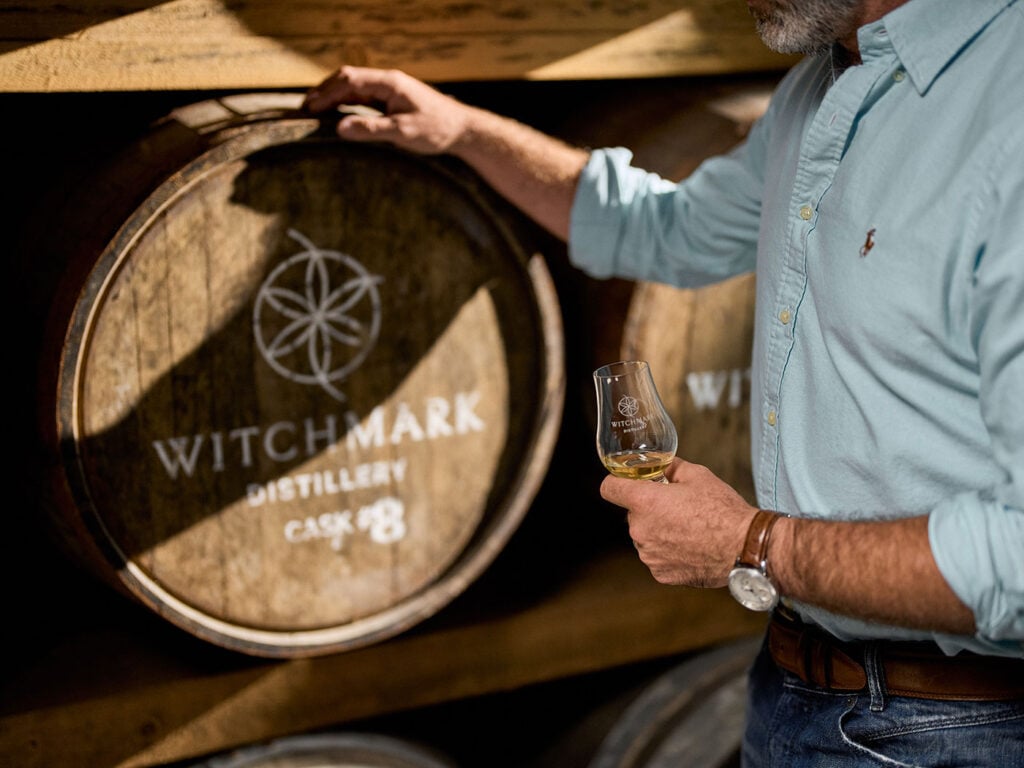
We can’t wait to taste the eventual whisky made here
Responsible for the good spirits
That experience proved valuable when Witchmark began bringing its own stills online. Gorur joined early in the project, becoming just the second on-site production team member and helping guide the distillery through the long commissioning process that every new operation faces.
Within six months, she had progressed from distiller to lead distiller. Today, she oversees daily production operations, production planning and the training of a small but growing team.
“A big part of my role is mentoring people who may not have formal distilling qualifications,” she says. “I focus on making sure the processes are clearly understood, standards are maintained, and safety is never compromised. It’s important that the team feel confident asking questions and taking ownership of their work.”
Her responsibilities span the entire production chain, from fermentation monitoring and distillation runs to white spirits production and assessing developing whisky casks.
“As one of the more experienced whisky distillers on site, I work across the full process,” she says. “That includes evaluating spirit character and contributing to blending decisions as we prepare for our first whisky release.”
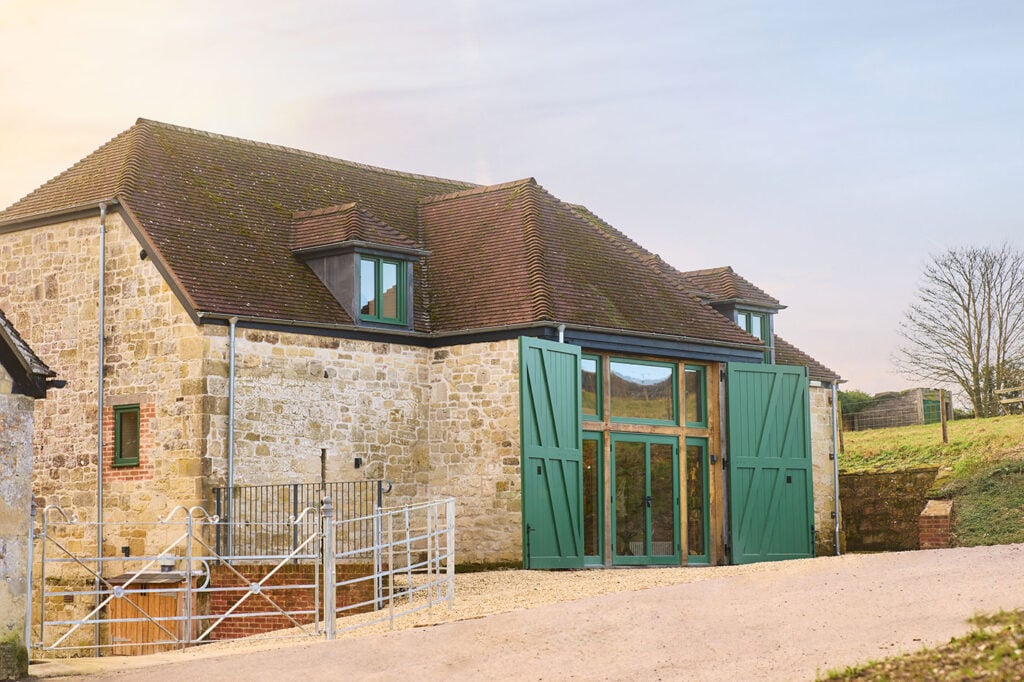
Old listed buildings are a feature at Witchmark Distillery
Sustainability as a design principle
Before we get to the nerdy production details, it’s worth giving the Ssustainability of Witchmark Distillery a shout-out. No greenwashing here, folks.
First, it’s B Corp certified with a score of 124.4, currently the highest achieved by any distillery in England. A 100 kW solar array installed on the warehouse roof generates electricity for the site in partnership with Nadder Community Energy. The stills run on bio-liquid propane gas recovered from renewable road fuel production.
Heat recovery systems capture excess energy generated during distillation and return it to the hot liquor tank for reuse in mashing and still charging. Spent grains, botanicals, pot ale and other by-products are sent to a nearby anaerobic digestion facility where they are converted into energy used for electricity generation and heating commercial greenhouses.
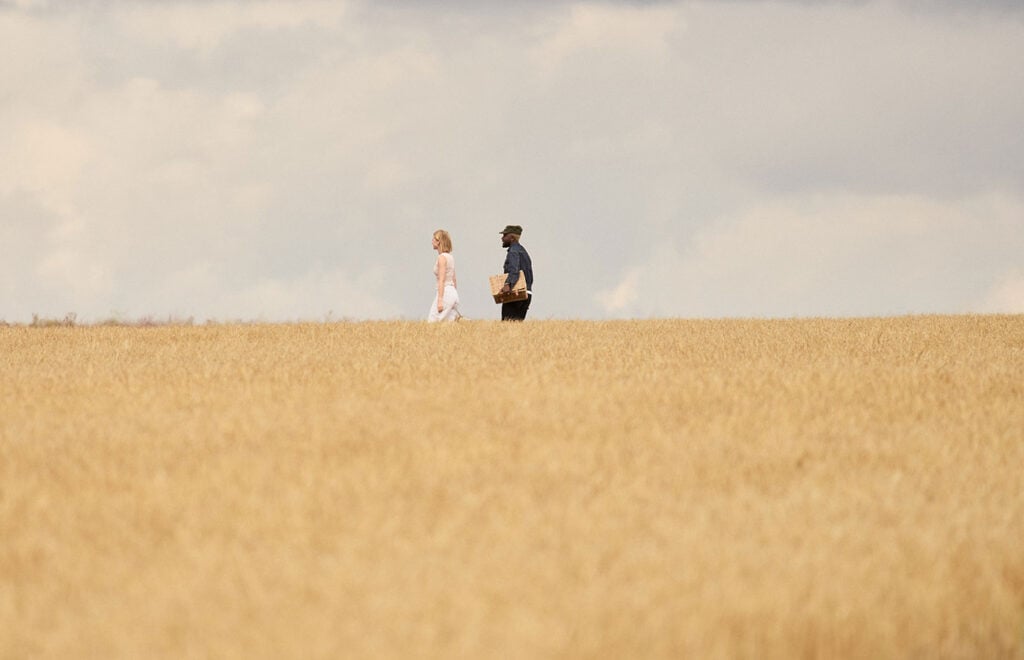
The barley used here is local.
A distillery built on its landscape
Everything at Witchmark begins with the estate itself. Barley is grown on the surrounding farmland of the 9,000-acre Fonthill Estate using regenerative farming practices designed to improve soil health and biodiversity. The grain is then malted just 10 miles away at Warminster Maltings, the oldest working maltings in the UK. Water comes from a chalk aquifer roughly 150 metres beneath the distillery. Naturally filtered through chalk and limestone, it emerges soft and mineral-balanced.
Local sourcing reduces food miles while giving the distillery a direct connection to its raw materials. The team believe this sense of place is central to the character of their spirits. Whisky is an agricultural product at heart, so being able to trace ingredients back to the land matters.
Production runs six days a week, with roughly eight tonnes of grain processed over that period. Barley is milled using roller mills before entering the mash tun, where hot water extracts fermentable sugars. The resulting wort leaves the mash at around 64°C before passing through a heat exchanger that cools it to roughly 25 to 30°C. Fermentation takes place over four days in five washbacks of 10,000 litres each.
From there, the wash moves into stills built by Italian manufacturer Frilli. Witchmark operates a 5,000-litre wash still and a 3,000-litre spirit still designed with tall necks that encourage natural reflux. Rather than relying on boil balls, their shape encourages heavier compounds to fall back through the still while lighter vapours continue upward.
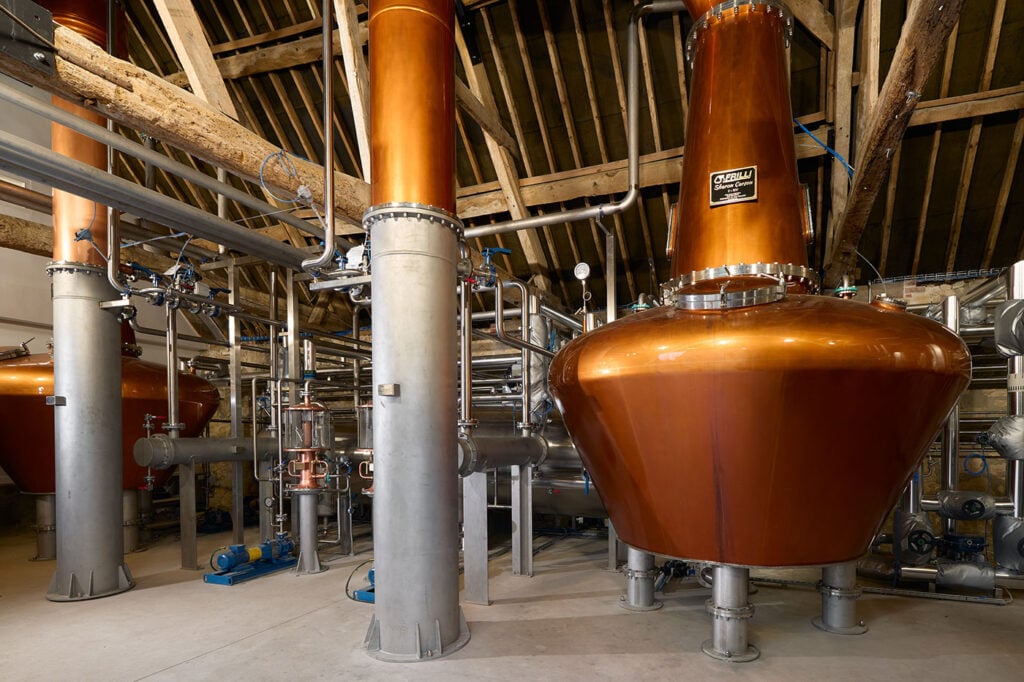
You should see this spirit safe in person. It’s a beauty.
Witchmark’s white spirits production
One unusual feature of Witchmark’s process is how it handles the heads fraction. Rather than recycling them into the next whisky distillation, the distillery diverts them into a separate tank where they are redistilled through a 42-plate column still. After a reflux period lasting roughly three to three and a half hours, the resulting neutral grain spirit reaches around 97% ABV.
This spirit becomes the base for Witchmark’s vodka. After carbon and silica filtration followed by pad filtration, the vodka retains a subtle barley-derived creaminess thanks to its whisky origins.
Gin production also happens on-site. Witchmark is one of a small number of gin distillers that create their own neutral spirit rather than purchasing it. Botanicals are layered carefully inside a perforated basket, with heavier ingredients placed lower down and lighter powders above.
Around 25 kilograms of juniper are added directly into the still pot to anchor the spirit firmly within classic London Dry territory. Alongside juniper, the botanical mix includes orange peel, bay leaf, coriander, cubeb and cinnamon.
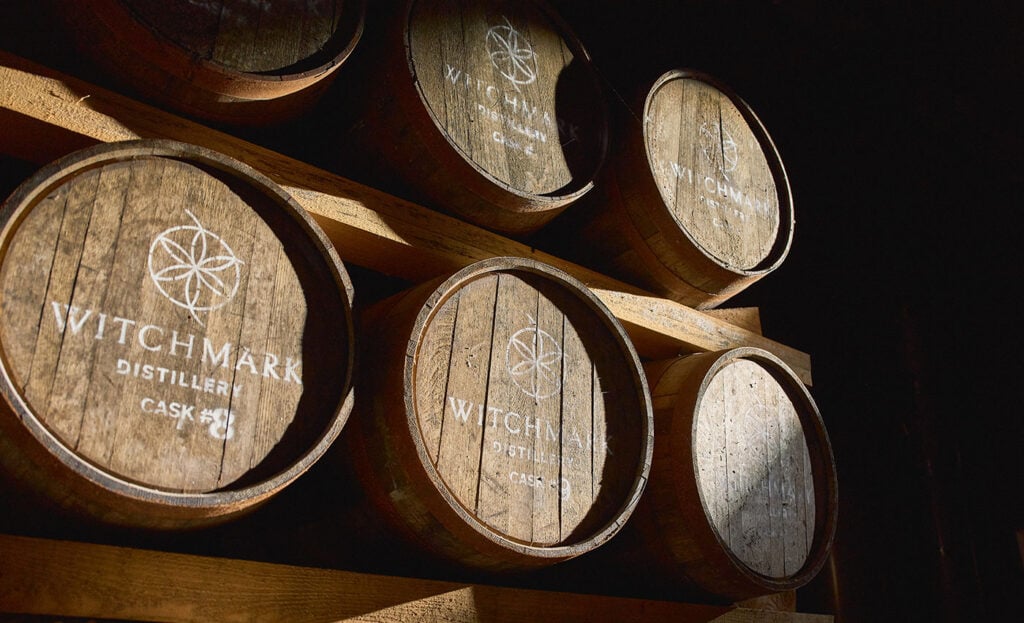
Future English whisky is inside these
Casks quietly waiting
While vodka and gin are already in the market, whisky remains the long game. Witchmark filled its first casks in 2024 and currently has around 900 barrels maturing.
The core maturation programme focuses on three wood types: bourbon barrels, new American oak and STR casks, which are shaved, toasted and re-charred to intensify the interaction between spirit and wood. Experimental casks are also being filled, including Madeira, sherry, tawny Port and even Islay casks for potential finishing projects.
Temperature fluctuations in the Wiltshire climate appear to encourage active maturation, while angel’s share has so far remained relatively modest at around 1%. Some casks have also been moved into cooler warehouses to slow development for later releases.
The first Witchmark single malt is expected in 2027.
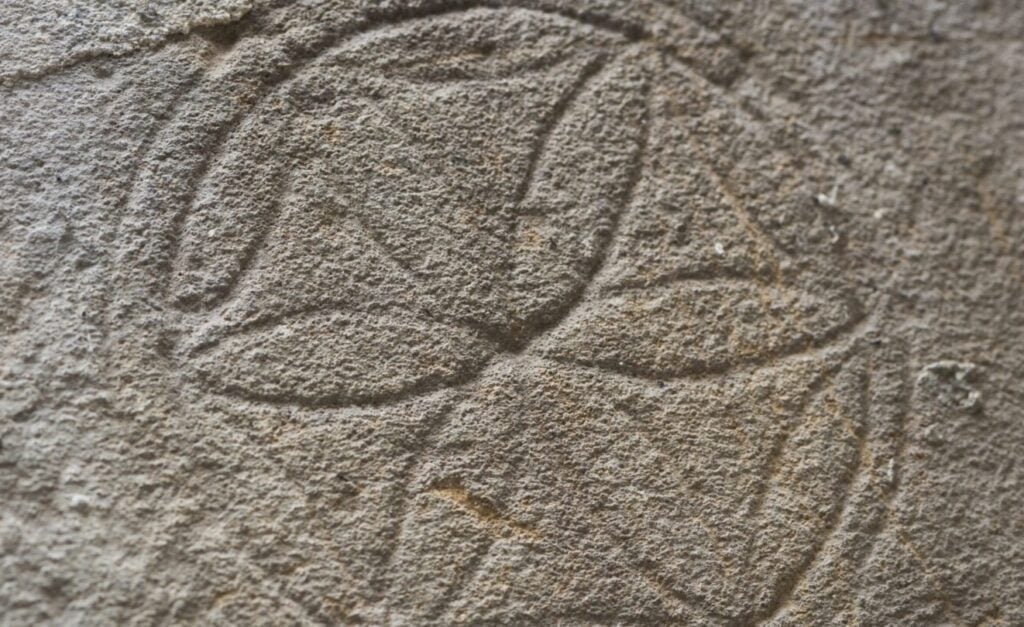
An example of a witch mark, at Canons Ashby, Northamptonshire
Making their Witchmark
For now, the distillery is busy building foundations. The production team has grown from two people to four, yet the site is already producing whisky alongside award-winning vodka and gin.
Since bottling began in December 2024, the distillery has produced around 13,000 bottles, with its vodka recently ranking among the best in the world at international spirits competitions. Meanwhile, the whisky continues its quiet work in the warehouse.
The witch marks carved into the barn beams continue to keep bad spirits away. Meanwhile, Gorur is busy creating good ones. Let’s meet some.
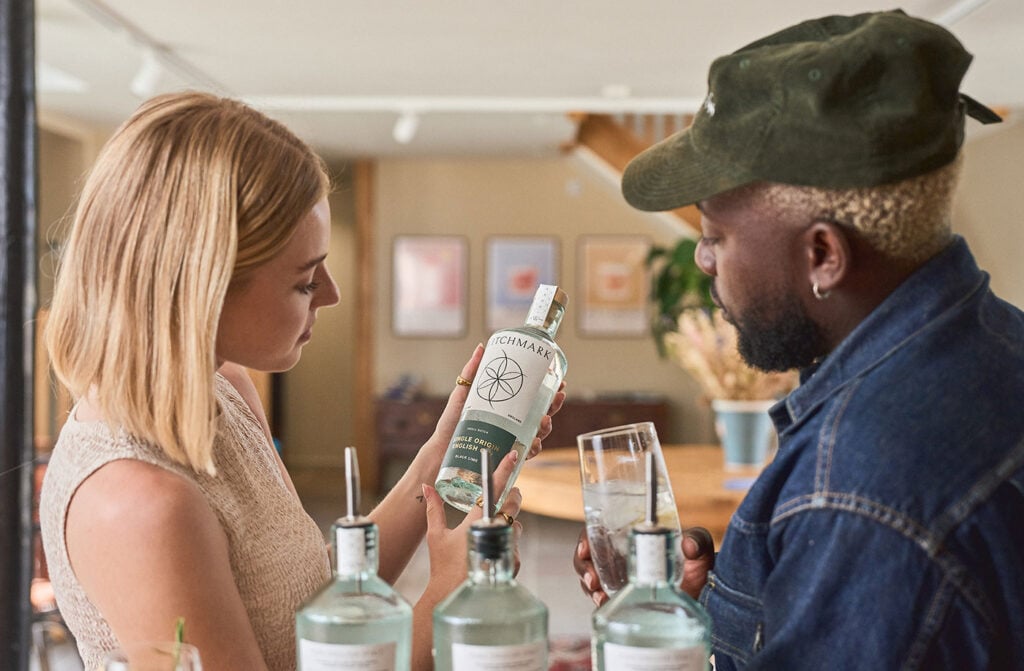
Witchmark has a very bright future and an equally interesting history
The Witchmark range
The first glimpse of the distillery’s future arrived late last year in the form of Witchmark Single Origin New Make Spirit: Distiller’s Cut, a limited run of just 300 bottles. Releasing new make isn’t something every distillery is brave enough to do. It’s a bit like showing someone the cake batter before the cake is baked. But when the underlying spirit is this good, you can see why they felt confident.
The new make is fresh, clean and confidently malty. Think cereal notes (Shreddies immediately came to mind) alongside bright orange sherbet and those nostalgic Fruit Salad sweets if you give it a moment in the glass. Throughout is a gentle vanilla creaminess that you also get in the vodka, and it’s all the better for it.
I also tasted a sample of one-year-old future whisky, a blend drawn from bourbon cask (75%), STR (15%), and new American oak (10%). This could well form the backbone of the first official release, and Witchmark fans have every reason to be optimistic. The texture is already impressive: creamy, buttery and packed with classic bourbon cask influence. There’s vanilla sponge cake, citrus brightness, a little mineral lift, and even flashes of pineapple. The finish rolls out a wave of caramel richness. Imagine vanilla ice cream topped with tinned tropical fruit, caramel sauce, and a handful of toasted barley, and you’re somewhere close.
A second sample, this one just eight months old, showed how the distillery is already experimenting with cask influence. This blend combined bourbon cask (70%), STR (15%), new American oak (10%), and a small portion of Islay whisky cask (5%). The result added a smoky dimension to the distillery’s creamy house style. Clotted cream, smoky vanilla ice cream, a faint medicinal whisper from the Islay cask, and once again plenty of caramel and tropical fruit. Early days, obviously, but delicious days nonetheless. While the whisky matures, Witchmark’s white spirits are already making a name for themselves.
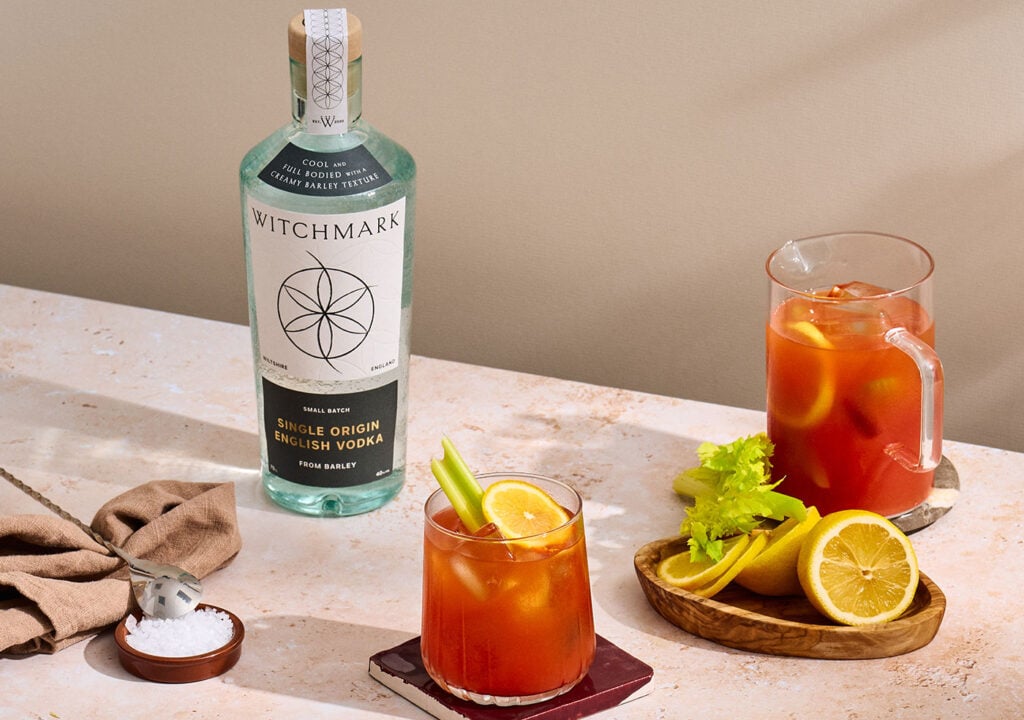
Need. Gimme.
Witchmark Single Origin English Vodka
Most vodka producers buy neutral spirit and flavour it with clever branding. Witchmark does the opposite. The distillery produces its own neutral grain spirit from barley, creating a vodka with real texture and character. The result is one of the more interesting vodkas currently coming out of England. It has the clarity and polish you want, but also enough structure to stand up in cocktails. The thought of this in a properly ice-cold Martini made me shiver slightly, in a good way.
Tasting Note:
Very malty with creamy vanilla at the forefront. A flinty minerality runs through the middle, followed by subtle orchard fruit and a crack of black pepper spice that makes me dream of a Bloody Mary. Is that or a freezer Martini the move? I will have to experiment in the name of science to find out.
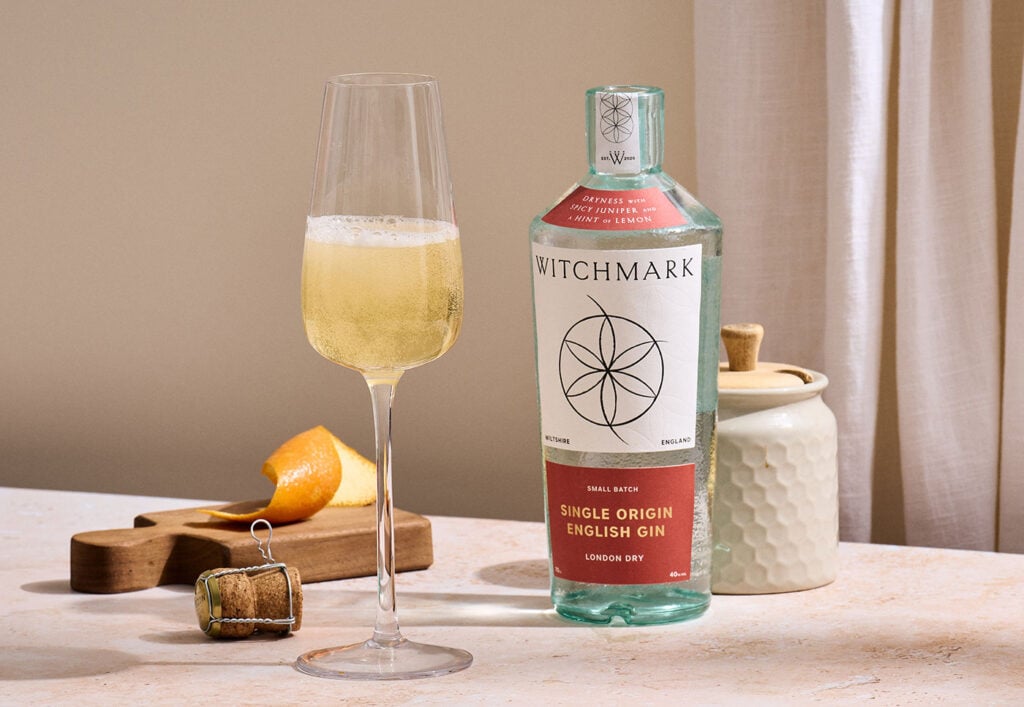
Look, it’s Witchmark Single Origin London Dry Gin!
Witchmark Single Origin London Dry Gin
Witchmark’s London Dry Gin takes a classic approach to the category. Juniper sits firmly at the centre, supported by orange peel, coriander, cinnamon, cubeb and bay leaf. The result is a clean, bright and traditional gin. It’s not reinventing the wheel, but it’s certainly a very shiny wheel. Impressive stuff once again.
Botanicals: Juniper, Orange, Bay, Coriander, Cinnamon, Cubeb.
Tasting Note:
Bright, piney juniper backed by orange peel oils and a lift of coriander spice. There’s a savoury flicker from bay leaf that keeps things interesting. Enough backbone for a proper G&T.
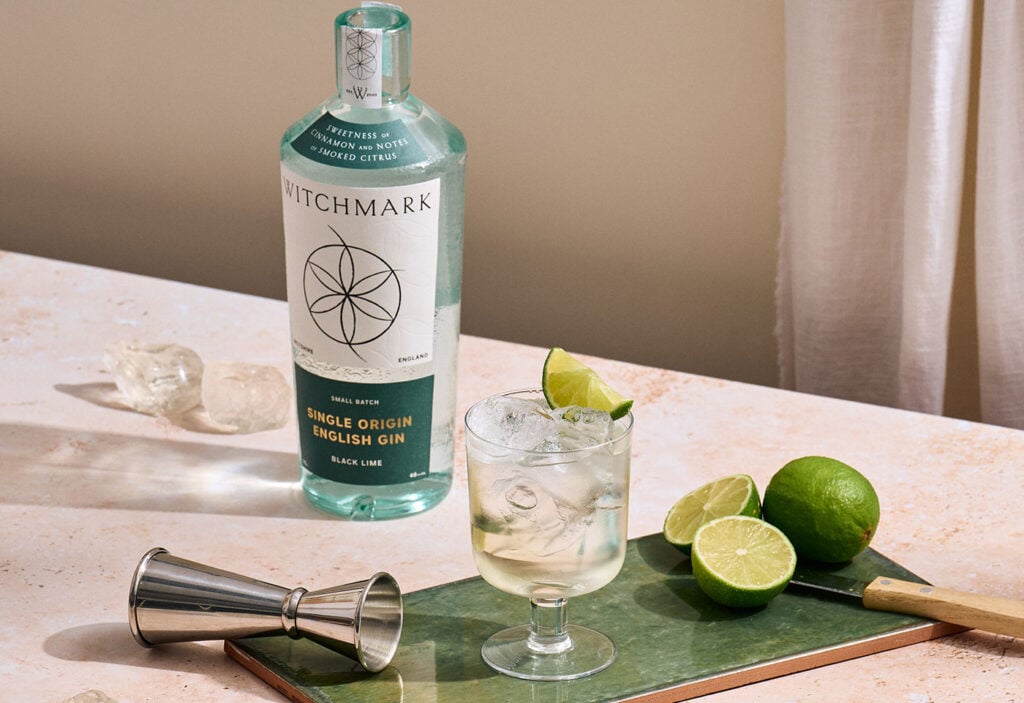
And Witchmark Single Origin Black Lime Gin!
Witchmark Single Origin Black Lime Gin
Black Lime Gin is a more original concept, and it’s a fine one at that. The dark, smoky tang of black lime and the numbing spice of Szechuan pepper add this complexity that is properly integrated with clove and orris root warmth and elderberry and yuzu zest, so it becomes more than just intriguing.
Botanicals: Juniper, Coriander, Clove, Black Lime, Szechuan Pepper, Orris Root, Elderberry, Yuzu.
Tasting Notes:
Zesty and aromatic with an immediate hit of smoky citrus and the gentle prickles of Szechuan pepper. Warming orris root emerges among the tart lift of elderberry and yuzu. A Negroni. I must have one.



