Whisky Tourism and How Place Became the Point


Whisky tourism did not begin as an experience economy. It grew out of a simple impulse. As whisky crossed oceans in barrels and boxes, carrying Scotland and Ireland to places that had never seen a glen or a bog, each time it left a trace of where it came from. The further it went, the more people started asking questions. Where was this made? Who made it? What does that place look like?
But distilleries were not places you visited. They were places you worked. Practical, industrial, even in the prettiest Highland sites. They existed to make spirit, not host guests. The people inside were not stars. They were locals. Steady hands putting communal knowledge and long memories to work.
The visitor centres, the tasting bars, the branded tote bags… The whisky tourism scene we know now exists because it’s an answer to a simple human need. People want to know where things come from. That desire creates an avenue of income and a platform for storytelling for whisky. The trick is making sure it still tells the truth. And in light of the closure of the Clynelish visitor centre, understanding the risks of your investment.
This article looks at how whisky tourism got here, why it matters now, and where it can lose its footing.
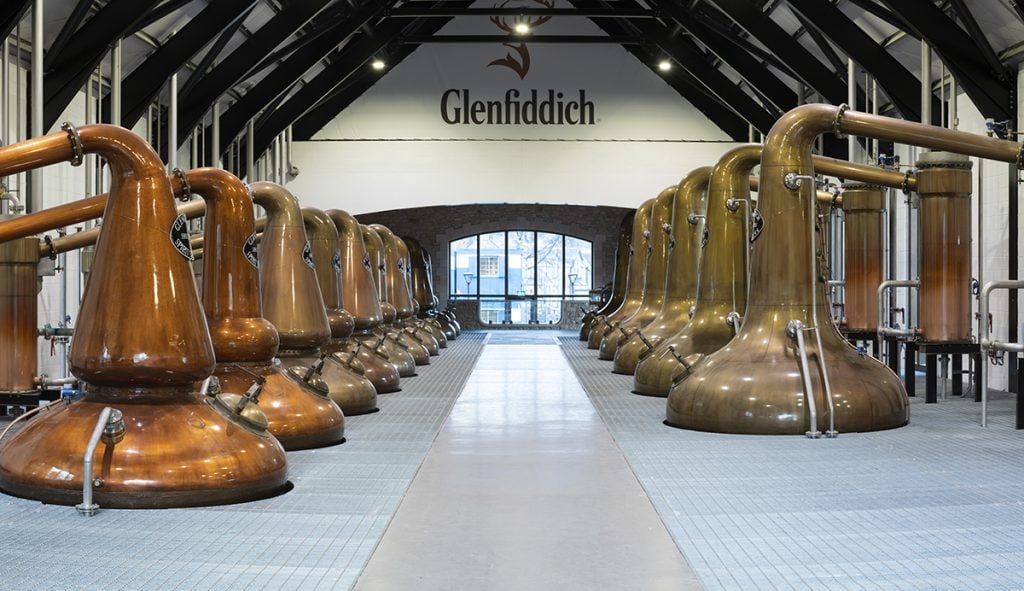
Speyside’s Glenfiddich is one of the biggest-selling single malts in the world
Opening the doors
The first seismic change in whisky tourism came in 1969, when Glenfiddich opened its doors to the public. The brand that tends to understand things early took a gamble that if people could see how whisky was made, where it came from, and who made it, they would value it more.
“Today, people can’t conceive how difficult it was in the 1960s to launch not just a malt whisky to the world, but the whole concept of single malt whisky. Our visitor centre was at the forefront of those efforts and our most successful weapon,” says David Grant, the former Glenfiddich brand manager. He was present at the 1969 opening and was commenting on its 50th anniversary.
If you read the second edition of R.J. McDowall’s The Whiskies of Scotland, released in 1971, you’ll find a more sobering report: “Recently an old barn has been attractively adorned as a reception centre for pirates with attendants in Highland Dress who make you very welcome.”
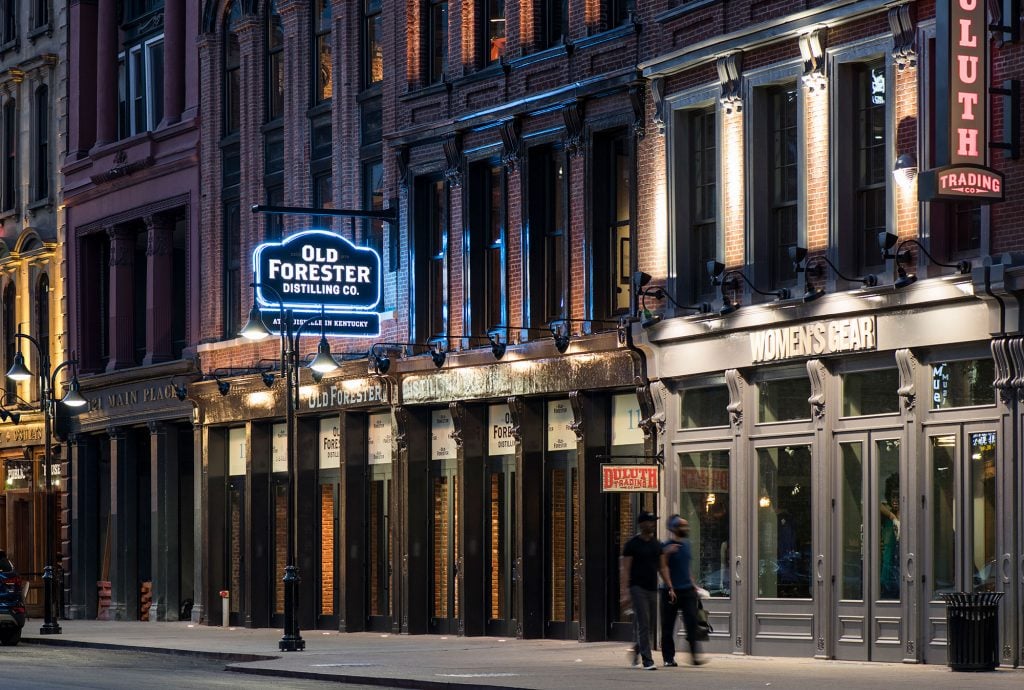
Kentucky is a bucket-list destination for many whisky lovers
From following flavour to following maps
Regardless, the idea stuck. The Malt Whisky Trail followed in 1972, modelled on the chateau trails of France and comprising several distilleries like The Glenlivet and Glenfarclas. Whisky was becoming a destination, not just a product.
As informal welcomes became structured visits, early narratives leaned heavily on visual shorthand. Tweed. Tartan. Springs bubbling obligingly out of hillsides. But Scotland also came to resist the idea of a single route. Speyside tasted different to Islay. Tourism helped make those distinctions physical. You could feel the distance between styles because you travelled through it.
The growth was steady but sure. By 1995, six distilleries ranked among the top 50 visitor attractions in the Grampian region, and by 1999, you could visit 54 distillery visitor centres across Scotland.
The same year, across the Atlantic, years of informal tours coalesced when the Kentucky Distillers’ Association launched the Kentucky Bourbon Trail. You were no longer dropping in on individual stills. You were following a map, joining the dots on a shared tradition.
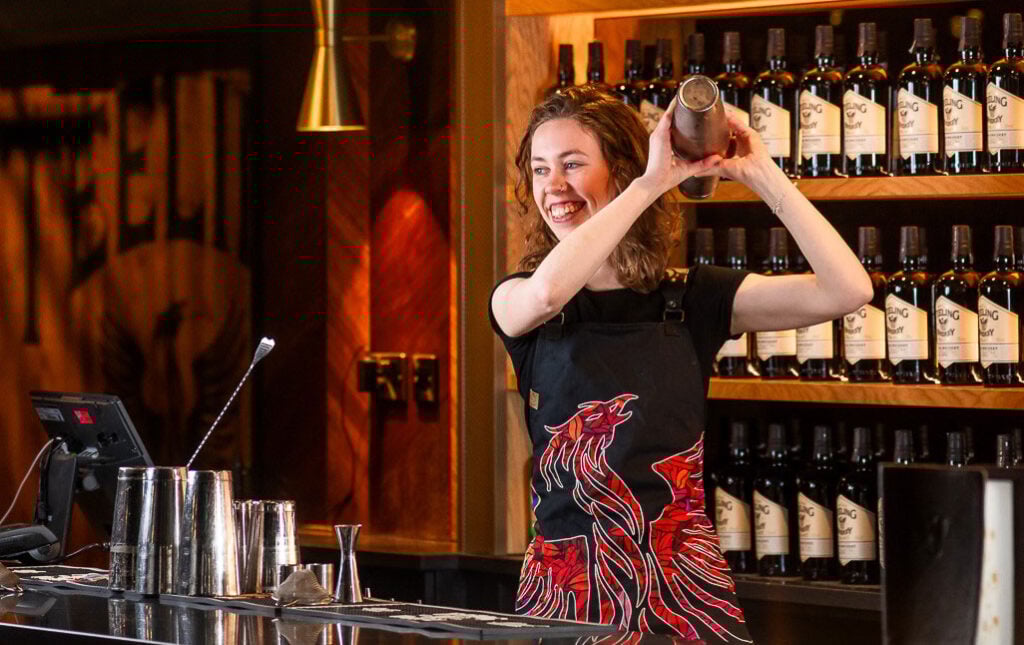
Teeling Distillery in Ireland has an acclaimed visitor experience
Beyond the cultural homes of whisky
Once whisky tourism proved it could work, it stopped being a novelty and became part of the furniture. Ireland made it a cornerstone of its revival. Whether visitor centres chose nostalgia or new dawns as their focus, the message that underlined it all was clear: We are back. Come and see what we are doing now. From rural distilleries to Dublin’s urban flagships, whisky tourism became a way of stitching back together this national story.
Elsewhere, whisky tourism has become a statement of arrival. Distilleries from India to Scandinavia have little inherited whisky mythology to lean on, so offer something else. Proximity. Access. Personality. Visitors can get up close to the production, talk directly to makers, and appreciate the credibility behind it all.
Take English whisky. Distilleries like The Cotswolds and The English Distillery offer picturesque rural walks and freshly made food on-site. Copper Rivet lives in a Pumphouse in Chatham’s Royal Dockyards, and Ad Gefrin doubles as an Anglo-Saxon Museum. Without the weight of centuries pressing down, tourism in the widening whisky world feels immediate and human.
Wherever it takes root, whisky tourism supports hotels, drivers, guides, restaurants, craftspeople, and seasonal workers. It can even go as far as to keep communities alive, particularly in rural areas. The economic halo effect spreads far beyond the distillery gate. It’s why awards matter, why distilleries keep building visitor centres even in uncertain times, why governments care, and should care more. Whisky tourism has become one of the industry’s most reliable bridges between liquid and livelihood.
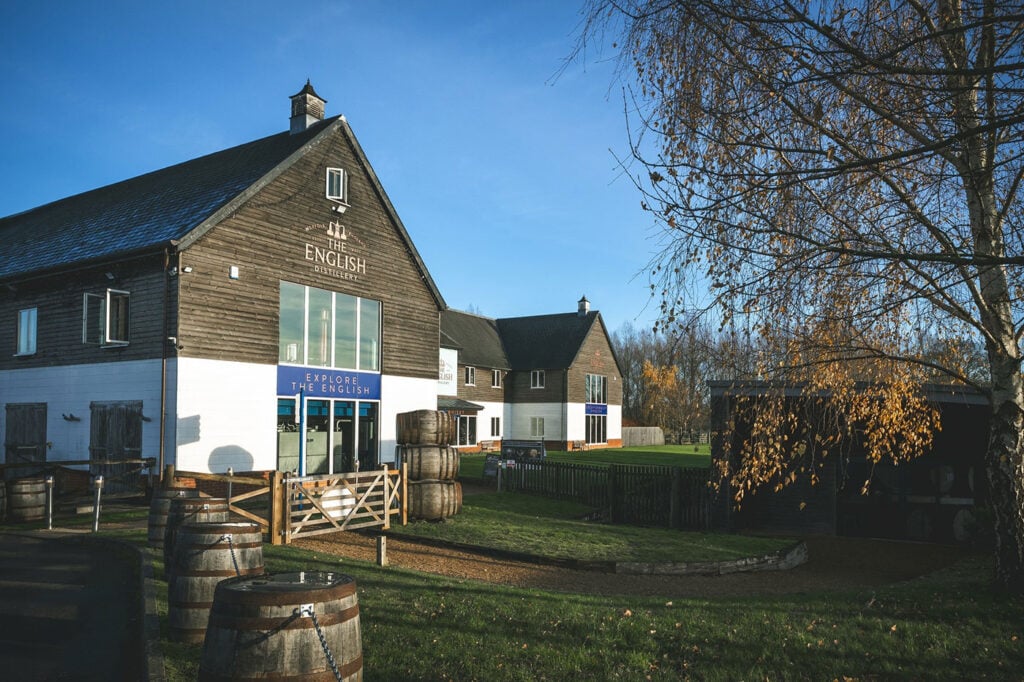
The English Distillery is nestled in the Norfolk countryside
From curiosity to pilgrimage
The scale of this shift shows in the numbers. According to the Scotch Whisky Association, there are currently 152 operating Scotch whisky distilleries across Scotland as of June 2025. Scotch whisky visitor centres welcomed 2.7 million visits in 2024, with more than 60% of those visitors travelling from overseas. Visitor spend has more than doubled in the past decade.
Ireland tells a similar story. Data from the Irish Whiskey Association shows more than one million distillery visits in the year to June 2025, representing a 23% increase year on year. Whisky tourism in Ireland generated over €40m for local businesses in a single year. Visitors did not just pass through distilleries. They ate locally, stayed locally, and moved slowly through the country.
Kentucky bourbon is a $9 billion economic and tourism powerhouse. The Commonwealth produces 95% of the global supply of bourbon, with 100 licensed distilleries operated by 84 companies and a record inventory of 12.6 million barrels ageing right now. That industry is responsible for 2.5 million visitor experiences in 2023, with tourists trending younger, spending more, and staying longer compared to other tourism attractions. Distilling generates more than 23,100 jobs with annual salaries of $1.63 billion ($2.2 billion including benefits). Bourbon generates more jobs, payroll, tax revenue, and tourists in more Kentucky counties than ever before.
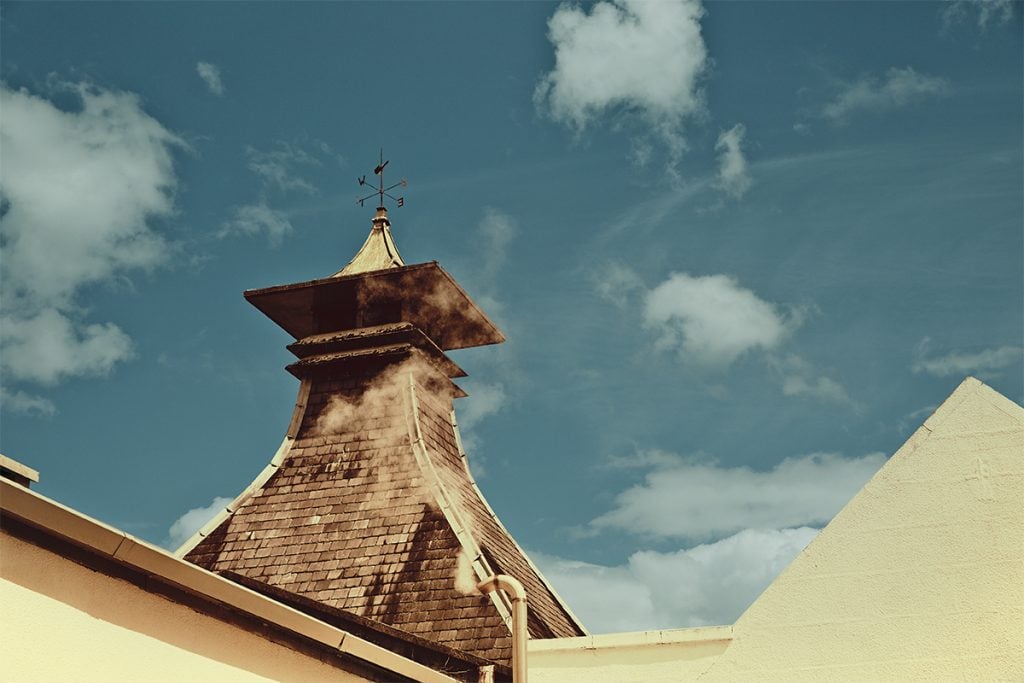
The pagoda roof at Craigellachie Distillery
Why people turn to whisky tourism
The modern whisky tourist is changing, which means so is the way whisky tourism works.
Post-pandemic travel came with a hunger for things that felt earned. Travel is no longer just a collection of sites and a bit of sun; people want to explore and understand things. Whisky tourism is a natural extension of whisky obsession. Distilleries are collected like Pokémon cards. A distillery tour lets you meet the makers, ask your questions, and taste the liquid where it’s made, not just the site, but the landscape. Widespread access to information fuels curiosity and – in turn – invigorates people’s interest in craft, provenance, and locality.
That charm becomes more seductive as whisky becomes harder to reach. Rising prices mean bottles turning into objects of pursuit rather than default purchases. Drinkers responded by asking better questions. Why does this cost what it costs? What am I actually paying for? Tourism answers those questions and provides an alternative way to connect. You see the scale. You feel the labour. The value stops being abstract, particularly for those who can be tourists without too much travel. Staycations cost less than vacations.
Then there’s social media. Distilleries sit in landscapes people want to stand inside, not just drink from afar. Whitewashed walls on Islay. Pagoda roofs in Speyside. Red brick rickhouses in Kentucky. Whisky tourism looks good because whisky lives in places with texture. You can’t get clout without proof. It’s a pics-or-it-didn’t-happen world.
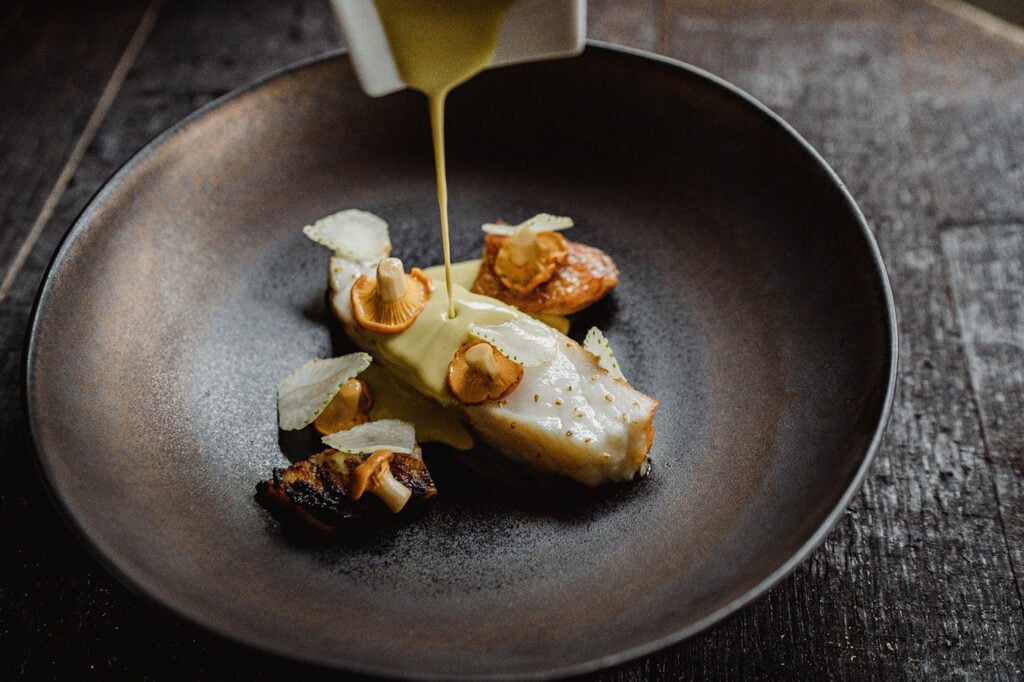
Glenturret has a restaurant with two Michelin stars.
The modern whisky tourism experience
Changing appetites means the best examples of whisky tourism are moving on from the fixed script. For distilleries with modest resources, a guided walk and talk with a dram at the end still does the job. But at the higher end, more comprehensive experiences are required. The Macallan didn’t spend £140m to create a Bond villain’s lair in Speyside just to do the usual.
Dewar’s Aberfeldy Distillery understands that visitors do not just want to see whisky being made; they want to know why it tastes the way it does. Its Whisky Explorer Experience puts character before prestige, using aged expressions and limited releases to talk about decisions, not status. Interactive tools, a bespoke bar, and a fresh approach to design make it standout in a crowded industry.
Johnnie Walker spent millions creating brand homes in distilleries like Cardhu and Caol Ila (we’ll get to Clynelish later) and opened its Princes Street location in Edinburgh in 2021. Here, visitors journey through a flavour tour, shop whiskies found nowhere else, take in the views of Edinburgh Castle from the 1820 rooftop bar, and even venture into the realm of patronage with its Vault Private Blending Experience.
Elsewhere, Rosebank and Brora have been turning restoration into cultural reconnection, and Ardbeg House shows how total immersion still works when locals remain part of the picture. Add destinations like The Glenturret Lalique, where food extends time on site without distracting from the whisky, and a pattern emerges.
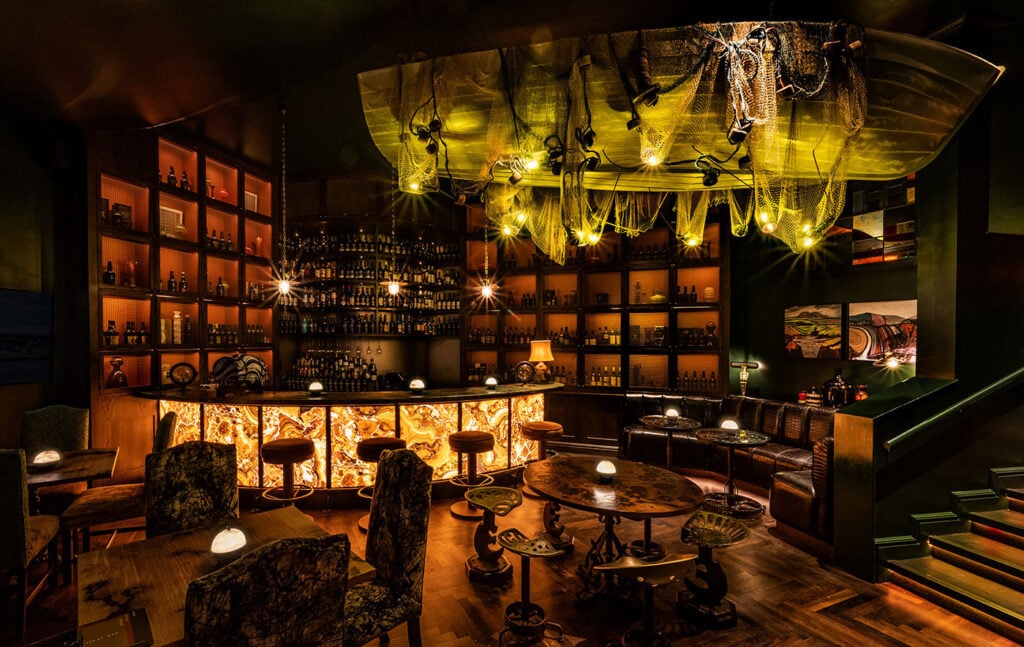
The new Islay Bar at Ardbeg House
The Whisky World Tour
The world of literature underlines the desire to travel with whisky, not just taste it. The Malt Whisky Yearbook profiles no fewer than 930 malt whisky distilleries in the 2026 edition, while 2025 also gave us The Whisky World Tour: A Curated Guide to Unforgettable Distilleries and Their Whiskies.
Joel Harrison’s latest book maps 52 of the best whisky distilleries open to the public around the world. Each chapter blends story, place, and practical bottle recommendations, allowing readers to travel through whisky whether they are packing a bag or staying put. We begin in North America, taking in key bourbon producers, before moving through Ireland and Scotland. From there, the journey widens. The likes of South Africa and Scandinavia sit alongside established names, before the book closes in Japan, home to some of the most lauded whiskies on earth.
Throughout, the message stays consistent. Whisky is no mere prelude to a party. It is an elixir of possibility, shaped by where it is made and by the people who make it. The question Harrison keeps returning to is not which door you open first, but which one you open next.
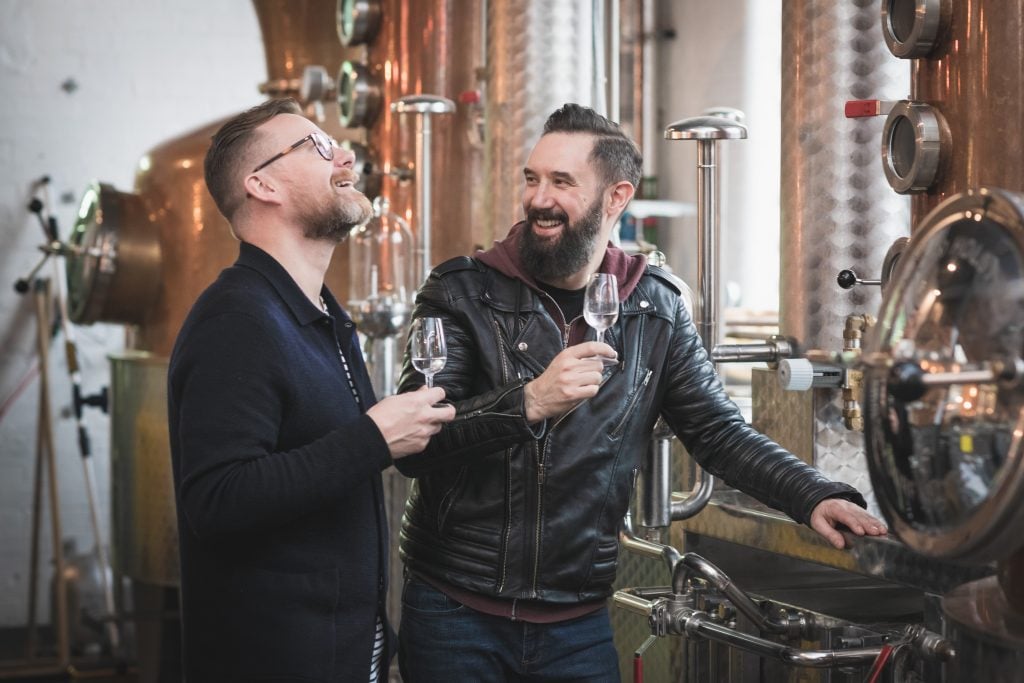
Joel Harrison (left) with Neil Ridley
The risks beneath the rise
Among the headlines and statistics that speak to a Gatsby-style party that will never end, there are tougher questions. How big can whisky tourism become, and what might it lose along the way? What happens if the demand stops? And who are we building this future for?
Whisky tourism serves several audiences at once. There is the first timer, trying to understand what whisky actually is. Then there is the enthusiast, chasing context and depth. The collector too, drawn by proximity to rarity. And there is the luxury traveller, for whom whisky sits inside a broader appetite for curated experience. None of these audiences are wrong. Problems arise when one begins to dominate the shape of the offer.
Luxury experiences bring money, visibility, and confidence. They also bring gravity. As prices rise and access narrows, whisky tourism risks shifting from invitation to filtration. Whisky is at its worst when it becomes a competition of affordability. The story of its early travels across the world was more complex than that one class of people who are so relentlessly associated with it. It belonged to workers as much as owners, to locals as much as visitors. When every experience aims higher, louder, shinier, something flattens. Tourism that forgets this loses something essential.
Distilleries are not theme parks. They are places of repetition, patience, and failure. Fermentations go wrong. Cuts are missed. Tourism that hides this may still sell, but it stops teaching. And whisky without understanding becomes just another expensive thing. For all its momentum, whisky tourism is not a straight line. It remains vulnerable to the same pressures shaping the wider whisky industry. Progress and precarity travel together.

Not even that view could save Clynelish
The closure of Clynelish’s visitor centre
The recent announcement of the planned closure of the visitor centre at Clynelish Distillery underlines this. It’s a particularly striking move following news that Beefeater has done something similar and, more alarming still, given that Diageo positioned Clynelish as one of four distilleries underpinning Johnnie Walker, backing that status with significant investment only a few years ago. It suggests the numbers weren’t adding up.
In a tightening market, visitor experiences can look expendable next to production, distribution, and stock management. Yet, their removal raises tough questions. Whether reducing access should come first, or rethinking pricing, value perception, and how to nurture future demand.
Closing a visitor centre trims short-term costs. It also closes one of the most effective routes into education, storytelling, community engagement, and long-term loyalty. As global markets soften and inventories swell, distilleries need stable, diversified income. Tourism provides that.
It’s the tool you can’t live with, or without. Tourism exists to turn drinkers into advocates, then moments like this force the industry to confront how fragile that bridge can be.
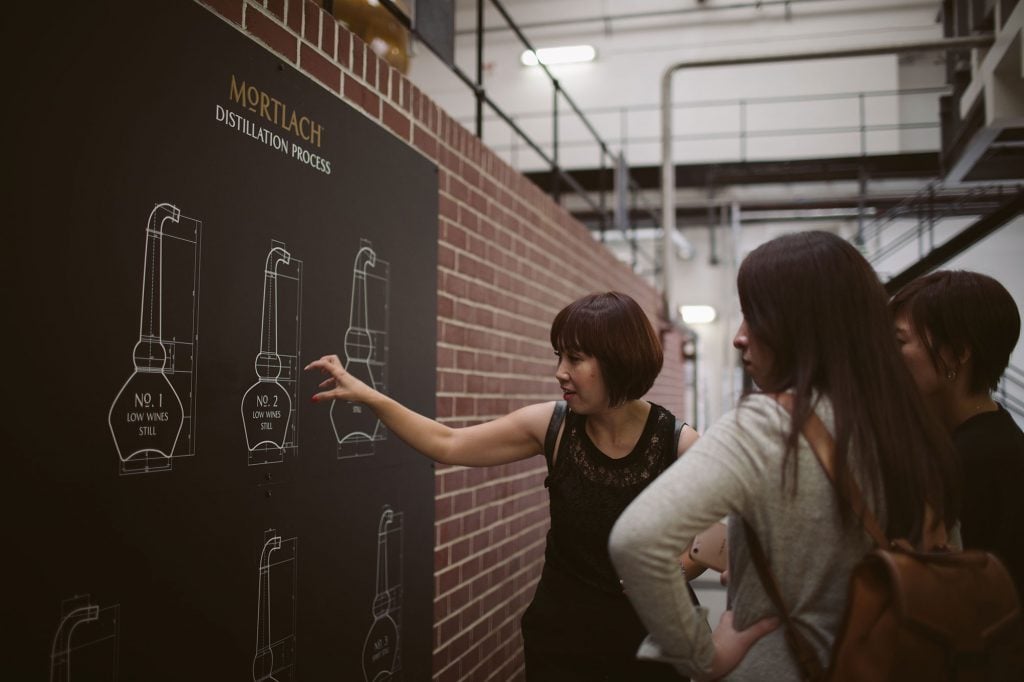
Go forth and tour the world of whisky!
What comes next
I’ll always advocate for the power and relevance of whisky tourism. The whisky holiday is one of my favourite kinds. If you haven’t tried it, you really should. A distillery visit teaches more in an hour than any label ever could. It exposes you to things an article can’t. You hear the stills. Smell fermentation. Feel the warehouse climate. Whisky stops being abstract and becomes physical, demystifying the art for newcomers and deepening the obsession for enthusiasts. The latter tend to keep whisky honest, though not always politely, by scrutinising the marketing upclose in broad daylight.
The future of whisky tourism will not be decided by how luxurious it becomes. It won’t be defined by features or who spins the best yarn. The long-term real success relies on remembering its purpose. It is not there to impress for its own sake. It exists to connect. To give visitors the sense that whisky belongs somewhere, and that – even for a brief time – you’re a part of that world.
Whisky has always lived beyond the glass. Tourism gives us a way to step closer to that truth. When it forgets, it becomes noise. The choice becomes one between building experiences that last longer than the visit. Or building spectacles that fade the moment your dram is finished.
Tags:
1 Comment




