

Today, we’re delighted to have a new writer for Master of Malt, industry veteran Dr Nick Morgan. Here he brings us a tale of greed, deception, and short-sighted business decisions, as he lifts the lid on the long and murky relationship between the Scotch and Japanese whisky industries.
Diligent readers may recall that in February the Japan Spirits & Liqueurs Makers Association acknowledged that there had been a longstanding practice of mixing Japanese spirits with distillates from other countries, which were then sold under the description of ‘Japanese whisky’.
This was in a preamble to proposals for a new voluntary code (effective from 1 April 2021) to be followed by Japanese distillers and blenders which is intended to prevent this from happening in the future. Disingenuously, and with not a word of contrition, the preamble explained that these practices were part of “the tradition, history, and culture of Japanese whisky-making” which “had enriched the Japanese drinking culture” and “were supported by many people around the world”. The Association, it continued, “took pride in that fact and are grateful for the efforts of our predecessors”.
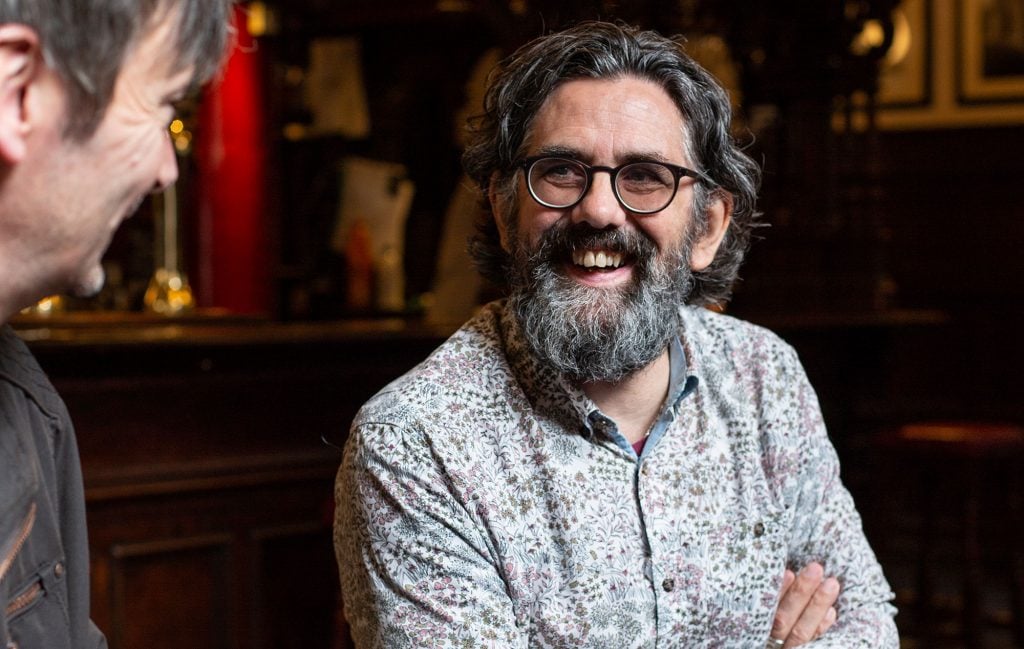
Dave Broom was not happy
The dog that did not bark
Whilst one might have expected such an announcement to have been met with outrage, it was instead greeted either with a muted response by commentators, and a deafening silence from the Scotch whisky industry. Only Dave Broom (in the past a prominent cheerleader for all things Japanese) wrote frankly about the questions this statement raised, the consequences that this admission would have for the reputation of the Japanese whisky category, and the breach of trust it represented with those consumers (and for that matter writers) around the world who had helped to build it. Otherwise, the dog did not bark.
Can you imagine a similar announcement, from say the Scotch Whisky Association, confessing to decades of consumer deception by some of its members? Would it have been greeted with such equanimity?
Perhaps what is most shocking is that so many stakeholders, industry commentators, and even consumer groups were already aware of this practice of blending Japanese whiskies with those of other countries, and selling them under a misleading description. In many respects, it was hiding in plain sight.
In recent years some CEOs of large Scotch businesses, enraged by the amount of love that whisky commentators and consumers have chosen to shower on Japanese whiskies at the expense of Scotch, pulled out their hair in frustration because no one would publicly call out Japanese producers for this practice. It was almost, you might think, as if there was a conspiracy of silence, with the foremost conspirators being the Scotch whisky companies. Why? Because some had been happily selling bulk malt whisky to Japan since the 1960s.
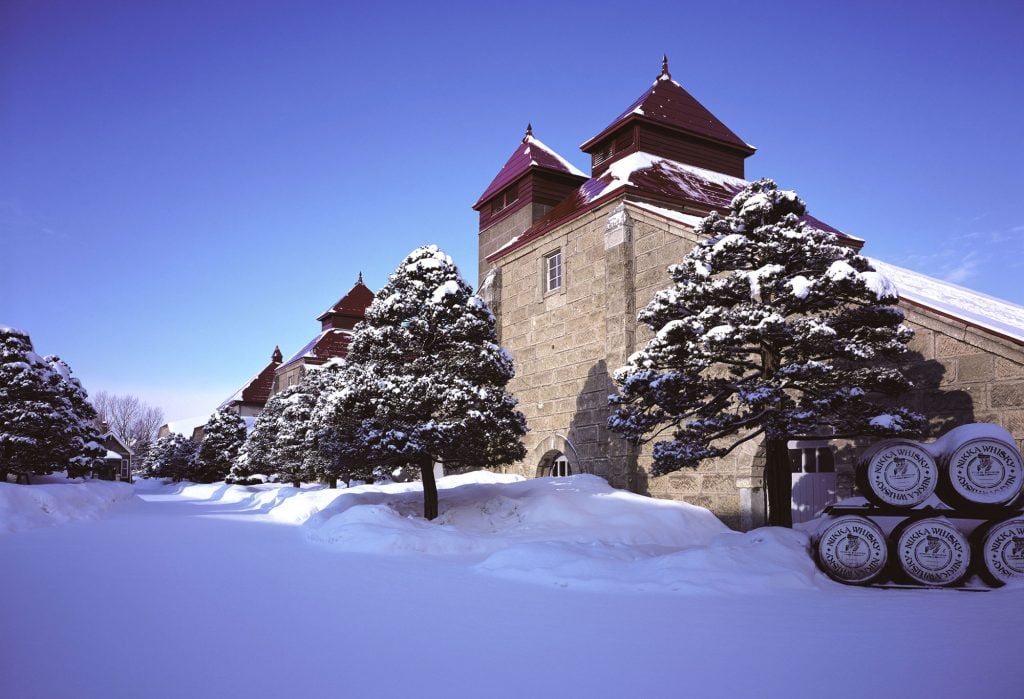
Nikka’s Yoichi distillery
So how did we arrive at this situation?
First, some history. As the Japanese economy began to recover after the Second World war, leading Japanese distillers (Suntory and Nikka dominated the category, with Suntory having a market share in excess of 70%) had ambitions to build both domestic and global reputations for their brands as rivals to Scotch both in terms of craftsmanship and quality. But despite significant increases in whisky production in the early 1960s and again in the early 1970s, inventory and spirit quality lagged behind ambition. Japan’s whisky distilling tradition rested on Masataka Taketsuru’s much romanticised adventures in Scotland in the early twentieth century. As we shall see, some of his contemporaries in Scotland came to think of these as akin to industrial espionage.
Meanwhile, Scotch whisky, considered to be the epitome of quality, was held in such high regard domestically and globally. However, the two whisky industries could not have been more different. In Scotland, a history of independent distilleries selling mostly new-make whisky either directly to blending houses or to brokers and speculators had created a commodity market where mature whiskies were bought and sold freely. Blenders might even trade or exchange casks with competitors. As a result, it was common practice for blenders to make use of a wide variety of the available makes in their blends.
In Japan, on the other hand, production was concentrated in the hands of a small number of companies, and the tradition of using other distiller’s whisky was unknown. Over time this forced the large Japanese distillers to develop the skills to produce a variety of spirit characters and qualities from their stills. It also made the major Japanese brand-owners look outside Japan for whisky that would help meet their volume requirements, and more importantly their desire to match, or surpass, the reputation that Scotch whisky had for quality. And what better place to go in the first instance than Scotland?
What better place to buy whisky than Scotland?
In 1961, Japanese distillers were selling an estimated 2 million cases in the domestic market. By 1975, this had increased to 25 million cases. In the early 1960s, bulk malt whisky from Scotland was being imported into Japan, largely through brokerage firms, in the tens of thousands of gallons. By 1975 it stood at over five million gallons, and by 1978 over six million.
For tax purposes, Japanese whiskies were divided into three grades: Special Grade, First Grade, and Second Grade, a categorisation that remained in place until 1988. These grades were also de facto designators of quality. Some writers have reassuringly yet inexplicably suggested that bulk Scotch malt whisky was being used principally to improve the quality of the cheaper First and Second Grade brands. These were typically blends of Japanese malt whisky, neutral grain spirit, and sometimes other flavourings.
On the contrary, as Scotch whisky executives reported in the late ‘60s and ‘70s (and British newspapers and commentators also wrote), Scottish malt whisky was being used to bolster the quality of the Special Grade brands (like Suntory Old, ‘with a smoothness akin to fine Scotch’), which in the early 1960s had been available in only very limited quantities. The objective was to enhance the reputation of domestic whiskies with consumers and put them on an equal footing with Scotch.
Between 1963 and 1975 the per capita consumption of whisky in Japan had more than tripled. It was the Special Grade of domestic whiskies that were growing most rapidly, as the cheaper grades declined. The leading brands were Suntory Old and Nikka Super, and Suntory Royal and Nikka Kingsland, the last two priced between standard and deluxe blended Scotches such as Johnnie Walker Red Label and Black Label. By 1975 Special Grade accounted for almost 60% of Japanese whisky sales, and a graph showing its rapid growth in the early 1970s would almost correlate to one showing the equally dramatic rise in imports of bulk malt whisky from Scotland.
‘You can’t tell the difference between Suntory Old and Scotch’
At the same time companies such as Suntory were promoting their brands with huge advertising budgets, with messaging to persuade consumers that Suntory brands were as good as, if not better, than Scotch whisky. As one observer commented, the advertising message was “you can’t tell the difference between Suntory Old and Scotch”. By 1975, Suntory claimed that Suntory Old, which like Suntory Royal was thought to contain 20% Scotch malt whisky, was the largest selling brand of whisky in the world (8.5 million cases). The label read: ‘a blend of rare, selected whiskies, distilled and bottled by Suntory Ltd … Product of Japan’. Sean Connery drank it as James Bond in 1967’s You Only Live Twice and would go on to appear in advertisements for the brand in the 1990s.
Suntory Old, “with a smoothness akin to fine Scotch” was launched in the United States in 1962, at a time when the company had very limited inventory to support such a bold move. Suntory whiskies were being sold in European Duty Free in 1972. In 1976, advertising agency Chiat Day launched a striking campaign for Suntory Royal in the United States with the strapline “From the bonnie, bonnie, banks of the Yamazaki” (“if Suntory Royal happens to taste like Scotch we wouldn’t be surprised”). “Just as Suntory Royal is similar to Scotch, but better” said an advert in the Los Angeles Times the following year.
In 1977, Suntory opened a restaurant in London to showcase its brands alongside Japanese cuisine, “within a stones-throw” noted the Aberdeen Press and Journal, of the head offices of Johnnie Walker, Cutty Sark and Justerini & Brooks. Suntory Old was listed in luxury outlets such as Harrods. Whilst total exports remained small the global intent was very clear.
Helping the competition
Scottish distillers, often with overseas owners or investors, had begun to get directly involved in the supply of these bulk malts, rather than leaving the business to brokers. Seagram entered into an alliance with Kirin, announcing in 1973 the launch of a new blend, Robert Brown. The whisky, said the press release, would consist of malt whisky from Scotland imported from Chivas Bros. and local Japanese whisky which would eventually be produced at the new distillery planned by Kirin at Gotemba in the Shizuoka Prefecture.
The industry, however, was divided on the issue. Some, like the giant Distillers Company, remained aloof from this business, despite being regularly courted by Suntory. DCL’s Robin Cater warned that bulk exports used to improve the quality of Japanese blends were in effect helping to create the reputation of a category that would soon compete with Scotch, while Adam Bergius of William Teacher’s described bulk exports as “short-sighted and against the long-term interests of the Scotch whisky industry”.
Trades unions formed a pressure group, the Scotch Whisky Combine Committee in 1977. Its purpose was to lobby both the industry and the Scotch Whisky Association, and government, complaining of the long-term threat both to jobs, and the reputation of the category, that the export of both bulk malts and blends represented. The Scottish National Party supported the campaign.
Reports were commissioned and reports were written, warning of the long-term damage that would result from the “self-interested and short-term policy” that some companies had adopted to the sale of bulk malt whisky, particularly to Japan. At the heart of this was a concern that the increasingly multi-national ownership of whisky companies in Scotland (and elsewhere) could lead to the commoditisation of Scotch and the development of a globalised trade in whisky generics, with a commensurate loss of distinctiveness for Scotch, and for that matter other types of whisky too.

Masataka Taketsuru and Rita Cowan
Tartan-tinted spectacles
The warnings went unheeded, allowing Japanese distillers to develop a very specific “tradition” and “culture” of Japanese whisky-making. It “enriched the Japanese drinking culture” at the expense of Scotch. In addition, it led to whisky consumers and collectors all over the world, in a category where provenance is everything, being sold products that were not, as one might say, exactly as described.
Of course, this part of the story wasn’t told when Japanese whiskies were taken to the world in the late 1980s. Producers persisted with a carefully-curated narrative, told through tartan tinted spectacles, of an auld alliance between the two distilling nations based on Masataka Taketsuru’s visits to Scotland, an alliance symbolically solemnized by his marriage to Scot Rita Cowan, sometimes described as “the mother of Japanese whisky”. The tale that is told is of long-standing respect shared with Scottish distillers for authenticity, craftsmanship, and traditional methods of production.
Industrial espionage
For the record, that’s not quite how the chaps at the DCL saw it. They had been outraged when the purpose of Taketsuru’s visits became clear following the release by Suntory of a ‘Scotch Whisky’ with an English language label in 1929, invoking both government and the law to try and prevent its distribution and sale. As late as 1982, they were still debating whether uninvited Japanese visitors should be allowed into their distilleries, so stung were they by the events of the past. Indeed, it’s quite possible that the extreme culture of secrecy that surrounded distillation in the DCL for so many years was one of the unintended consequences of Taketsuru’s time in Scotland.
Retailers, writers, and commentators were sucked in by the romance story and the ‘zenness’ of it all, and of course by the outstanding quality of many of the whiskies produced (whatever their origin). In a collective attack of cognitive dissonance, they couldn’t, or wouldn’t, see beyond it. Scotch producers, as the fortunes of their bottled products waxed and waned in the late 20th and early 21st centuries, came to rely on bulk malt sales as a way of maintaining revenue and managing excess inventory. As the global popularity of Japanese whisky increased, so did the sales of bulk malt Scotch.
Increasingly through either direct acquisition or developing shareholdings, Japanese companies have increased their presence in the Scotch whisky business, and their access to stocks. So complicit has the Scotch whisky industry been in the development of the deceptive practices finally acknowledged this year by their Japanese counterparts, that it’s hardly surprising that they have remained so tight-lipped on the subject.
At the same time, Japanese interests in the world of Scotch (and for that matter American) whisky has increased its influence over writers and commentators. So the muted response to February’s announcement is hardly surprising. Say the wrong thing about Japanese whisky these days, and it could cost you a free trip to Islay. Or Speyside. Or Kentucky. Let alone to the bonnie bonnie banks of the Yamazaki.
Biog
Nick Morgan’s career as a historian and writer was rudely interrupted by a thirty-year, award-winning spell in the Scotch whisky business. Beginning as archivist for United Distillers, he body-swerved his way into marketing, and managed the largest portfolio of single malt whiskies in the world for over ten years. Laterly he was a spokesman on Scotch whisky related issues, famously described as ‘Diageo’s human shield’. He has now returned to the relative sanity of the past, and recently published A Long Stride, the official history of Johnnie Walker. His new book, Everything you need to know about whisky (but are too afraid to ask) is published in August 2021.





