

Alice Pearson is one of the youngest distillers in the UK. At 25, she’s head of production at the first English whisky distillery to sell 100,000 bottles of English single malt whisky globally, and is available in more than 30 markets, including the US, Japan and Europe.
When I first visited The Cotswolds Distillery a few years back, head of advocacy Rob Patchett introduced us and told me that Alice would be a star. At the end of last year, I spoke to her as the person in charge of whisky blending, quality, production shifts, site operations and the sort of practical problem-solving that involves both spreadsheets and lifting manhole covers.
Now it’s time for you to meet Alice, in her own words.
From theatre sets to stills
Alice did not set out to make whisky. She set out to work, and whisky happened to be where that led.
“I wanted to be a set designer in theatre,” she says. “I joined the distillery part-time in the shop because I was local and it was just there as a job when I was a teenager.”
After finishing her A levels in 2018, she needed summer work. “I already knew the place, so I joined the bottling line. Then a job came up as an assistant in the NPD lab, and after that it was kind of one thing after another.”
She wasn’t really a whisky drinker then. What drew Alice in first was the equipment. “Watching the distillers operate in that environment, I just thought, ‘That looks cool. I want to do that.’ It felt like a physically rewarding job.”

Meet Alice Pearson
What the job actually looks like
There is no such thing as a typical day for Alice. The Cotswolds Distillery appears to have that small business energy that means any notion of routine tends to fall apart by mid-morning. I can relate.
“I do all of the whisky blending and a lot of the quality side,” she says, “but there’s also a massive practical element.”
One day might be admin. The next, not so much. “It can be, oh, this drain’s not working, I need to lift a manhole cover. Then it’s, I need to jump on and run the whisky stills this afternoon. It’s everything it takes to run a distillery and a visitor site.”
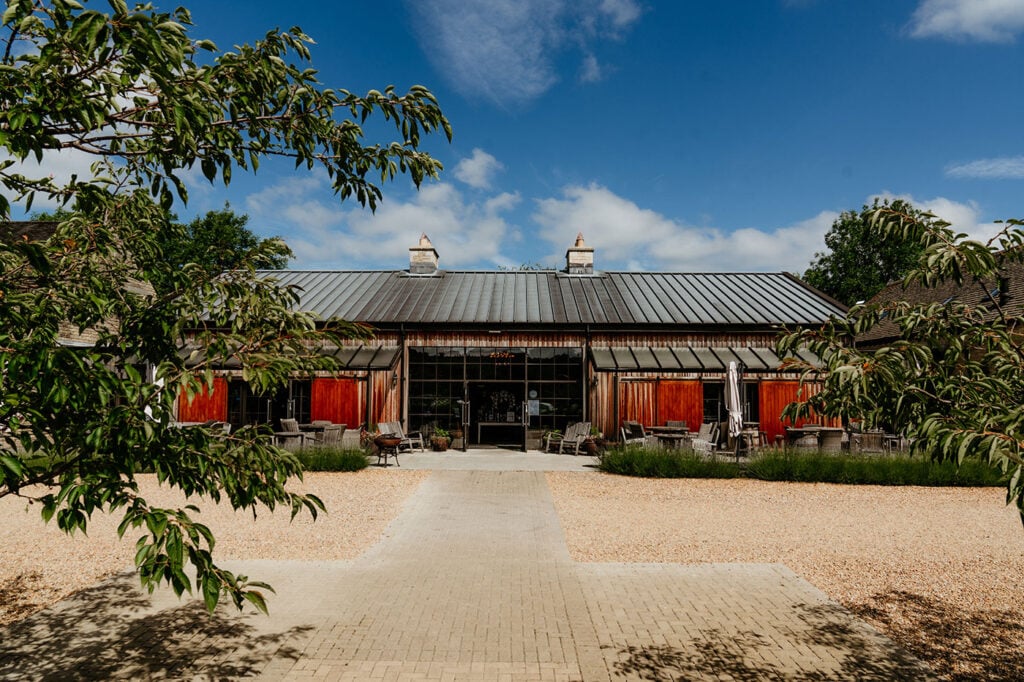
Welcome to The Cotswolds Distillery
Innovation, without doing it for the sake of it
Pearson has the freedom to play when creating whisky, but she is not chasing novelty. “There’s so much in whisky that’s well studied and proven. I don’t feel the need to innovate just to innovate.”
Instead, she focuses on what is new for the Cotswolds. “Something can feel innovative because we’ve never done it, even if it’s not new to the industry.”
She points to the latest and fourth Harvest Series expression, Wychwood Harvest Single Malt Whisky. This limited release of 1,500 bottles is crafted from a rare parcel of Port and select bourbon casks laid down nearly ten years ago.
“We pumped the liquid, introduced loads of air after disgorging the barrels, and finished it in experimental casks. We hadn’t done any of that before. Every distillery’s spirit is different. So it’s still innovation for us.”

The whisky creation here is led by head of production Alice Pearson
Blending for markets and for balance
Pragmatism plays its part too, whether that is responding to market preferences or knowing when to lean on colleagues.
“If there’s a brief, I’m very happy to follow it. Germany loves super-sherry-heavy whisky. Big, bold, loads of character. I can pick a cask for that, no problem.”
“And I’m always very keen to work with marketing because, as much as we’re building a great product from a great building on a great site, without a great brand behind it, people don’t understand that. So there’s a lot of collaboration in that sense”.

Rob Patchett and Alice Pearson both havethe honour of featuring on our blog. We’re sure they’re made up.
Where inspiration strikes
Above all, the key is finding balance, and the distillery character in the new make spirit helps.
“I don’t like whisky that fires off too far in one direction. Luckily, our spirit stands up so well. It’s light, but even after ten years in really active casks, you can still taste those nectarine, peach, apricot notes.”
She laughs. “It makes my job easier. The spirit is always there.”
That balance also comes from looking beyond the warehouse. “I’m a big foodie, so a lot of flavour thinking comes from that. From chefs, hospitality people, lots of experiences that are not just distilling.”
She pauses. “It kind of comes from anywhere, really.”
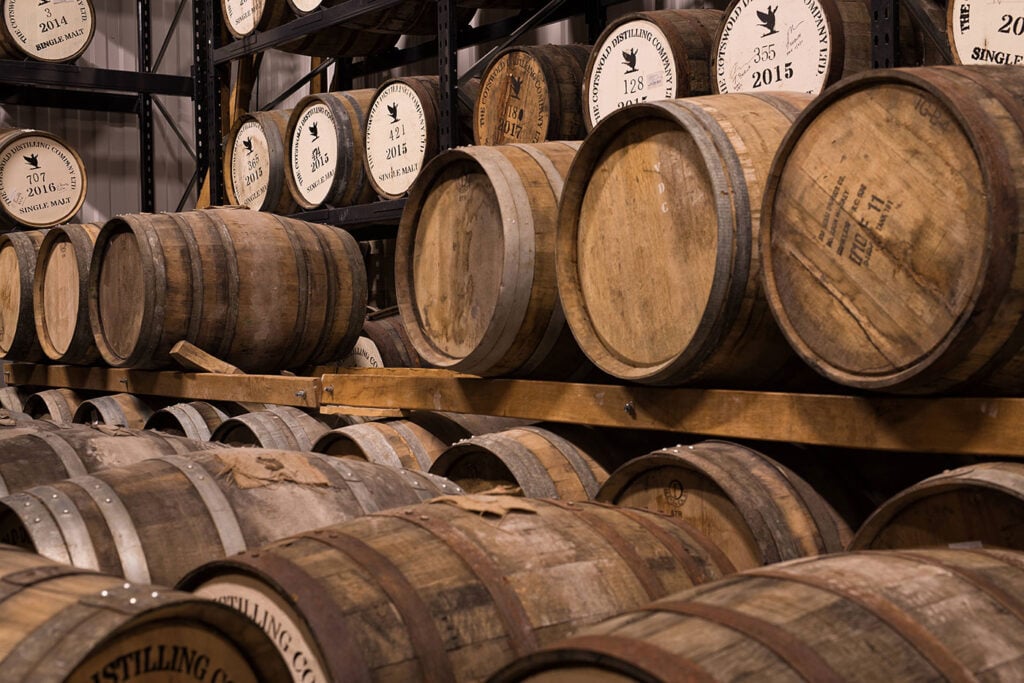
Future Cotswolds whisky maturing
The charm of the Cotswolds
It is not just the whisky that reflects its home, but the person shaping it. Alice loves the outdoorsy setting, the nature and the wildlife. More than that, she talks about a working environment that changed how she saw herself.
“I’m very much a product of my environment here. I’ve had the freedom to learn and to make mistakes. Everyone here is doing the thing they love. It becomes this sort of petri dish for creativity.”
That support mattered. “I definitely did not think I would be blending whisky for sale. Now it just feels very normal. A lot of that comes from external support and being allowed to grow into it.”
People sit at the centre of it. “People can really lean into what they’re good at instead of fitting into a very square definition of a role. You see that in the products, the design, and the brand work. It all comes from that.”
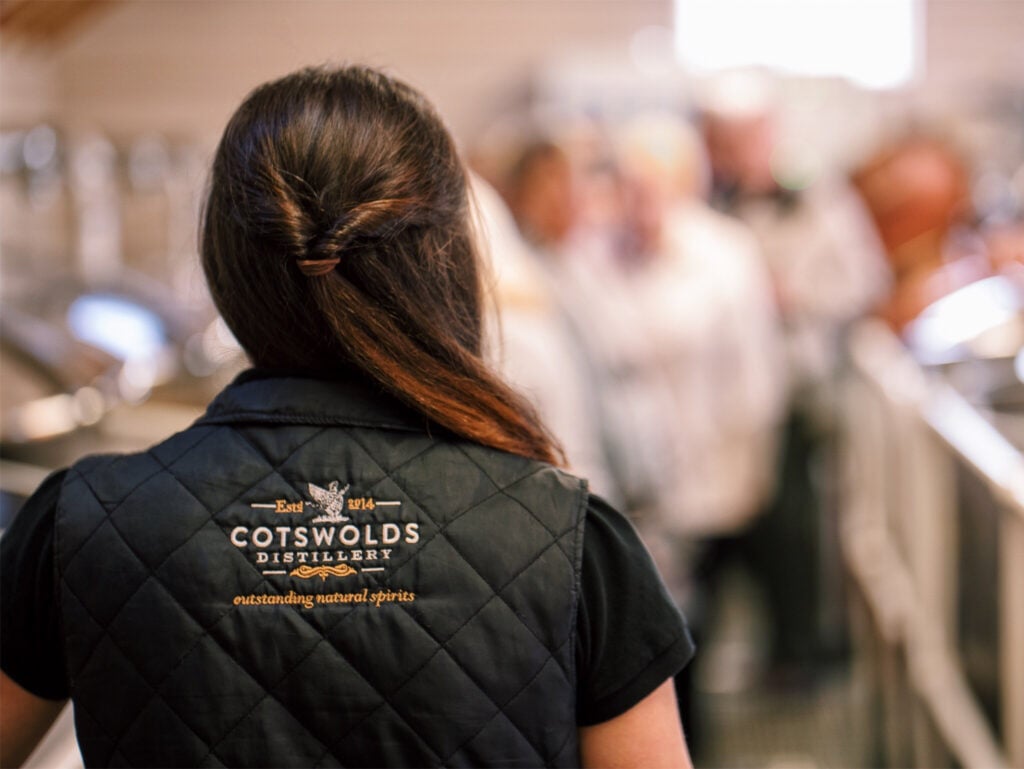
The Cotswolds Distillery has given Alice Pearson and others a platform to shine
The new distillery and the wetlands
A lot has changed in the seven years Alice has worked at the Cotswolds. English whisky is pushing for a Geographical Indication (GI), annual production exceeds 500,000 bottles, and there’s an English Whisky Week now. The Cotswolds also built another distillery on-site.
“The new distillery was a massive change,” she says. “It was us going out into the industry and saying, we’re serious about this.”
Part of that redevelopment was building an ecological treatment system to treat wastewater sustainably.
“The Wetlands is basically a big field with three-tiered ponds, willow trees, plants, all working together,” Alice explains. “But it doesn’t look like wastewater treatment. It looks like green space.”
Visitors walk through it. There are signs, pathways, and beehives. “You’d think you were in a National Trust site. We even sell honey from the bees in the shop.”
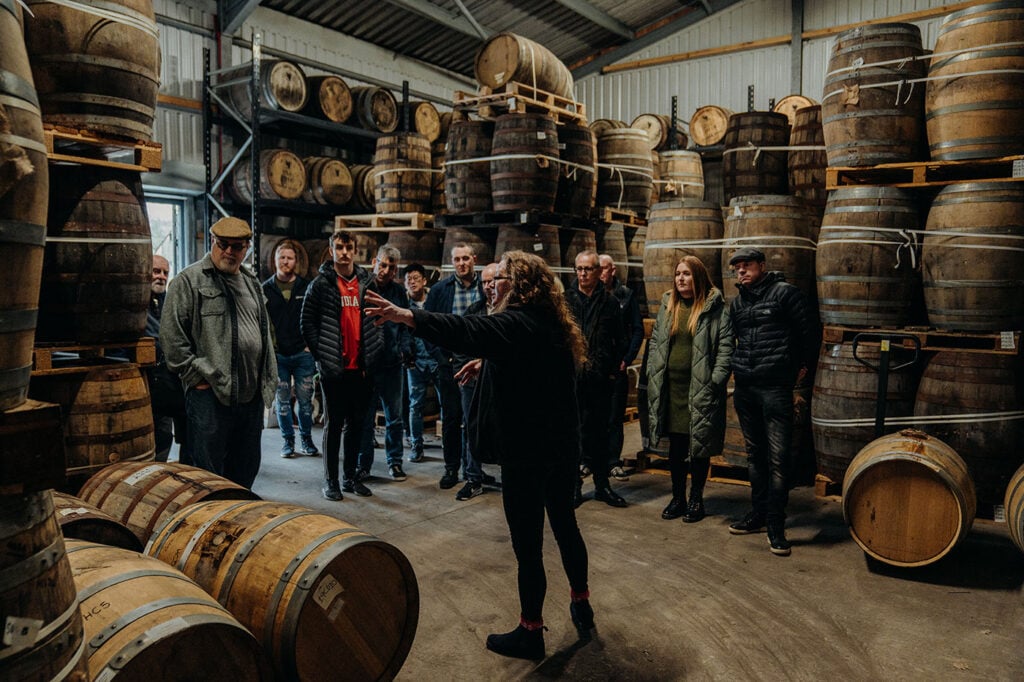
The Cotswolds Distillery is a leading light in English whisky
English whisky finding its character
English whisky is still a work in progress, and Alice appears to enjoy the unfinished edges.
“I think innovation here happens by default,” she says. “We’re in a different climate. We have different restrictions. Different access to engineering and equipment. All of that forces you to do things differently.”
There is also attitude. “A lot of the English whisky distilleries are run by really big personalities. There’s a bit of cheekiness to English whisky. That subtle humour. We’re making whisky so close to Scotland, and there’s a bit of fun in that.”
She smiles. “It doesn’t take itself too seriously, and I think that’s important.”
Alice talks about whisky like someone who belongs exactly where she is. No mystique. No posturing. Just bags of curiosity. And a few muddy boots.
English whisky is still writing the first chapters of its story. At The Cotswolds, a rising star holds the pen.




