Inside the Coleburn Distillery Revival


The Coleburn Distillery revival is one of the most ambitious whisky projects in Scotland right now, and it is happening quietly in a Speyside gully that most visitors speed past without ever knowing what is about to unfold.
Coleburn has been asleep since the early eighties, a silent relic from the era when too many good distilleries were shut and stripped. Yet beneath the weathered stone and rusted pipework, there is a spark worth saving. A spark that is finally catching.
The plan is not to reopen Coleburn as a museum piece. The plan is to build a twenty-first-century Scotch whisky resort on heritage foundations and to let the distillery, landscape and community grow into something genuinely new.
This is not a visitor centre. This is a place to stay, eat, drink, wander, breathe, and taste the full life of a working distillery. Overseen by a man who has already done this once before.
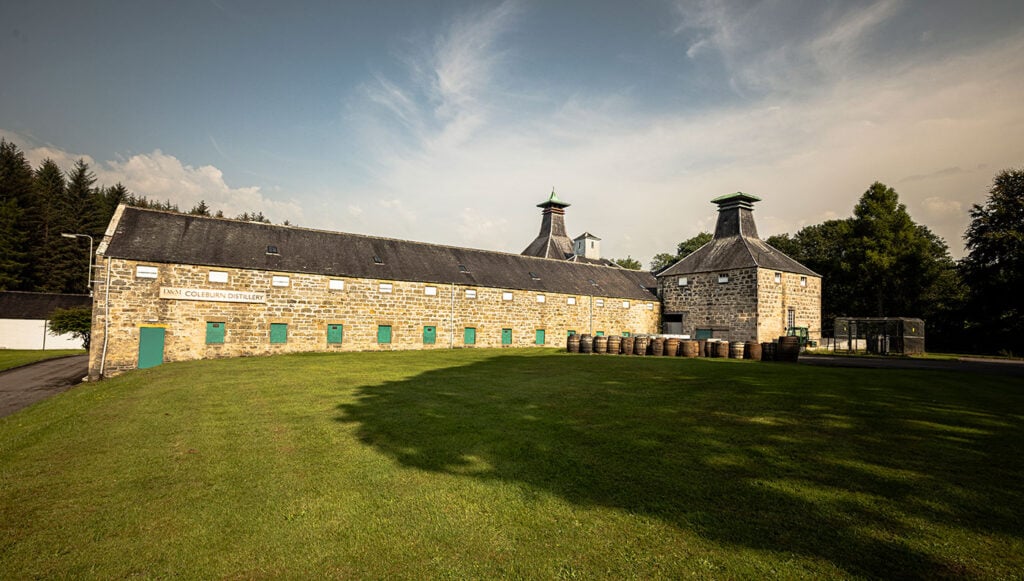
Welcome to The Coleburn Distillery
The distillery with a rebellious streak
The story begins in 1896 when whisky blenders John Robertson and Son founded Coleburn during the last great Victorian distillery boom. Charles Doig, the architect responsible for some of Speyside’s most distinctive pagoda-topped distilleries, designed the site.
It opened with two copper pot stills in 1897 and quickly became known for its experimental workshop, where new production techniques were tested at the turn of the twentieth century. For decades, Coleburn’s single malt fed blends across Scotland, including Johnnie Walker Red Label and J&G Stewart’s Usher’s blend.
In 1915, the distillery was sold to the Clynelish Distillery Company, then jointly owned by John Risk, John Walker and Sons and the Distillers Company Limited. By 1925, the DCL had full control and licensed Coleburn to its subsidiary J&G Stewart.
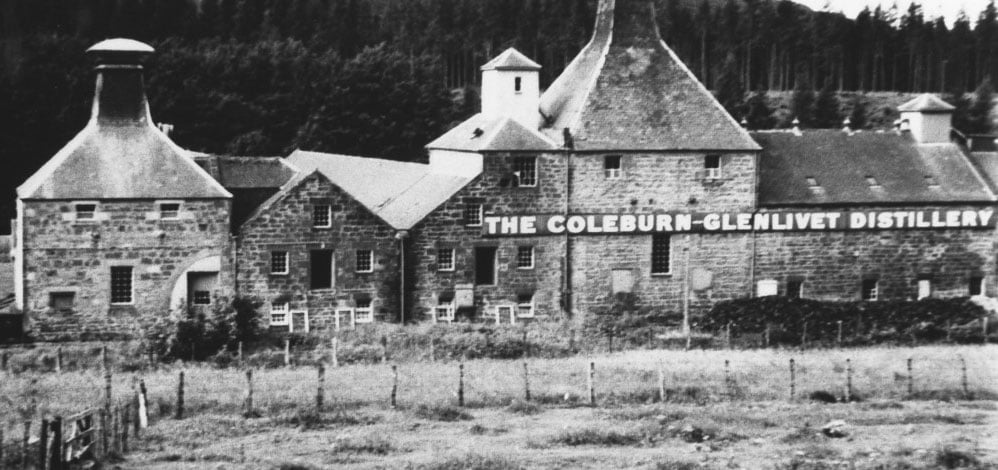
The old Coleburn. Image credit: Whisky Antique.
Into modern times
The distillery was modernised in the sixties, but when the Whisky Loch of the eighties hit, Coleburn was an easy target. Tired plant. Costs rising. Pressure building. In 1985, it was mothballed, and its distilling licence was revoked in 1992. Most of its equipment disappeared. The place slipped into memory.
Yet Coleburn was not forgotten. Its experimental roots gave it a cult following among whisky makers and industry folk. When Diageo considered turning the site into flats and houses, the plan quietly dissolved. Something in the stones resisted.
In 2004, brothers Mark and Dale Winchester bought the derelict site with plans that were, even then, ahead of their time. Their dream was not to resurrect Coleburn as a museum piece but to rebuild it as an entertainment and hospitality destination featuring a hotel, spa, concert hall and perhaps a boutique distillery.
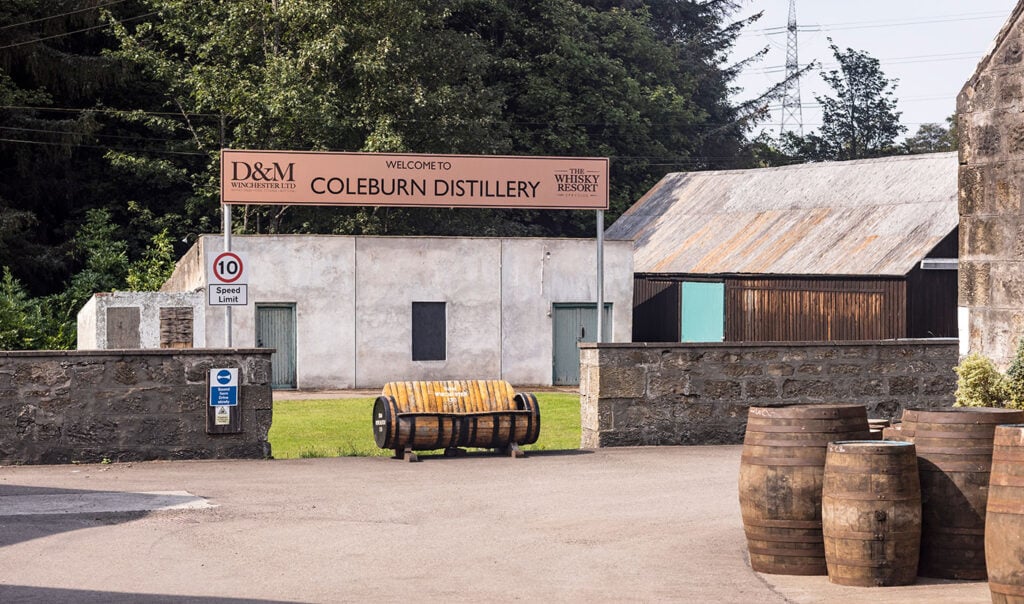
This is where the new Coleburn Distillery will be built
Enter the Winchesters
The idea was bold. Possibly too bold for the mid-2000s.
While the grander elements of the plan were paused, the Winchesters began to rebuild the site’s identity. In 2014, they leased the Victorian dunnage warehouses to Aceo, owners of the independent bottler Murray McDavid.
Coleburn became Murray McDavid’s home, a place to mature its wide variety of casks from across Scotland. With more than ninety single malt and single grain whiskies resting under its roofs, Coleburn quietly became one of the most diverse ageing warehouses in the country.
Murray McDavid leaned into the place’s history. They matched spirits with casks sourced from around the world and used Coleburn’s cool, quiet warehouses to shape flavour and texture. They ran warehouse tours during the Spirit of Speyside Festival, held tastings and blending workshops, and even hosted a ceilidh on the lawn overlooking Parkmore. Guests came from across Scotland and as far as Brazil. Coleburn, for the first time in decades, felt alive again.
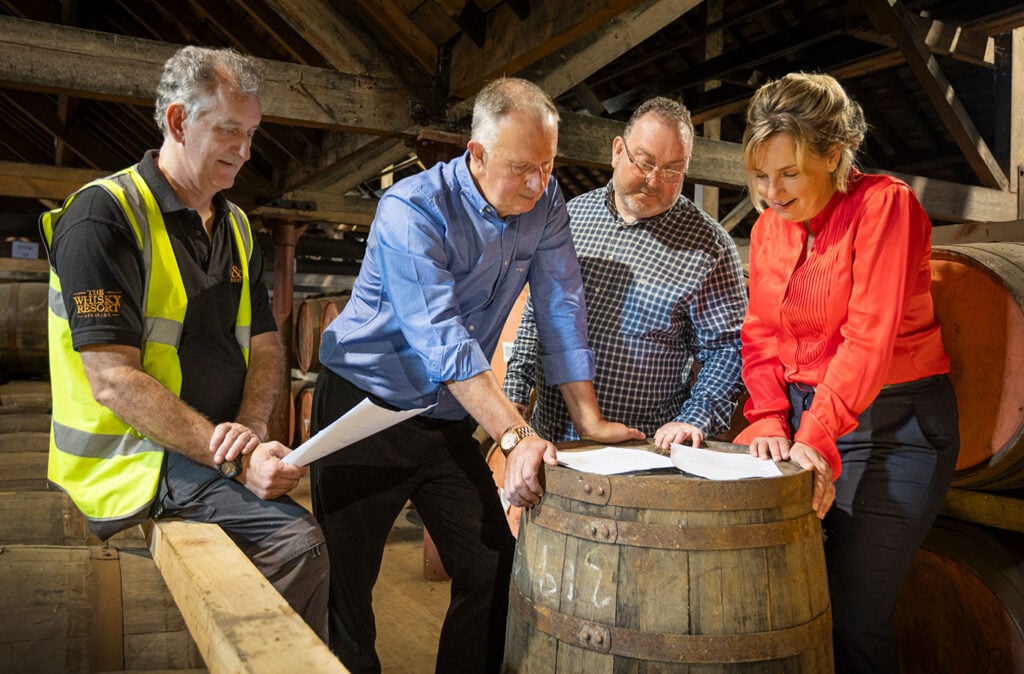
The project is ambitious, but the folks behind it are in it for the long haul
The long game
Fast forward to 2024. After years of planning, the first public sign of the revival arrived when the Winchesters announced that Coleburn’s new bistro would open later that year. A year later, in August 2025, came the real headline. Coleburn will reopen as a working distillery in 2027.
The project will be known as The Distillery at Coleburn, and the first phase will include an entirely new distillery alongside the bistro. To build the distillery, the Winchesters brought in two heavy hitters.
Master distiller Keith Cruickshank, who spent 27 years at Benromach and has three decades of distilling expertise, and Organic Architects, the team behind the sensitive restoration of Lindores Abbey.
Coleburn is a Grade B listed site, meaning every change demands care. That means a modern production facility can’t be wedged inside the old buildings. Establishing a distillery for today means being green from the ground up, and that efficiency requires the right space.
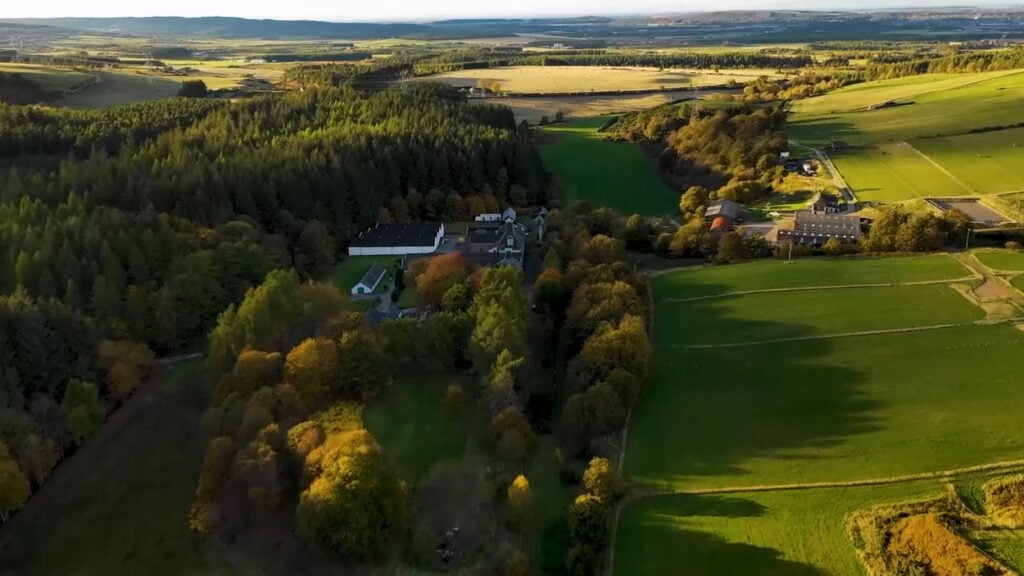
There’s a lot of land to paly with here
A new distillery built for modern Speyside
The new distillery will sit at the lower end of the site. It will run a two-tonne mash and initially produce around 100,000 litres of alcohol annually. This allows the architecture to meet modern sustainability standards without forcing the heritage buildings to compromise.
Heat recovery. Water retention. Energy efficiency. These are central pillars of the design. Excess heat from production will warm the log cabin lodges and even power the hot tub. Grain sourcing will remain as local as possible. And the distillery will be designed not just for production but for storytelling.
The original water source remains untouched since the eighties, still flowing cleanly and still connected to the old pipework. It will once again feed the Coleburn spirit. The climate of the glen also shapes the build. In winter, frost lingers. In summer, the site glows. The morning sun does not clear the 100-foot trees until well into the day. These quirks matter. A distillery is shaped by its environment as much as its equipment.
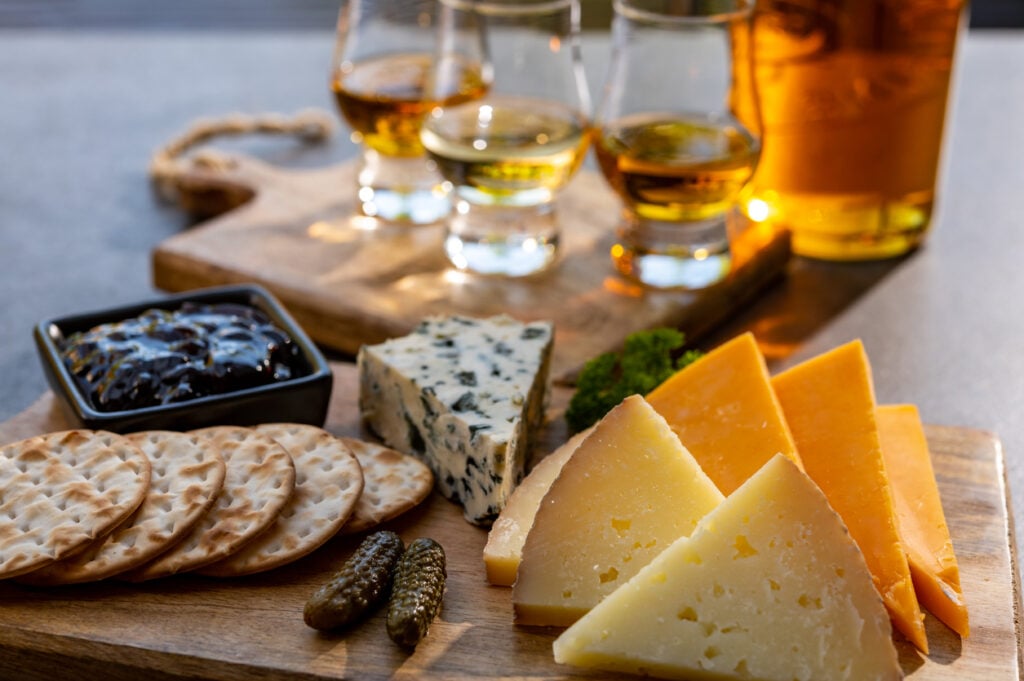
Whisky hospitality has come an awful long way…
A whisky resort, not a whisky factory
The vision for the site is a circular experience. Visitors will wander through woodland, across the burn, into the bistro, through the warehouses and finally into the distillery itself. The old piggery becomes The Kitchery, a bistro that nods to the site’s past but embraces contemporary hospitality.
The flat-roofed pagoda, unusually rare in Speyside, becomes the penthouse of the whisky resort. The stone buildings become lodges and suites. Copper and turquoise design elements will appear throughout, echoing the copper sulphate deposits that cling to the inside surfaces of stills.
The resort will grow in phases. The bistro comes first. The spirit arrives in its own time. Cruickshank estimates two years to build and another five to ten before a first release. That is the rhythm of whisky. You cannot cheat the clock.
Memory as blueprint
Rebuilding Coleburn has required some detective work. With few photographs surviving from the seventies and eighties, the team relied on people.
Former manager William Mechal provided structural memories. Stewart, whose father once cut peat for the distillery, shared stories from the floor. And then there’s 90-year-old Tony Hogg, one of Coleburn’s last witnesses. He provided a treasure trove of old photographs and even returned the original shaker box from the distillery. These objects and stories have filled in gaps that floor plans never could.
These are local heroes. And it just so happens that, before the stills return to life, Coleburn is making its presence known through the Local Heroes collection.
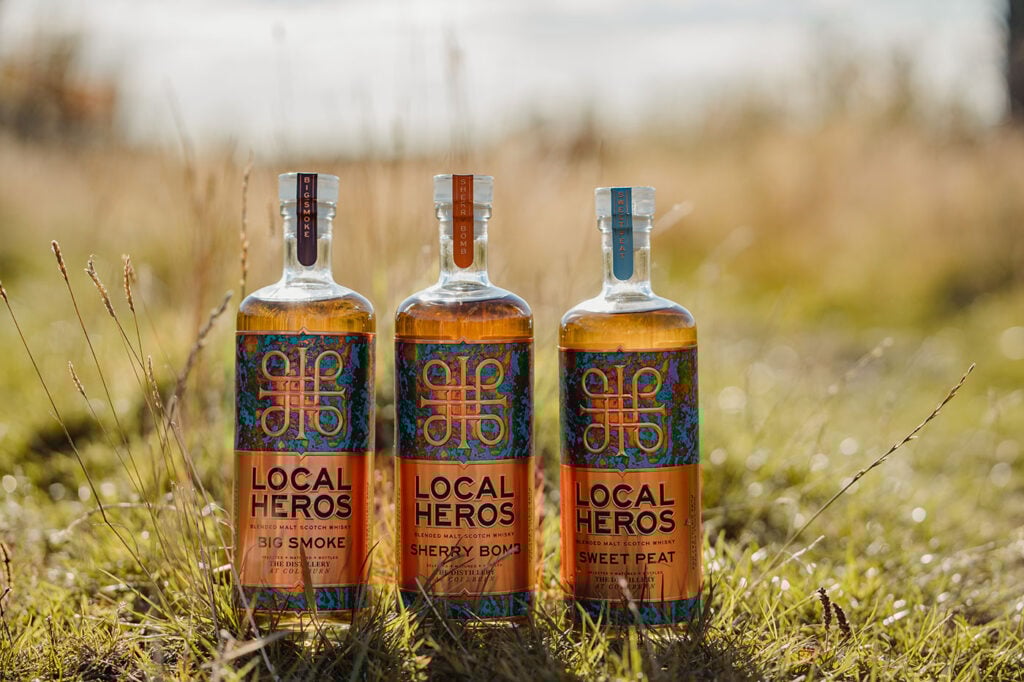
The first major launch from the new Coleburn project is Local Heroes
Local Heros: The whisky that leads the revival
This ongoing series celebrates the people who shape whisky. Makers, custodians, enthusiasts. Anyone whose hand, palate or personality has fed Scotland’s whisky culture. The name also references Mark and Dale Winchester’s appearance in the 1983 film Local Hero, after recording part of the soundtrack.
The first Local Heros (spelt like this as an intentional nod to the film) release features three blended malts bottled at the Coleburn site. Each uses the same Speyside base blend from the Glen of Rothes, including Glenlossie, Mannochmore, and Linkwood. Around 70% of the recipe remains constant, which gives stability and allows character tweaks through selected casks or smoky components.
Everything is presented naturally. Some of the liquid is surprisingly old. Each is ABV 46% and the prices range between £50-55. It is a strong opening statement.
Coleburn Local Heros Sherry Bomb Blended Malt
Nose: Honey, strawberry, red apple and cinnamon over toasted malt. Apple crumble with vanilla ice cream and darker fruit beneath.
Palate: Stewed plums, figs, sultanas and hazelnuts with classic oloroso richness and a thick, slick texture.
Finish: Medium, smooth and fruity.
Coleburn Local Heros Sweet Peat Blended Malt
Nose: Caramel, butterscotch, vanilla and plum pudding with elegant smoke. Water reveals orchard fruit, grassy brightness, raspberry white chocolate and tropical accents.
Palate: Marshmallow, fudge, honey, pear drops and ripe banana with gentle smoke and a touch of tobacco for lift.
Finish: Long, sweet and smoky.
Coleburn Local Heros Big Smoke Blended Malt
Nose: Cherry, lemon, vanilla and coastal air, plus plum pudding and toffee wrapped in steady smoke.
Palate: Medicinal notes, esters, banana, sea salt and tobacco carried by a heavier West Coast style smoke.
Finish: Long and smoky.
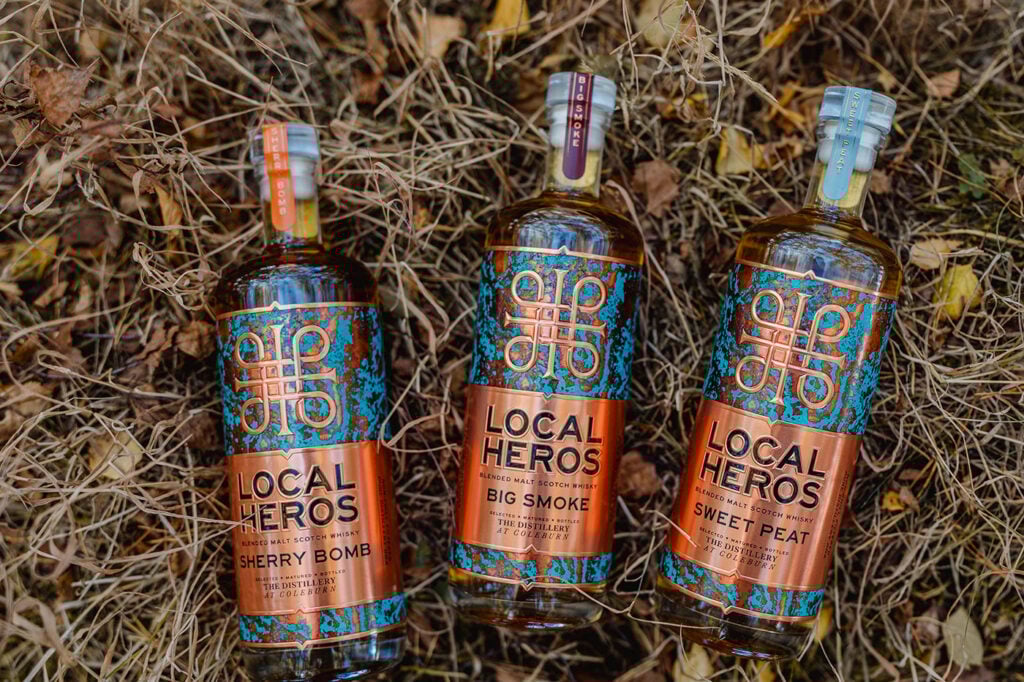
The future looks bright for Coleburn
Inside the Coleburn Distillery revival
Coleburn has history, eccentricity and scars. It has been experimental, mothballed, nearly demolished, rediscovered, repurposed and now revived. It’s the story of a Scotch whisky distillery. And it’s a familiar one.
What’s different here is the scale and ambition of the project. This is not a typical revival. The Winchesters have played the long game. Nostalgia isn’t fueling the distillery’s second life.
Coleburn has added scant few pages to its story since 1985. The future promises a new chapter. The destination distillery.



