How Redbreast Irish Whiskey Is Made


If you want to understand how Redbreast Irish whiskey is made, you have to start in Midleton. That’s the sprawling County Cork distillery responsible for some of Ireland’s most famous bottles, from Jameson to Midleton Very Rare.
Redbreast is the standard bearer for single pot still Irish whiskey. And with St Patrick’s Day around the corner, it feels like the right moment to pull back the curtain on what actually goes into the whiskey, from a trio of distillates to fine sherry casks.
The single pot still foundation
At the heart of Redbreast is single pot still Irish whiskey, one of the most distinctive whiskey styles in the world.
Unlike Scotch single malt, which uses only malted barley, single pot still whiskey uses a mix of malted and unmalted barley in the mash bill. The story goes that unmalted barley existed for tax reasons. Malted grain was taxed in 18th-century Ireland, so distillers added raw barley and accidentally created one of the most characterful whiskey styles ever made. That might be a little fanciful, as Irish whiskey makers were likely aware of the character impact unmalted barley would have beyond any tax implications.
Regardless of how it came to be, the mix of malted and unmalted barley created a spirit known for a creamy texture and a spicy, fruity profile that you rarely find anywhere else. If you’ve ever tasted Redbreast and wondered where that oily mouthfeel and clove-like spice come from, that’s the pot still style doing its thing.
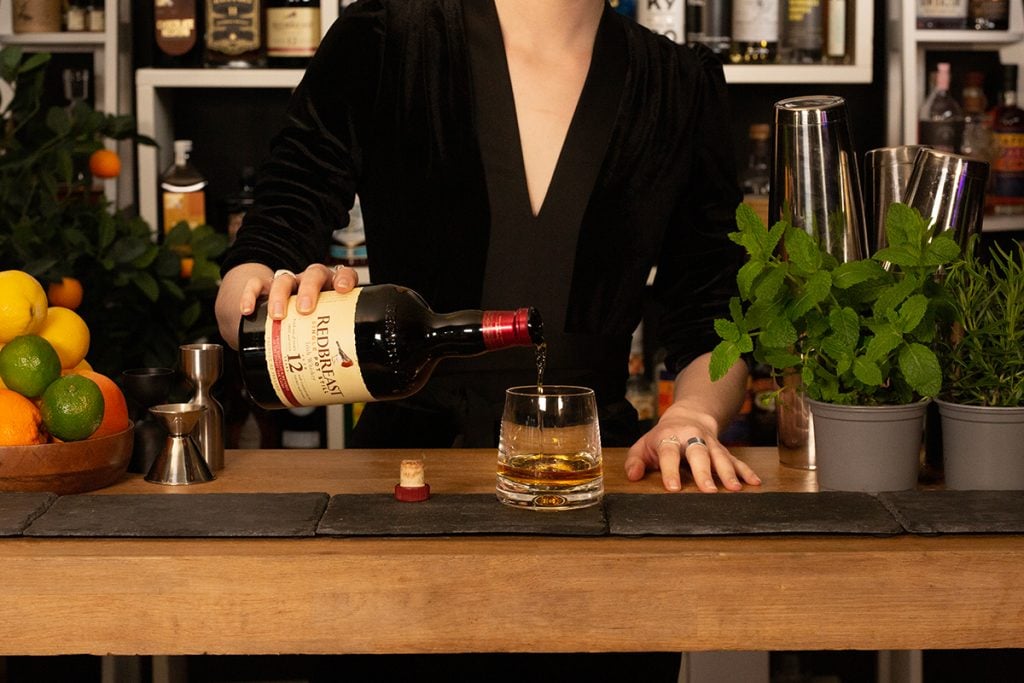
We do love our Redbreast
A trio of distillates
One of the most fascinating aspects of how Redbreast Irish whiskey is made is that Midleton produces three distinct pot-still distillates: light, medium, and heavy.
These are not different whiskies in the sense of separate mash bills. Instead, they’re created through variations in distillation technique, cut points, and still operation. The goal is to produce spirits with different textures and flavour intensities.
Midleton master blender Dave McCabe explains it like this:
“People sometimes assume ‘light’ means watered down, but that’s not what we mean. It refers to texture. Light might be less oily than the heavy style. The approach comes from the history of Irish Distillers, which brought together three distilleries and three different house styles”.
An enviable blending toolkit
When Irish Distillers consolidated the Irish whiskey industry in the 20th century, it inherited different distilling traditions. Instead of choosing one, Midleton kept the lot, giving it an enviable blending toolkit to use across its brands, including Powers, Spot, and Method and Madness single pot still whiskies, as well as blends like Jameson and Midleton Very Rare.
Light pot still spirit tends to show more cereal notes and fresh barley character. Medium brings orchard fruit and warming spice. Heavy distillate delivers weight, oiliness, and the deeper pot-still flavours that whiskey enthusiasts love to talk about. Different brands use different combinations. Some expressions use all three styles. Redbreast 12 Year Old, for example, relies mainly on light and medium pot still distillate to create its balance of fruit, spice, and richness.
Another defining feature of Redbreast is triple distillation. While most Scotch whisky is distilled twice, Irish pot still whiskey typically runs through three copper pot stills. The idea is to further refine the spirit, removing heavier elements while preserving flavour. You can learn more about that in our guide to triple distillation.
The power of sherry casks
The other half of Redbreast’s identity comes from wood. Specifically, sherry casks. These casks are produced specifically for Irish Distillers at the Antonio Páez Lobato cooperage in southern Spain. They’re filled with sherry for seasoning before being shipped to Ireland, arriving already loaded with flavour.
For Redbreast 12, whiskey matured in bourbon barrels is married with whiskey aged in these sherry casks. Bourbon wood contributes vanilla and toffee sweetness, while the sherry barrels deliver dried fruit depth and nutty complexity.
Put the two together, and you get the house style that fans recognise instantly.
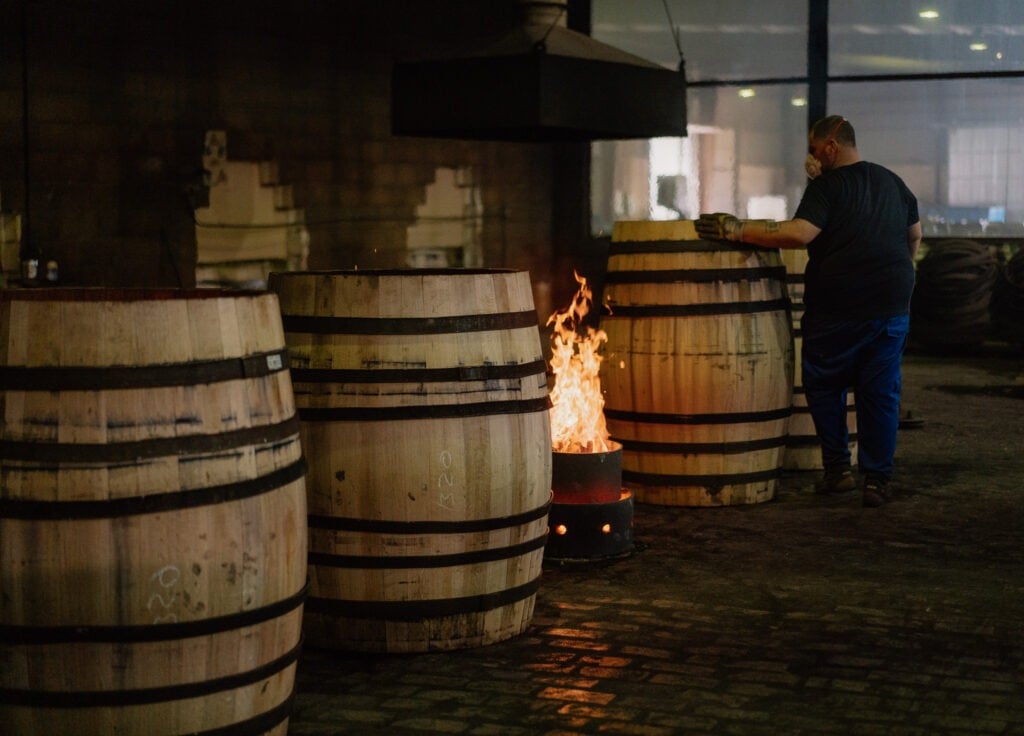
Sherry casks at a Spanish cooperage
The enduring nature of Redbreast
The production process helps explain why Redbreast has such a loyal following.
Single pot still spirit brings texture and spice. Triple distillation refines the spirit. Carefully sourced sherry casks add richness and depth. The three distillate styles at Midleton allow blenders to dial in everything with remarkable precision. Few whiskey producers have that level of flexibility.
It also explains why Redbreast has become something of a gateway whiskey. New drinkers discover it and realise Irish whiskey can be far more complex than they expected. Experienced drinkers revisit it and remember why the style became famous in the first place.
Consistency helps too. Midleton has spent decades refining the process and sourcing casks from trusted suppliers. When a Redbreast bottle lands on the table, you more or less know what you’re getting.
The brand is strong, the history compelling. Fundamentally, the key to Redbreast’s success is in its flavour. If you haven’t indulged yet, with St Patrick’s Day around the corner, now is the perfect time.
Sláinte.



