Scotch Whisky Regions
Each of these boasts a distinct flavour profile and style, thanks to a mix of geography, history, and production methods. The variable climates, terrains, and proximities to the sea also influence both the raw ingredients and maturation processes used to make the whisky.
Depending on where you go, your Scotch could taste like honey and rose petals, or it could be like a bonfire put out with a bottle of iodine (which some people, including us, actually like). So, let’s dive into the whisky regions of Scotland…
Islay and Peaty best sellers
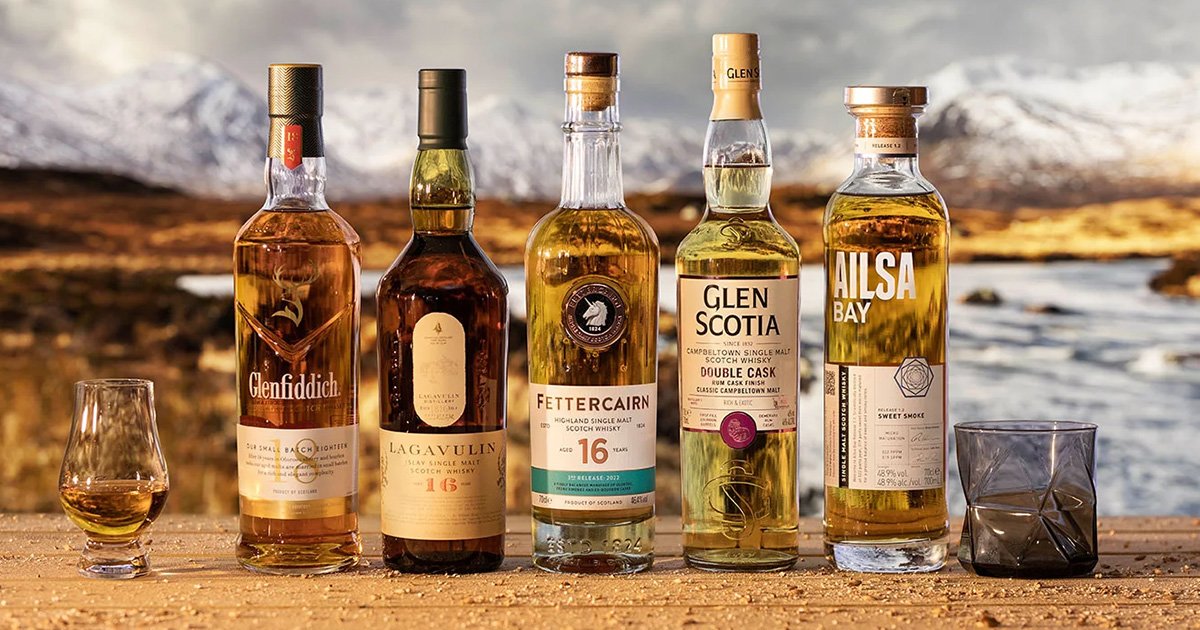
Located off the west coast of Scotland, Islay whiskies are renowned for their pronounced peaty, oily, smoky, and sometimes maritime qualities, influenced by the fierce Atlantic winds and seaweed-strewn shores. It is home to big names in the whisky world, such as Laphroaig, Lagavulin, and Ardbeg, to name just a few, and despite its size, it is one of the best-loved regions by connoisseurs and whisky lovers.
Speyside best sellers
Sheltered by the mountains and located in a pocket in the northeast of the Scottish Highlands, Speyside hosts the highest concentration of distilleries in the country, including illustrious names like Glenfiddich, Glenfarclas, Glenrothes, and Macallan. It is noted for its generally sweeter and fruitier whiskies which offer up a classic malt-driven style.
Highland best sellers
The Highlands encompass a vast and wonderfully diverse terrain. Not only is the landscape varied, but so are the whiskies themselves. Distilleries like Glenmorangie, Glengoyne, Dalmore, and Oban produce spirits which can range from delicate and floral, to robust and peaty.
Campbeltown best sellers
Campbeltown, once the epicentre of whisky production in Scotland, has distilleries such as the legendary Springbank, which creates an array of whiskies ranging from peaty and intense to totally unpeated. This is thanks to its unusual still setup and the various production methods the distillers employ.
Island best sellers
The loosely defined Island region (which excludes Islay) offers a range of robust, coastal-influenced whiskies, with Talisker from the Isle of Skye being a notable example. You can also find some gems like Highland Park on Orkney, which is a notably heathery, rich single malt. Islands like Jura, Arran, and Mull are all worth a look too, each offering up their own characteristics.
Lowland best sellers
The Lowlands, home to distilleries like Auchentoshan and the recently reopened Rosebank, traditionally produce lighter, floral, and more accessible whiskies. This is in part due to the use of triple distillation (as opposed to the more typical double distillation).
Scottish Islands that produce whisky

The islands include:
Isle of Skye
Located on Skye, Talisker offers up a defined peaty flavour mixed with a notable coastal, briny character, often accompanied by a spice and a little sweetness.
Isle of Jura
Whiskies from Jura, the island's eponymous distillery, often present both oily and maritime notes as well as a distinctive fruity sweetness and, in some expressions, a little smoke.
Isle of Mull
Single malt from Tobermory on the Isle of Mull exhibits a gently peaty character, interwoven with rich, fruity, spicy notes, as well as hints of the sea.
Isle of Arran
Whiskies from the Arran distillery tend to lean towards a sweeter, maltier style, often with notes of orchard fruits, citrus, and vanilla, as well as an almost tropical character.
Isle of Orkney
Whiskies from Orkney, like those from Highland Park, combine notes of gentle peat with a sweet, honeyed malty flavour. You can also expect flavours like heather and hints of salt.
Campbeltown
Campbeltown, once the booming capital of Scotch whisky, is now home to just three operational distilleries. However, whiskies from the region are not without their own unique character. Springbank, for example, makes a wonderful single malt with hints of sea salt, gentle peat, malt, and an oily mouthfeel.
Lowlands
The Lowlands make up the southernmost whisky-producing region in Scotland. Nicknamed the “Lowland Ladies”, these whiskies are known for their generally light, approachable style and characteristic floral notes. This is thanks to a mix of triple distillation, as well as the region's relatively mild climate.
Whisky Guides
Our team of whisky experts take you on a journey through the wonderful world of whiskey. In our comprehensive whisky guide we cover subjects from how it is made to how to drink it and so much more.