Without criticism there is only marketing


For his first column of 2023, Nick Morgan looks into the state of whisky and spirits criticism today and asks whether some writers are too close to the industry giants to be entirely trusted.
About a year ago I read a typically trenchant piece in the Spectator by restaurant critic Tanya Gold, in which she lamented the effect that the pandemic seemed to have had on reviewers; ‘has Covid killed criticism?’ she asked. “The pandemic was bad for criticism with its universal dogma of kindness”, she wrote. “Restaurant, theatre, film and book critics felt compelled to be kind, as if criticism itself was coughing at a death bed.” This thought struck a deeply resonant chord. Serious and well-informed critical writing on the whisky industry could also have been read the last rites on many occasions over the past few years. As I reflected on critical writing, or rather the lack of it, in the world of whisky (and spirits more generally) I began to wonder if there were really any whisky critics, in the same way that there are for restaurants, theatres, films and books.

You know the face
The universal dogma of kindness
‘The universal dogma of kindness’ runs like an artery through the body of available whisky and spirits writing, although for ‘kindness’ in many instances you should read ‘obsequiousness’. Whether from authors, journalists posing as authors, self-styled experts posing as journalists or influencers posing as self-styled experts, this cacophony of kindness directed towards whisky makers and their whiskies is almost deafening. The same could be said for any other category of spirits. And with what consequence? Gold, in her article invoked the writing of The New Yorker film critic Pauline Kael, who wrote in 1973 that “movies, far more than the traditional arts, are tied to big money. Without a few independent critics, there’s nothing between the public and the advertisers.” In other words, without criticism there is only marketing.
How is it that so many have allowed themselves to become mere mouthpieces of marketers, product pluggers pecuniarily parroting press releases? It’s a messy story involving sometimes both inducements and payments, often leading to a web of undisclosed conflicts of interest. As this author knows only too well, brands like to build relationships with writers and influencers. In the old days the principal currency involved was information, access and product, but now it’s very different. Unlike Tanya Gold few seem to be able to resist the lure of the accomplished practitioners of the dark arts. “I learnt years ago to refuse requests to meet restaurant PRs”, she told her Spectator readers. “Good ones know that all marketing is based on personal relationships, and to know them is to want to please them. You cannot have two masters. I have one, and it is you.”
Creating a sense of indebtedness
All-expenses paid trips to distilleries and sometimes overseas, lavish entertainment in top bars and restaurants, generous gifts of products, regular supplies of samples, even gifts of ghastly branded Christmas jumpers, all serve to tie writers and influencers closer to brand owners, and create a sense of indebtedness. And of course, as so many brands choose to turn their backs on the traditional values of Scotch whisky and instead worship the hollow-eyed graven images on the altar of luxury, so the entertainment for their acolytes becomes, well, more luxurious, and more costly. At the same time these gifts and entertainments provide unsubtle incentives to the recipient to ‘deliver’ while furnishing them with endless content suitable for brand-promoting and envy-inducing social media posts, few of which acknowledge the relationship between poster and product.
Most brand owning companies have strictly monitored policies and codes of conduct when it comes to gifts and entertainment, put in place to prevent employees trying to exert undue influence or gain improper favours from customers or government agencies, or suppliers gaining undue influence over employees. Inducement and influence, in other words bribery and corruption. In most instances, the cumulative cost of inducements offered to writers and influencers are far in excess of the limits allowed by companies for ‘proper’ business relationships when it comes to their ‘gifts and entertainment’ policies for employees. It’s a constant surprise that corporate lawyers are prepared to tolerate such potentially corruptive practices.
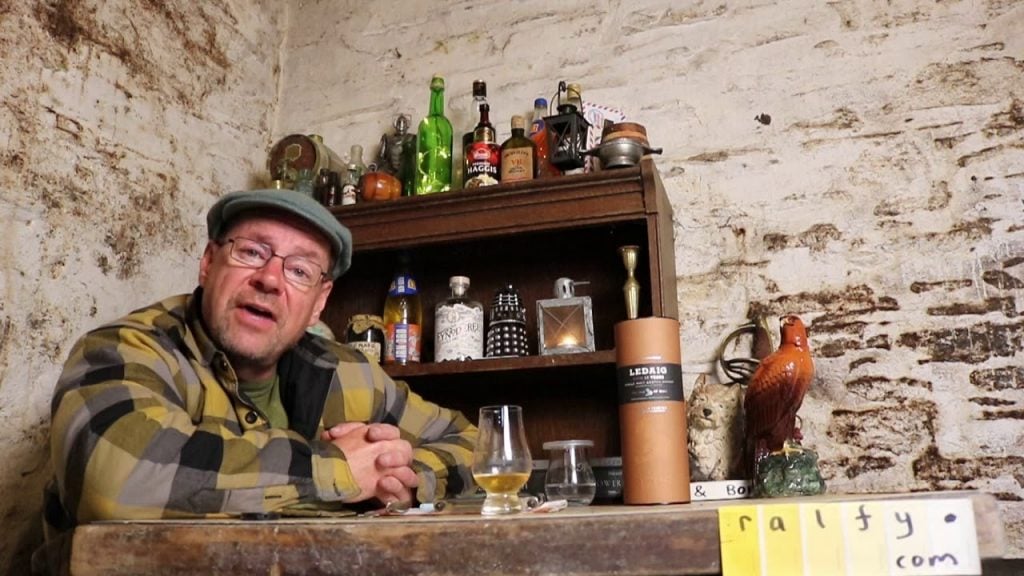
Ralfy, now there’s a man whose opinion you can trust
How the world works
Some brands of course have contractual and fiscal relationships with writers and influencers, such as brand development consultancies, or payments of fees for tasting notes or training, creating a dependent relationship which can give brand owners a further lien over the thoughts and opinions of writers and influencers. Who, in the real world, wants to bite the hand that feeds them? Some even take a very public pride in the fact that their opinions are available only to the highest bidder, pouring scorn in social media posts on producers and their hapless PRs who dare to suggest they might freely share their thoughts about a product in return for receiving a gratis bottle. That isn’t – as I read recently – ‘how the world works.’
If you want to see who’s feeding on the gravy train, then you need only take a look at the numerous filmed tasting panels that so many brands seem to use these days when launching new products. A familiar line-up from central casting ham their way through every whisky tasting cliché: the generously full copita wafted under a nose, half-closed eyes, a knowledgeable frown, the wondering stare into the distance (as if seeking out some highland Shangri-La on a lost horizon), a gasp of astonishment at just how good this whisky is (just like the last one strangely enough), and the final affirmative gesture of approval, like nodding dogs in the back-window of a slightly soiled Ford Mondeo. These repetitive repertoire performances are becoming so familiar that they are almost an embarrassment. One wonders why brands and their PRs are so keen to do business with people whose opinions and approbation are so easily bought and sold.
I’m not sure that our whisky and spirits writers and influencers have the same high regard for independent comment, or for their audience, as Spectator contributors apparently do. Perhaps the audience doesn’t have the same regard for these writers and influencers. Perhaps they are both dancing to the tune of this marketing pas de basque, or perhaps not. Despite marketeer’s obsession with them, social media ‘likes’ for many of these brand promoting posts are mostly quite desultory, certainly compared to other categories where paid for promotions are common. It’s noteworthy that the person who regularly notches up thousands of viewers for his tasting films is the famously unapproachable Ralfy Mitchell, who refuses any interactions with either brands or PRs (“No samples, free stuff, or gifts are accepted, so please do not try to send them, thank you” reads his website). His opinions are at best quirky and often ill-informed, but never other than honest. “I can’t think of anyone else in the whisky world who’s [sic] opinion I trust more”, wrote one fan recently on his YouTube channel. You can understand why.

A top whisky writer responds
Social media and influencers
A final thought: we must all know that this pattern of behaviour is not unique to the spirits industry. Readers will easily discover parallels across the broader consumer goods universe – fashion items, cosmetics, holiday destinations, for a start. The whole phenomenon seems to have been encouraged by two coexistent developments: the explosion of social media as a means of influencing and reinforcing attitudes and behaviours, with inputs both from ‘professional’ influencers and ordinary members of the public; and the decline of traditional journalism meaning that there are fewer paid opportunities for qualified commentators to share their expertise with a broader consumer market, so that would-be influencers (unless they have a private income or a separate wage-earning job) have to find some way to pay the rent and set them apart from the generally anonymous voices that litter platforms such as Twitter and Instagram.
But at what cost? Without any criticism you might think that Scotch whisky is caught in some crazy version of the Whig school of history, where everything just gets better and better. New releases either receive undeserved praise, or at least the benefit of the doubt (‘kindness’). As one magazine famously demands, no reviewed whisky can receive a low score. We live in a seven-plus world. Obscene and unjustifiable pricing for old and often undistinguished whiskies seem to escape the moral compass of writers and influencers. No one dares to consider what effect hysterically over-priced whiskies are having on regular Scotch drinkers.
Not learning the lessons of history
In the world of luxury no one cares about the ordinary Joe. Nor does anyone seem to want to ask what the proliferation of ‘finished’ whiskies says about the quality and diversity (or rather lack of it) of much of today’s new make spirit, or the young age at which many producers want to sell their wares. Nor will anyone challenge what the cultural appropriation of so much practice and language from other spirits categories and wine is doing for the once treasured distinctiveness of Scotch (not even the industry’s trade association).
Every new distillery is welcomed with open arms, as if the lessons of the whisky boom of the 1890s, and the whisky loch of the 1980s has never been learned. Marketing stories, many of which strain incredulity and often bear little relationship to the truth, are swallowed without a word of doubt. Brand owners consider themselves to be above censure. “Everything”, as Ray Stevens once wrote (and sang) “is beautiful”. Our writers and influencers see no evil, hear no evil, and speak no evil. Without criticism, there is only marketing.
14 Comments





