The Revival of Islay Whisky Peatlands


The Islay whisky peatlands are famous. Their smoke defines a style, a place, and an expectation in the glass. But the bogs themselves tell a much longer and more complicated story.
At the core of it is peat. And peat is a paradox. It is both ancient and alive, local and global, archive and ecosystem. It is flavour, tradition, and place, but also land, carbon, water, and time measured in millennia.
For most of whisky’s modern history, peat has been discussed almost exclusively in sensory terms. Smoke levels. Phenols. Style. What has been harder to face is peat as a living system, one that takes thousands of years to form and minutes to damage.
The restoration of Islay whisky peatlands
That wider conversation is now impossible to ignore. A new conservation partnership at The Oa on Islay brings together RSPB Scotland and three major whisky groups, Suntory Global Spirits, Diageo, and The Glenmorangie Company. Over the next five years, the partners will collectively invest £1.6 million to restore around 1,000 hectares of degraded peatland at The Oa nature reserve.
This is not being framed as carbon offsetting, nor as a licence to continue business as usual. The work is explicitly about restoration. Repairing hydrology. Rewetting blanket bog. Reducing wildfire risk. Improving flood resilience. Rebuilding habitats for species such as Curlew, Snipe, Hen Harrier, and the Large Heath butterfly.
Before getting into what the partnership is doing, it is worth understanding peat.
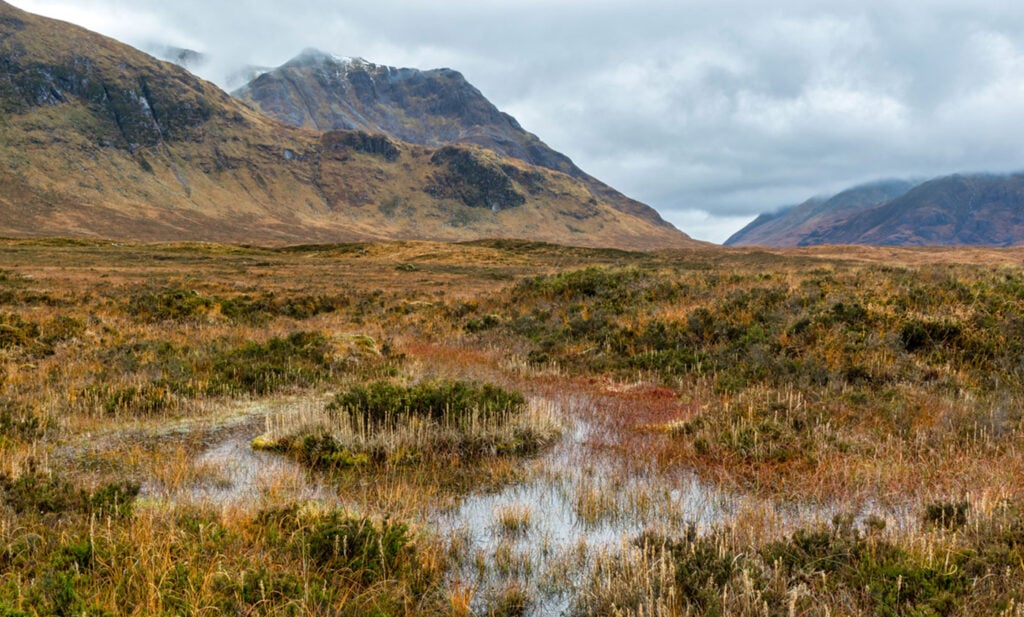
This is what peatland in Scotland looks like
What peat actually is…
Peat is essentially soil. Waterlogged soil, made up almost entirely of partially decomposed plant material, with around 90% water by volume. And like a fossil fuel, it’s not renewable in any meaningful human timeframe.
It began forming across the British Isles around 10,000 years ago, after the last ice age retreated and left behind bare, saturated landscapes. Plants colonised these environments, pulling carbon dioxide from the atmosphere through photosynthesis. In cold, wet conditions, decomposition slowed. When plant growth outpaced decay, organic matter accumulated, millimetre by millimetre.
Today, peatlands cover roughly 20% of Scotland’s land surface. Growth averages around 1mm a year. Over thousands of years, that produces bogs several metres deep. Those layers act as archives, holding evidence of vegetation, climate shifts, volcanic events, and human activity stretching back millennia. Peatlands are also extraordinary carbon stores, holding an estimated ten times as much carbon as all the UK’s forests combined.
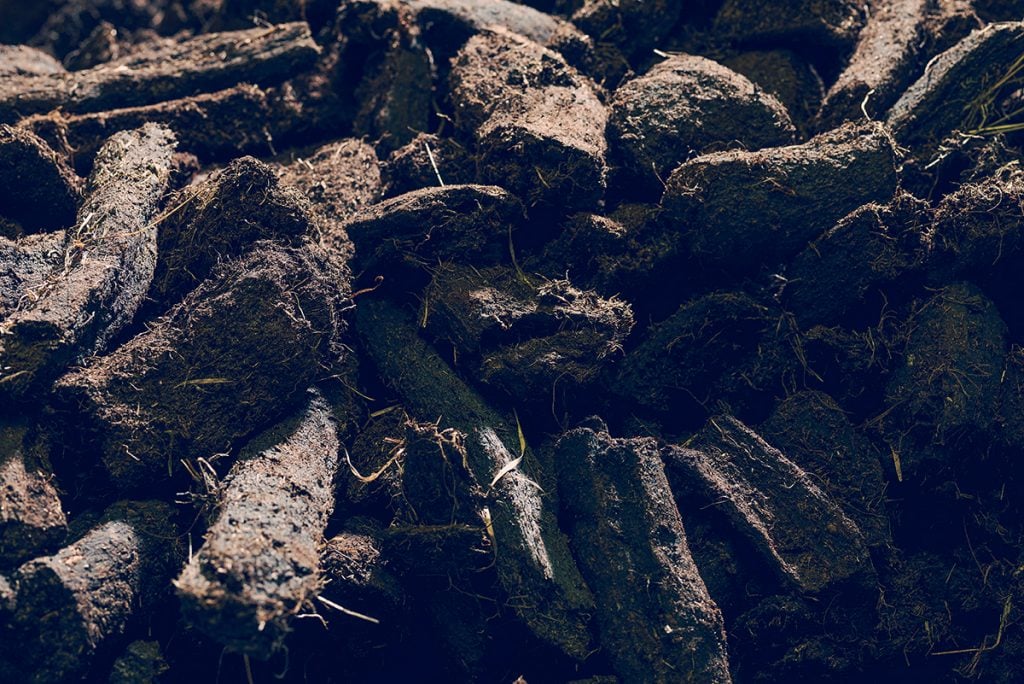
Meet Peat.
… and why it complicates everything
From a whisky perspective, peat is chemically complex and far from uniform. As it matures underground, simple compounds break down first, while larger molecules like waxes and lignin accumulate. When peat is burned during malting, those compounds generate the phenolic aromas that define peated whisky.
Depth matters. Surface peat behaves differently from dense, highly decomposed peat cut from deeper layers. Geography matters too. Peat formed from heather-rich moorland is chemically distinct from peat formed from ancient lake beds, forested wetlands, or seaweed-rich islands like Islay.
This variability is one reason peated whisky remains such a creative category globally. It is also why peat cannot be treated as a generic fuel source. It is living, fragile, and easily tipped from a carbon sink to a carbon source when damaged.
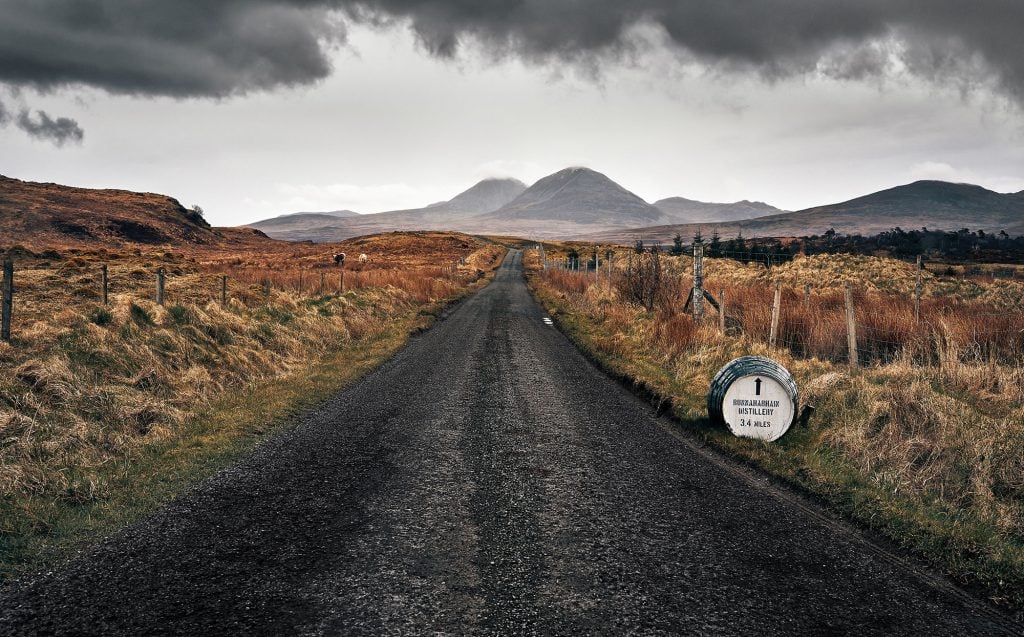
Islay is home to arguably the world’s most famous peat bogs
From conservation principle to practical restoration
The Oa, despite its wild appearance, carries the scars of centuries of domestic peat cutting and drainage. Much of its blanket bog no longer functions as a healthy peatland. Restoration here is about reversing that degradation so peat can begin accumulating carbon again, rather than losing it.
RSPB Scotland is delivering the restoration using established peatland conservation science, with the distillers’ funding tangible on-the-ground work. Addressing concerns that the project could become a one-off headline rather than a precedent, RSPB and the partners are clear about the intent:
“As part of the partnership, the peatland restoration work at The Oa is delivered by RSPB Scotland using established conservation science and expertise. The three distillers are funding tangible on-the-ground change. Healthy peat is essential to a healthy ecosystem, but also for producing whisky, and so this work is about leadership in the sector and recognising the importance of nature for business. The ultimate goal is peatland restoration, and to return a degraded habitat to health to improve ecosystem function, biodiversity, and resilience.”
All three distillers are signatories to the Scotch Whisky Association’s Commitment to Responsible Peat Use, which commits the industry to improving efficiency of peat use, minimising extraction impacts, and supporting peatland restoration alongside continued production.
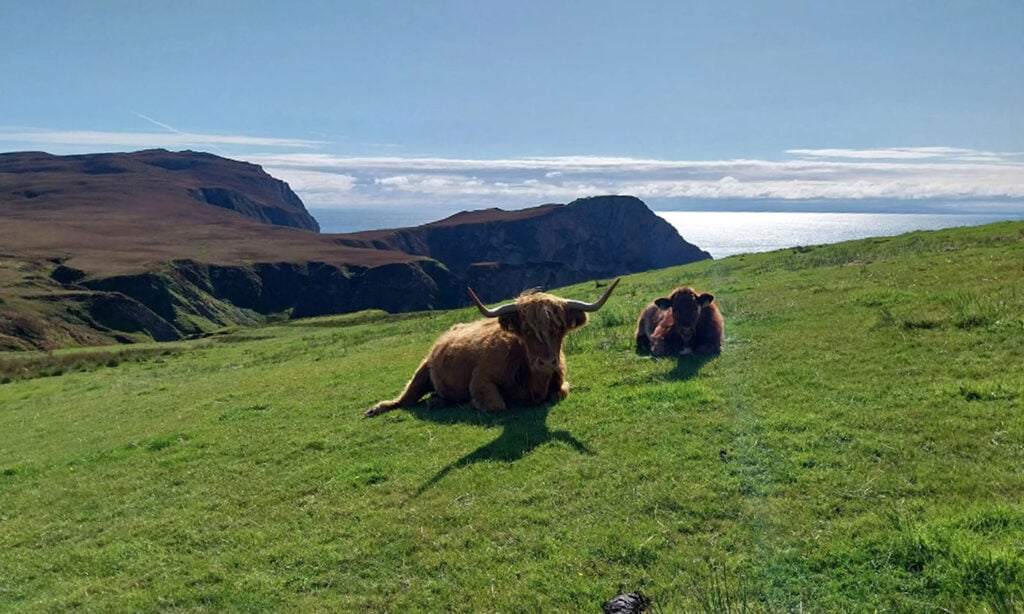
Habitat restoration is crucial for the wildlife that calls The Oa home
Measuring success beyond hectares restored
One of the recurring criticisms of large-scale environmental projects is that success is measured in surface area rather than ecological function. The partners insist that long-term monitoring is central to the project.
“We intend for all restoration projects to comply with the Peatland Code, which requires long-term maintenance and monitoring plans to be in place. This could include monitoring the condition of peatland restoration interventions, ground wetness, and assessing the growth of characteristic bog plants. We carry out a comprehensive reporting process to track how the peatland responds and improves over time.”
Transparency is built into that process:
“Peatland Code project documentation is publicly accessible via the S&P Global UK Land Carbon Registry. This provides project details and transparent reporting.”
Before work began, detailed baselines were established:
“The RSPB peatland project team assessed the condition of the degraded peat by ground-truthing the site, categorising each area into Peatland Code pre-restoration (baseline) condition categories. Improvements to baseline conditions as a result of peatland restoration will be verified by an independent IUCN Peatland Code auditor.”
The emphasis here is on verification rather than self-reporting, with independent auditing built into the framework.
Research, carbon, and scientific limits
The Oa project itself is not being positioned as an active research site for methane dynamics or dissolved organic carbon, but it sits within a much broader research landscape supported by RSPB:
“The project on The Oa is not being used as a research project. There is a significant amount of research being undertaken by several educational institutions and organisations into peatland science. The RSPB has established a peatland science centre of excellence at the Forsinard Flows Field Centre and works with research partners including the Environmental Research Institute and The James Hutton Institute.”
That wider body of work informs restoration techniques, hydrological modelling, and expectations around carbon flux, even where The Oa itself is not instrumented for detailed flux measurement. Importantly, the partners are explicit that this project is not about offsetting peat use:
“With regard to the partners’ project to restore 1,000 hectares of peatland on The Oa is about restoration, not offsetting. The partners are not purchasing any carbon credits.”
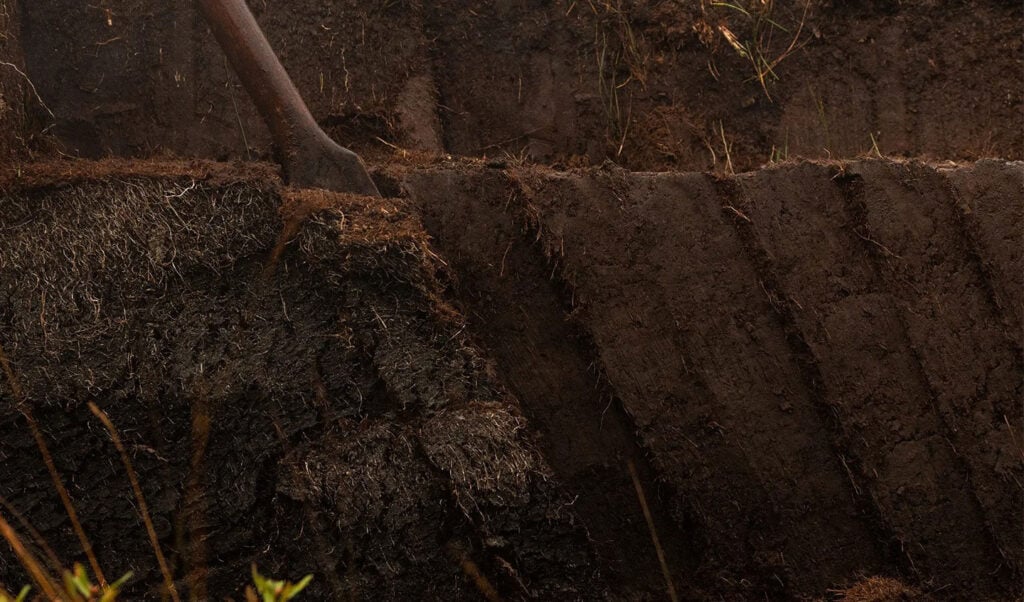
Are there realistic alternatives to peat? Right now, they are not permitted in Scotch
Peat use, alternatives, and uncomfortable realities
One of the most difficult tensions sits at the heart of the project. Peat remains central to the flavour identity of many Scotch whiskies. But while research continues into improving efficiency and reducing volumes used during malting, the industry is candid that there is no viable replacement for peat-derived flavour within Scotch whisky’s legal framework.
“Peat is critical to creating the smoky characteristic that many single malts and blends are famed for. It is core to the identity and flavour profile of brands enjoyed by consumers around the world, and the regulations which define Scotch whisky do not permit peat alternatives.”
The focus, therefore, remains on minimising use, improving extraction practices, and pairing continued use with large-scale restoration.

We love peated whisky. But we have to appreciate where it comes from.
Community, access, and local impact
The RSPB allays concerns about land access and local livelihoods directly. It confirms that the restoration work will take place entirely on RSPB-owned land and will not restrict access.
“This work will take place on RSPB-owned land and will not result in any restrictions on access. The land is already managed as a nature reserve, and so this work will be within keeping of the current land-use and enhance the reserve as a place for wildlife and visitors.”
The project expects to create seasonal local employment, improve flood management, enhance water quality, reduce wildfire risk, and strengthen the island’s appeal for tourism and whisky heritage. Education outreach has already taken place in local schools, and the historic peat cuttings at The Oa are no longer active. Species monitoring is also part of the long-term plan:
“The long-term monitoring plans we have in place for our peatland restoration projects on our Islay reserves encompass species monitoring for Hen Harrier, Large Heath, Marsh Fritillary and Adders.”
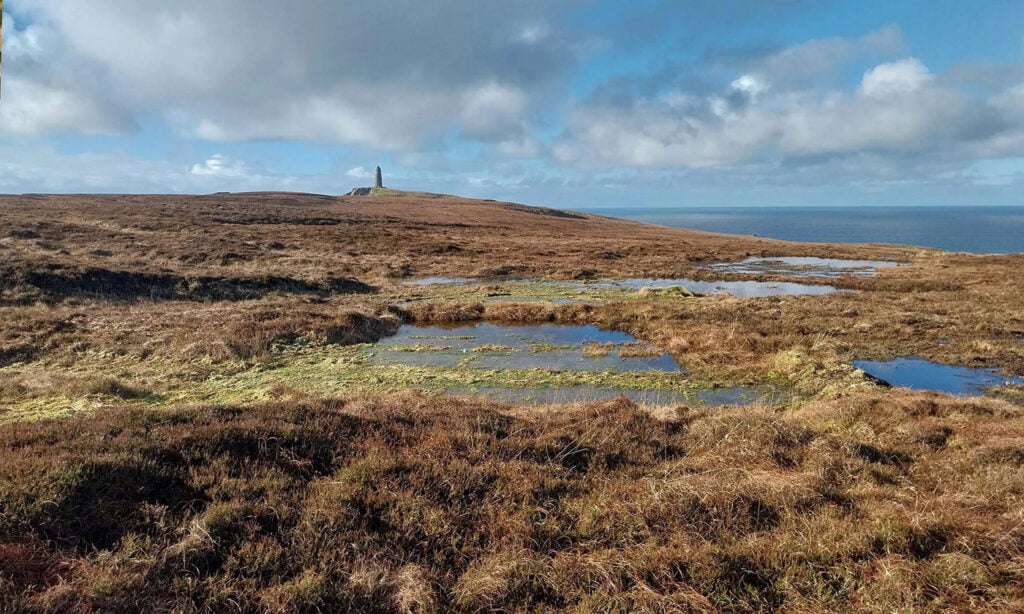
The future of peatland habitat on The Oa is something whisky fans should care about
Planning for a less predictable climate
Extreme weather is no longer theoretical. Restoration planning explicitly considers increased rainfall, storm intensity, and erosion risk:
“When developing a restoration plan, we consider the impact of extreme weather events and build in mitigation measures to compensate. We adapt techniques to build strong dam constructions from a variety of materials to ensure their durability and continuity over a long period.”
What success would actually mean
The hardest questions remain unresolved by design. This project does not claim to make peat use net-positive, nor does it pretend restoration cancels out extraction.
Instead, it asks a more uncomfortable question. What does responsibility look like in an industry that depends on something that cannot be quickly replaced or repaired?
If this partnership succeeds, it will not be because of hectares restored alone. It will be the act of treating peat not simply as an abstract flavour input, but as a living system with limits, history, and consequences.
Peat has always given whisky depth. The work at The Oa is an attempt to return some of that depth to the land itself.



